
Specifying stainless steel sheet correctly comes down to three engineering levers: corrosion class, mechanical duty, and surface finish — with EN 10204 3.1 mill test certificate acting as the documentation gate [S7]. Most procurement errors originate from defaulting to grade 304 regardless of chloride exposure, or accepting decorative finishes on parts that need weld-grade pickled-and-passivated surfaces [S4].
The mainstream sheet families in mill and stockist channels are austenitic 304/304L and 316/316L, ferritic 430, martensitic 410, and the 2205 duplex, each covering a distinct chloride/temperature envelope [S1][S4]. Cold-rolled sheet typically ships in 0.3–3.0 mm thickness, 1000/1219/1250/1500 mm widths and up to 6000 mm cut lengths for architectural and fabrication stock [S3]. For buyers, a working selection logic beats a price chase: match grade to environment, then match finish to duty.
Grade families and the chloride/temperature envelope
Austenitic 304/304L remains the default for indoor architectural, food-contact and general fabrication work, with 304L specified where post-weld stress-corrosion cracking in the heat-affected zone is a concern [S4]. Grade 316/316L adds 2–3% molybdenum, which measurably improves pitting resistance in chloride-bearing environments such as coastal, de-icing salt splash zones, and many chemical process streams; 316L is the low-carbon variant for welded assemblies [S1][S4].
Ferritic 430 is magnetic, lower-cost, and adequate for indoor appliance panels, kitchen equipment and dry architectural cladding, but it tolerates far less chloride than 304 and is not the right pick for pool, marine, or chemical exposures [S4]. Martensitic 410 is selected for cutlery, valve trim and wear parts where hardness matters more than corrosion resistance; it is rarely specified as a general sheet [S1]. For the high-chloride / high-temperature end of the duty spectrum, duplex 2205 offers roughly double the yield strength of 304 with better chloride pitting and stress-corrosion performance, at a cost premium that has to be justified by duty [S1].
Selection criteria that actually drive the PO
Three parameters drive the line item more than any other: chloride exposure (ppm in service or splash zone), operating temperature, and required forming/welding duty. Below 200 mg/L chloride and ambient temperature, 304/304L is generally adequate; above that, 316/316L is the safer default [S4]. For welded assemblies going into chloride service, the L-grade (≤0.03% C) is the spec to lock in to avoid intergranular attack in the HAZ [S1].
Formability and surface drive the second tier of decisions. Deep-drawn kitchen sinks and similar parts generally need 304 with a 2B or BA finish rather than a No.4 brushed decorative skin, which is directional and shows die marks. Decorative wall panels, elevator cladding and column wraps commonly use antique-finished sheet in 201/304/316/430, with mill capability from 0.3 to 3.0 mm thickness and 1000–1500 mm stock widths, custom-cut to a 6000 mm maximum length [S3]. For outdoor and tunnel applications, the same 316 base with a pickled-and-passivated or antique finish is the usual specification rather than a mill-finish 2B skin [S3].
Surface finishes and what they actually mean on a drawing

The 2B finish — cold-rolled, annealed, pickled and skin-passed — is the workhorse industrial finish and the right pick for further polishing, fabrication or sanitary welding [S4]. BA (bright annealed) is a reflective finish used for appliance and architectural trims where a mirror is too aggressive. No.4 is the brushed architectural finish with a directional grain; its abrasive belt grit (typically 120–180) should be called out on the drawing to avoid the supplier-default ambiguity.
Antique and coloured finishes are achieved by chemical reduction of metal ions on the autocatalytic surface in aqueous solution, which both alters the colour and improves surface wear and corrosion resistance of the base sheet; mill options in 201/304/316/430 ship at 0.3–3.0 mm, 1000/1219/1250/1500 mm widths, with antique brass, bronze, antique bronze and antique copper colour families as the standard palette [S3]. For PVD or antique sheets used in elevator interiors, train cabins and tunnel wall panels, specifying the base grade (not just the finish) is the single most common omission on architectural RFQs.
Documentation, certification and traceability
EN 10204 3.1 mill test certificates are the standard documentary baseline for stainless sheet used in process, architectural and OEM work, with the 3.2 variant added where third-party validation is contractually required [S7]. A 3.1 certificate identifies the melt, the heat-treatment batch and the chemical/mechanical test results, and is what the inspector reaches for when a fabrication is challenged. Stockist supply from USA, Europe, India and Korea is commonly offered on a 3.1 basis, with weekly delivery on the standard mill sizes for the common austenitic grades [S7].
ASTM A480/A480M and EN 10088-2 set the surface, dimensional and tolerance envelope for flat stainless product. For buyers comparing offers, a side-by-side check of MTC type, base standard (ASTM vs EN), dimensional tolerance class, and the grade designation itself is more productive than chasing nominal price. For buyers moving from carbon to stainless plate duty, the Carbon Steel Plate Selection map covers the equivalent thickness/tolerance and MTC reasoning on the carbon side.
Who should — and should not — default to 304

Grade 304/304L is the right default for indoor architectural cladding, food and beverage equipment, kitchen fabrication, general chemical plant indoor service, and any welded assembly where chloride is low [S1][S4]. It is the wrong default for coastal exterior, pool hall atmosphere, de-icing salt splash, marine hardware, pharmaceutical WFI loops, and chloride-bearing process streams — in those duties 316/316L is the baseline and a duplex upgrade should at least be evaluated where temperature and chloride combine.
For purely decorative interior panels with no chloride exposure and no structural duty, ferritic 430 is often acceptable and noticeably cheaper than 304; for cutlery, valve seats and wear parts, martensitic 410 belongs on the shortlist instead. In other words, 304 is the workhorse, not a universal answer — the duty decides the grade, not the inventory. For an at-a-glance refresher on how the stainless family sits next to alloy and carbon options, the stainless steel reference is the right starting point.
Market and supply signals worth tracking
The SMR June 2026 stainless price census — flat and long products across 75 countries — is the monthly benchmark most procurement teams cite when re-pricing forward orders; the July 2026 release is the next reference data point for spot and contract negotiation [S2]. Taiwan's June 2026 stainless flat exports fell as shipments to South Korea, Türkiye, the EU and the US weakened, a directional signal for Asia-origin supply in the second half of 2026 [S2].
On the supply-development side, SAIL and Indonesia's PT Krakatau Steel signed an MoU in July 2026 to explore an Indonesian stainless slab joint venture — capacity and timeline undisclosed — which, if it converts to a project, will shift the Asia slab balance into 2027–2028 [S2]. China's auto output recovered month-on-month in June 2026 with exports exceeding 1 million units for the first time, a demand-side read-through for austenitic sheet into automotive trim and exhaust-system upstream supply [S2]. The SMR team's 30-year stainless market data set is the most consistent public source for cross-checking these signals [S2].
Shortlist logic for a 2026 buyer
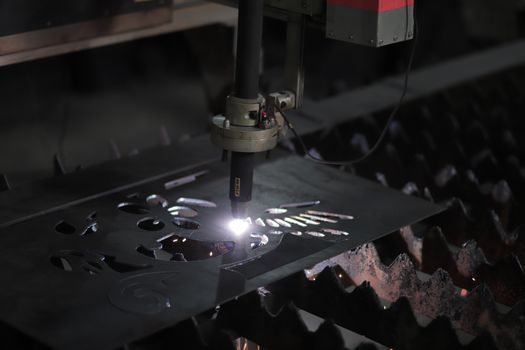
For a buyer writing the PO this quarter, the workable decision tree is: define the chloride and temperature envelope, pick the grade (304/304L for indoor general, 316/316L for chloride, 430 for indoor decorative, 2205 for high-chloride + temperature), lock the finish (2B for fabrication, BA for bright trim, No.4 for architectural brushed, antique/PVD for decorative, pickle-and-passivate for welded process kit), and require EN 10204 3.1 with the ASTM or EN base standard on the certificate [S3][S4][S7]. Two cross-checks before release: (a) whether the MTC names the melt and not just the coil, and (b) whether the thickness tolerance class is named against ASTM A480 or EN 10088-2.
Track three signals into Q3–Q4 2026: the SMR monthly price census for 304/316/430, the SAIL–Krakatau Indonesia slab JV conversion from MoU to defined project, and Taiwan's monthly flat export volumes as the cleanest Asia read on regional demand balance [S2]. A complementary view on adjacent stainless pipe and alloy steel selection is also worth keeping in the procurement file, since plant specs often cross both material families.