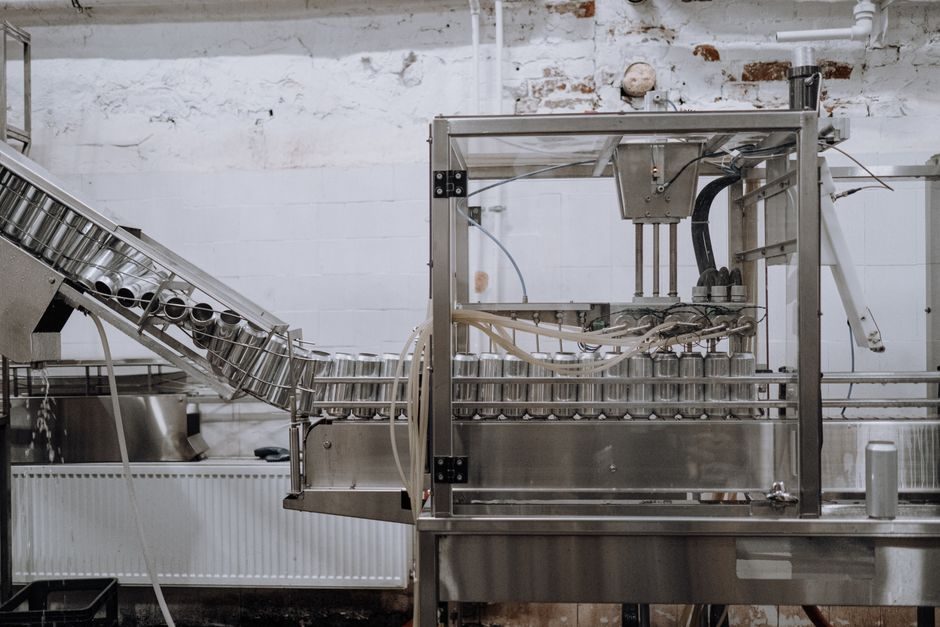
Six mechanical architectures dominate the 2026 stretch wrapper market: turntable, rotary arm, rotary ring, orbital, horizontal, and vertical, with 768 catalog models currently listed across 135 industrial manufacturers on DirectIndustry [S1].
Selection is governed almost entirely by load geometry and weight class: turntable units cover standard pallets up to roughly 2,400 mm table diameter, rotary-arm and rotary-ring machines handle unstable or heavy loads that cannot be rotated, while orbital and horizontal systems wrap long profiles, coils, and panels that would never fit a rotating platform [S2][S6].
Turntable Wrappers: The Default Pallet Platform
Turntable stretch wrappers rotate the load on a circular table while a film carriage travels vertically up a mast, and they account for the largest share of catalog entries for chemical, food, ceramics, and building-materials lines [S2]. Spec data from Shandong Dyehome lists the TP1650F series with 1,650 mm table diameter, 0–12 rpm rotational speed, 1.55 kW power, and M-chassis fork-tine pockets for direct forklift insertion in semi-automatic mode [S2].
Heavier turntable builds reach 2,400 mm table diameter with overall lengths around 2,745 mm and heights up to 3,200 mm to clear 2-meter-tall pallet stacks [S2]. The architecture fails above roughly 2,000 kg because the rotating mass, bearing friction, and inertia at the spin-up ramp exceed the economic envelope; for those loads, buyers move to rotary-arm or rotary-ring designs where only the film carriage moves [S1][S2].
Rotary Arm and Rotary Ring: For Heavy or Unstable Loads
Rotary-arm wrappers keep the pallet stationary and orbit the film carriage around it, which is the correct choice for unstable, very heavy, or off-centre loads that cannot be safely spun [S2]. The R1800FZ-PL-FM1800 from Sinolion wraps pallets up to 1,600 mm high with 1,200 × 1,200 mm footprint and uses an open-door pre-stretch carriage delivering 250% film stretch (1 m of film becomes 3.5 m), with a spare 200% ratio sprocket supplied for field changeover [S2].
Rotary-ring systems such as the AWR|PRO extend that envelope to 2,400 mm wrap height, 2,000 mm pallet length, and 1,400 mm pallet width, and are aimed at order-picking and high-throughput logistics cells where cycle time, not just stability, drives the spec [S2]. Across both designs, common film format is 500 mm width on a 3-inch core, max 240 mm roll diameter, 14–35 µm thickness, with one trial roll typically supplied with the machine [S2].
Orbital and Horizontal Wrappers: For Profiles, Coils, and Long Products
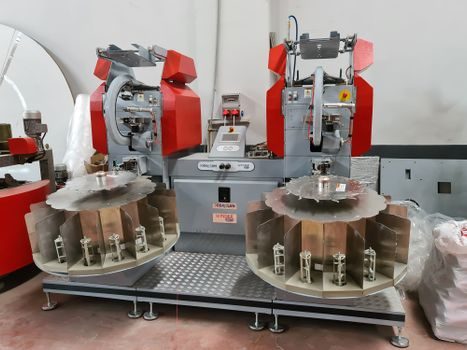
Horizontal orbital stretch wrappers rotate the film carriage around a stationary or slowly advancing product, which is the standard solution for long, bulky, or irregularly shaped goods such as PC wire coils, steel profiles, aluminium extrusions, door panels, and pipe bundles [S4][S6]. The orbital ring can be sized to the product length, eliminating the pallet-turntable geometry constraint that limits other types to roughly 1.5 × 1.5 m footprints [S6].
Fhopepack's profile orbital wrapper is specified for high-speed wrapping of panel-stock and profile products, removing the manual film-pass step that otherwise dominates labour cost on those lines [S7]. For Prestressed Concrete (PC) wire coils, the same orbital architecture handles the heavy, dense coil geometry typical of construction-supply yards, where load stability through transport is the dominant failure mode rather than throughput [S4].
Selection Criteria: Load, Throughput, Film Economy
Three decision criteria cut the type-selection problem cleanly: load stability under rotation, peak load weight, and film-economy target. A standard pallet under 2,000 kg with regular geometry routes to a turntable; an unstable, very heavy, or tall pallet routes to rotary-arm or rotary-ring; long profiles, coils, and panels route to orbital or horizontal [S2][S4][S6].
Film-economy is driven by the pre-stretch ratio: 250% pre-stretch (1 m to 3.5 m) is now standard on Sinolion rotary-arm builds, with 200% available as a mechanical fallback via change sprocket, and most turntable units in the same catalog band quote 150–250% pre-stretch depending on carriage type [S2]. Compressed-air utility is a common spec line — Sinolion's S1800EZ-PL lists an explicit compressed-air requirement alongside the electrical spec — and buyers should treat any pneumatic demand as a hidden infrastructure cost when comparing semi-automatic against fully automatic machines [S2].
Chemical, Food, and Heavy-Industrial Applications
Chemical-product stretch wrappers, a sub-segment tracked separately on DirectIndustry, list 48 catalog models across 6 manufacturers with turntable (27 entries) dominating, followed by rotary arm (12), orbital (4), vertical (3), rotary ring (3), and horizontal (2) [S2]. That distribution is a direct map of chemical-industry load geometry: most chemical bags, drums, and palletised finished goods are stable rectangles under 1,500 kg, which is the turntable sweet spot [S2].
For non-palletised heavy industrial goods like steel coils, PC wire coils, and aluminium extrusions, the orbital and horizontal architectures are the only realistic options, since a turntable cannot accept a 6-metre profile and a rotary arm cannot orbit a 4-tonne coil at speed [S4][S6][S7].
Integration with Coding, Cutting, and Wrapping Lines
Stretch wrappers rarely sit alone in a packaging cell: they are typically downstream of a stretch film delivery system and upstream of label or coding stations, and the coding machine interface is a common integration point for batch, date, and SSCC marking on chemical and food lines. [S3]
Where the pallet is also being sealed with a top sheet or hood, a shrink wrapping machine tunnel may run in parallel with the stretch line for tamper-evident loads, and a cutting machine is often co-located upstream for slitting stretch film master rolls to carriage width. Within the broader wrapping family, the wrapping machine category includes shrink, stretch, and hood systems, and buyers frequently evaluate them together on the same line balance rather than as standalone purchases. A closely related comparison point, when the question is hood-and-shrink versus stretch-and-palletize, is the architectural breakdown laid out in this shrink-wrapping machine type guide.
Limitations, Failure Modes, and Sourcing Reality
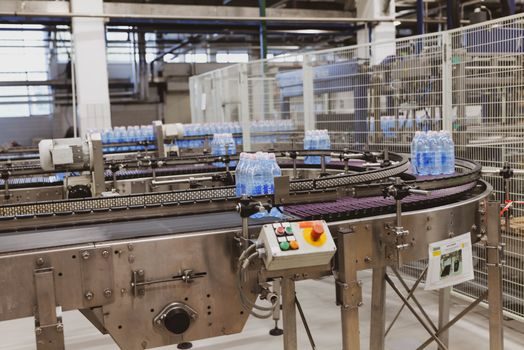
Three failure modes recur across all six types: film carriage mis-feed at high pre-stretch ratios, mast or ring deflection on tall loads exceeding 2,400 mm wrap height, and turntable bearing wear on loads above the rated kilogram envelope [S2][S5]. A typical fully automatic pallet wrapper uses a heavy-duty turntable, machined guide ways on the mast, and a compact stretch unit with change gears to vary stretch percentage across the 150–250% band [S5].
Sourcing is concentrated: Shanghai Fhope Machinery lists 101 catalog models, Sinolion 75, and Shandong Dyehome 20, with the rest distributed across Italian (Robopac 22, MATCO 21, COMARME 15, Cyklop 15) and other regional makers [S1]. Buyers should verify the pre-stretch ratio, film width tolerance, and compressed-air requirement on the data sheet before purchase, since the spread between entry-level 150% mechanical pre-stretch and 250% powered pre-stretch is roughly 40% in film consumption per pallet at equivalent containment [S2].
Watch also for new rotary-ring entries from the Chinese majors in the second half of 2026, where the catalog is already 3 deep on a sub-segment that did not exist in this density three years ago [S1][S2].