
Synthetic resin raw materials and formulated adhesive products occupy two different points on the supply chain, and confusing the two leads to wrong orders, wrong MSDS sheets, and wrong storage. Synthetic adhesives are built from prepolymers (oligomers) or polymers synthesized from petrochemically derived raw materials [S1], and the polymer is the single ingredient that defines heat response, chemical resistance, water resistance, load bearing, and flexibility [S5].
Resins are inputs sold to compounders and formulators, typically as solid flakes, pellets, or low-viscosity liquids that still need hardeners, accelerators, fillers, tackifiers, plasticizers, and solvents before they bond anything. A finished adhesive is the fully formulated system, ready to apply by brush, roller, spray, or hot-melt unit. Buyers who need pot life, viscosity at 25 °C, and cured tensile strength order the formulated product; buyers who need to control the cure profile or add their own fillers order the synthetic resin base.
Definition and Scope: Resin vs Formulated Adhesive
Adhesives are polymeric materials that interact physically or chemically with a substrate so that stress transfers between bonded members without rupture of the glue line or detachment from the surface [S1]. The polymer is the key raw material, and everything else in the can is there to make the polymer usable on a production line.
Liquid synthetic resin is typically treated as a raw material or forming medium for potting, casting, and molding, not as a finished glue, while synthetic resin glue is the fully formulated adhesive used for bonding [S6]. Epoxy resins show tensile strengths in the 55 to 130 MPa range after cure and exhibit low cure shrinkage of 1–5% [S4], which is why they anchor the high end of structural bonding. Phenolic resins, with tensile modulus of 4–7 GPa and cure shrinkage of 2–4% [S4], take the heat-resistant slots in structural panels and aerospace.
Main Resin Families Used in Industrial Adhesives
Epoxy, polyurethane, acrylic, and phenolic resins dominate industrial formulations, and the choice between them follows substrate, service temperature, and required flexibility. Epoxy gives chemical resistance and heat tolerance; polyurethane combines elasticity with adhesion and tolerates flexible substrates; acrylic resin delivers clarity, UV resistance, and impact strength; phenolic resin supplies toughness and heat resistance for structural laminates [S4].
Thermoplastic adhesive polymers include nitrocellulose, polyvinyl acetate, vinyl acetate-ethylene copolymer, polypropylene, polyethylene, polyesters, acrylics, polyamides, and cyanoacrylates, all of which can be re-melted after cure. Thermoset adhesive polymers cross-link irreversibly, which is what gives them their chemical and heat resistance. Acrylic resins, valued for clarity and UV stability, are moving into medical devices like syringes and implants [S4], a regulatory environment that demands the full formulated adhesive spec, not a base resin.
Cost Structure: Why Resin Is Half the Bill

Synthetic resins, polymers, solvents, and additives together account for nearly 50% of total adhesive production cost, and the resin fraction is the biggest single line item [S4]. The U.S. adhesives market is projected to grow from $9.94 billion in 2024 to $16.5 billion by 2033, driven by packaging, construction, and evolving technology demand [S4].
Resin pricing tracks petrochemical feedstock swings, and the 2025 trade environment added a 34% China tariff on U.S. imports plus the EU Carbon Border Adjustment Mechanism (CBAM) on top of normal logistics costs [S4]. For a buyer choosing between ordering bulk resin and in-house compounding versus ordering a ready-to-apply formulated adhesive, the resin route cuts freight per kilogram of active polymer but adds capital for mixers, degassing, and QC. The formulated route adds 15–30% margin to cover the formulator's labor, packaging, and shelf-life testing, and is the right answer when line throughput matters more than recipe control.
Bio-Based and Low-VOC Reformulation: Limits on Petrochemical Displacement
Bio-based adhesive raw materials, including Lubrizol Pearlbond ECO 590 HMS TPU at up to 59% bio content [S4], are gaining traction in low-VOC and reduced-carbon-footprint grades, but they remain a niche. Industry assessment as of September 2025 judged it extremely unlikely that bio-materials will make a significant impact in displacing petrochemical-based raw materials in adhesive industrial adhesive formulations [S3].
Bio-based feedstocks bring distinctive rheology and cure behavior compared to synthetic resins, and reformulating a structural epoxy or a phenolic for exterior plywood with 50% bio content is not a drop-in swap. The circular-economy push is opening two parallel tracks: replacing petroleum-based polymers with natural alternatives, and developing dismantlable adhesives that debond on demand under an external stimulus [S2]. Both tracks are real research, not yet commodity supply.
Comparison Matrix: Resin Types on Decision Criteria
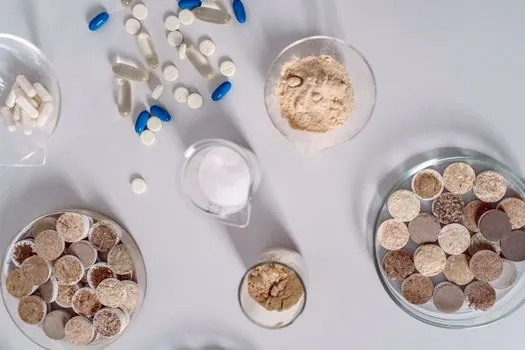
Specifying a base resin against four decision criteria puts the choice in one table. Epoxy leads on chemical resistance and heat tolerance with tensile strength 55–130 MPa and cure shrinkage 1–5% [S4]. Polyurethane leads on flexibility and elongation, suits dissimilar substrates, and is available in bio-content grades up to 59% [S4]. Acrylic leads on UV stability, clarity, and impact resistance, and is the easiest to co-polymerize for application-specific tweaks [S4]. Phenolic leads on heat resistance and toughness, with tensile modulus 4–7 GPa and cure shrinkage 2–4% [S4].
Cost per kilogram of active polymer is lowest for phenolic and polyvinyl acetate, mid-range for acrylic and polyurethane, and highest for high-purity epoxy and bio-based TPU. For exterior structural plywood and oriented strandboard, phenolic dominates because of heat and moisture durability. For flexible packaging laminates and footwear, polyurethane dominates. For UV-exposed transparent joints and medical assemblies, acrylic dominates. For electronics potting and PCB encapsulation, epoxy dominates, and the question of resin versus finished advanced material adhesive is settled by whether the formulator needs a filled, thixotropic, or pre-degassed system.
Who Should Order Resin, Who Should Order Formulated Adhesive
Order the synthetic resin base when the buyer is a formulator, compounder, or downstream coater who needs to add their own fillers, accelerators, pigments, or tackifiers and who can run mixers, vacuum degassing, and viscosity QC on site. Order the formulated adhesive when the buyer is a contract assembler, a maintenance crew, or a high-mix low-volume job shop that needs shelf-stable, viscosity-controlled, certified product with a published TDS and MSDS. Wood-products plants that bond large volumes of plywood, particleboard, or oriented strandboard are the canonical resin buyers, with North American adhesive resin solids demand around 1.6 × 10^9 kg per year bonding roughly 57 × 10^6 m³ of glued wood products as of the late-1990s baseline that still shapes today's forestry supply chain [S1].
The boundary is not always sharp. Some epoxy and polyurethane systems ship as two-part kits where the resin and hardener are both finished components, and the buyer's job is to meter and mix them at the gun. That case sits on the formulated-adhesive side of the line even though the resin itself is still a raw material in the chemical sense. The same applies to hot-melt adhesive pellets, which are a fully formulated thermoplastic system delivered in solid form for re-melt application [S5].
Limitations, Failure Modes, and Storage Discipline
Thermoplastic systems give good adhesion and strong bonds at normal temperatures, but can be brought back to the liquid phase by applying high heat, which is both a process advantage for rework and a service limit under sustained elevated temperature. Thermoset systems cure irreversibly, which is why they tolerate chemical and heat service but cannot be reworked. Resins with high bio-content, like Pearlbond ECO 590 HMS TPU at up to 59% bio [S4], can show different rheology and shorter open time than their 100% petrochemical equivalents, so test the full bonded assembly before approving a substitution.
Storage discipline differs by class: cyanoacrylates and moisture-cure systems are humidity-sensitive; epoxies have a defined pot life once Part A and Part B are mixed; phenolic dispersions have limited shelf life and can phase-separate below 5 °C. Tracking signals to watch over the next two reporting cycles: the 2026 CBAM phase-in for chemical imports into the EU, and any further bio-based capacity announcements from major resin producers that would change the supply curve for PEEK-class and POM-class high-performance polymer precursors used in structural bonding.
Background reading: Poker Head Length vs Concrete Layer Depth: Spec Rules for Layer Pouring.