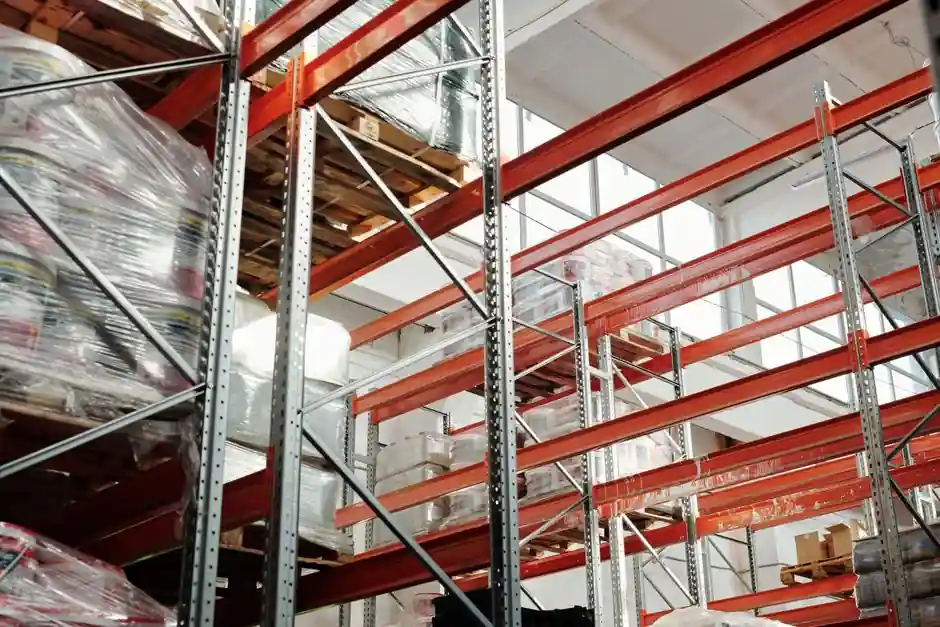
Load-cell tank weighing measures mass directly, while radar measures distance and converts it to inventory through tank geometry and product density.
Level sensors are a reasonable choice for very large storage tanks and underground tanks when only an approximate indication of how full the tank is needed.
Decision Basis: Mass Versus Calculated Volume
A weighing system supports load cells beneath the tank legs or supports, combines their signals in a junction box, and sends the total to a weighing indicator. The result is a direct mass measurement, with no strapping-table, tank-shape, or density conversion required [S3]. A weighing indicator is therefore the measurement endpoint for inventory, dispensing, and batch-control systems based on load cells.
Radar instead measures the liquid surface position. The level can be linearized to volume for cylindrical, spherical, or tank geometries with conical sections, but the conversion still depends on tank dimensions and, when mass is required, product density. Standard free-air radar and guided-wave radar instruments can offer accuracies down to several millimeters, which is sufficient for general inventory requirements [S1].
The distinction matters because measurement accuracy is not the same as inventory accuracy. A radar level instrument may resolve a small height change accurately and still produce a larger mass error if the tank calibration or density is wrong.
Criterion-Based Comparison of the Main Options
Tank weighing is normally preferable when the vessel is supported and direct mass is required. It is less dependent on liquid surface condition, foam, crusts, tank shape, and density assumptions, and it integrates directly with batching and inventory reconciliation. A practical installation needs compatible weigh modules, solid supports, and flexible pipe connections so external piping does not impose an unmeasured load on the load cells [S3].
Radar is preferable when the tank cannot be supported on load cells. The research identifies underground tanks and very large field-erected tanks as practical radar applications, since neither is readily weighed [S3]. Radar also avoids the structural work required to isolate a weighing vessel from attached piping and supports. The installation must still account for tank geometry, product temperature, density, vapor, foam, and the radar signal path.
Against four decision criteria, weighing wins on direct mass accuracy, shape independence, and integration with filling or batching. Radar wins on installation practicality for buried and very large tanks, and on suitability where a vessel cannot be structurally unloaded. Weighing has the higher mechanical installation burden. Radar has the higher data-conversion burden when custody or invoicing depends on mass rather than level.
Accuracy and Inventory Error

Standard free-air radar and guided-wave radar instruments can offer accuracies down to several millimeters, which is sufficient for general inventory requirements [S1]. That margin is often adequate for bulk raw materials that do not change ownership. For oils, fuels, edible oils, alcohols, some solvents, and juices, inventory or Automatic Tank Gauging requirements are tighter [S1].
Small level error produces a large volume error in a wide tank. Radar accuracy alone does not remove this geometric amplification.
Tank weighing removes the level-to-volume step from the primary mass calculation. It is therefore easier to defend in trade, stock control, delivery reconciliation, and theft investigations. For custody transfer, the system must still satisfy the applicable legal metrology, proof-testing, and overfill requirements; a weighing instrument is not automatically an approved custody-transfer system [S2].
Product and Process Suitability
Weighing is the stronger choice for LPG, diesel, vegetable oil, chemicals, syrup, water, foaming liquids, viscous products, and materials that form crusts, because load cells do not infer inventory from the appearance of the surface [S3]. The same principle supports batching by mass, dispensing, and filling operations where the target is kilograms or tonnes rather than litres.
Radar is the stronger choice when a remote level signal is required without adding load cells or modifying tank supports. It is used for general process tanks, bulk storage, and large inventory vessels [S1][S2]. For non-contact measurement, radar can operate where a contact device would face diaphragm or seal corrosion, although condensation and vapor still require installation and maintenance planning [S4].
Neither method should be accepted for every physical condition. Level sensors require an accurate strapping table, the correct product density, and a calm, flat product surface, while load-cell-based weighing systems measure the amount in a tank directly [S3]. A level transmitter is appropriate when radar is selected for continuous level and the required volume output.
Installation, Integration, and Lifecycle
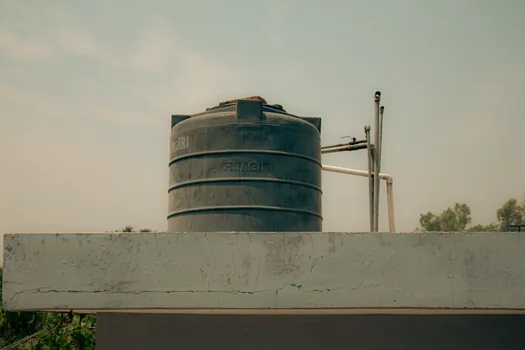
Radar generally requires a shorter mechanical retrofit for an existing vessel. It must be mounted with an unobstructed measurement path, and the signal performance depends on the antenna arrangement and product conditions.
Weighing requires more planning but creates a clearer measurement path from load cell to junction box to indicator. The tank must rest on suitable load-bearing supports, and attached lines must be sufficiently flexible. Complete systems with load-cell modules and an indicator are common starting configurations for vessels of approximately 1–30 tonnes; a smaller vessel can use three 5-tonne weigh modules with a junction box [S3].
For high-throughput inventory, integration effort shifts toward different data tasks. Radar needs tank tables, level-to-volume conversion, and density or temperature compensation when mass is required [S1][S3]. Weighing supplies mass directly, but the application still needs calibration, zero tracking, overload protection, and reconciliation procedures. The supporting load cell selection guide addresses the load-cell choice that determines weighing-system performance.
Custody, Standards, and Acceptance Criteria
API standards define Automatic Tank Gauging systems for higher-accuracy inventory applications, and the selection scope includes legal metrology, proof testing for overfill prevention, and custody transfer [S1][S2]. These requirements apply to the complete gauging system, not only to the radar or load cell. A radar-only proposal should define temperature correction, density correction tables, tank calibration, repeatability, and legal acceptance before purchase.
For an inventory weighing system, specify load-cell capacity, weighing range, sensitivity or division count, excitation voltage, output signal, ingress protection, overload capacity, temperature limits, and material compatibility. For a radar system, specify the measured range, accuracy, antenna type, process connection, process temperature, pressure rating, output protocol, and certification required by the installation. Guided-wave radar level is the relevant radar family where a guided probe is better suited than a free-air installation.
For custody transfer, the supplier and operator should define the measurement uncertainty at the delivered mass, not advertise level accuracy alone. An unresolved density, calibration, or installation issue can erase the benefit of a ±2–3 mm level instrument [S1][S2].
Application Recommendations
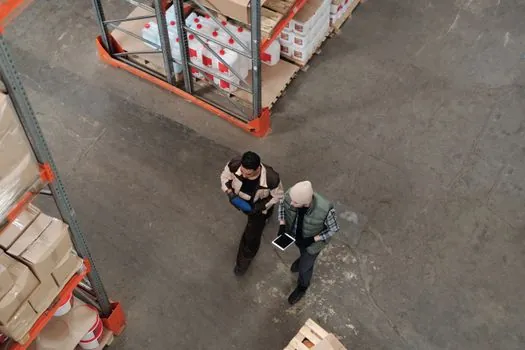
Specify load-cell weighing for supported vessels used for LPG filling, chemical dosing, food and beverage batching, custody reconciliation, and applications where foam, viscosity, crusts, cone bottoms, or horizontal geometry compromise level conversion. A common initial envelope is approximately 1–30 tonnes, subject to structural verification, piping flexibility, product density, and required weighing performance [S3].
Specify radar for underground tanks, very large field-erected tanks, ordinary process vessels, and sites where adding load cells is structurally impractical. Choose custody-grade configuration only when temperature and density compensation, tank tables, legal metrology, overfill proof testing, and acceptance criteria are part of the project scope [S1][S2].
The next procurement check is a measured comparison: record one survey level, one radar-derived mass, and one weighed mass under the same fill condition. If the mass discrepancy is stable, correct calibration or density inputs; if it varies with fill, investigate supports, piping loads, geometry, foam, or signal effects before selecting replacement hardware.