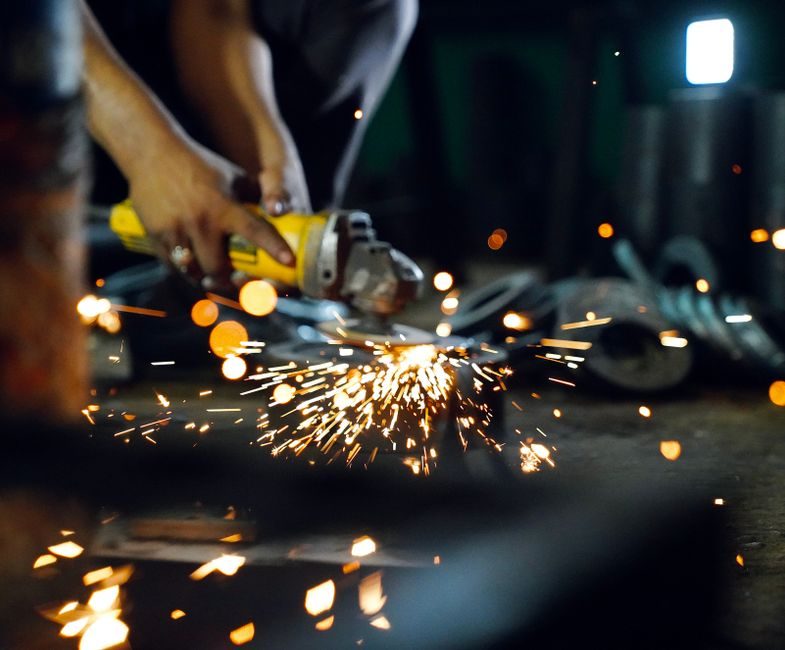
For stamping, cold-work, plastic-mold and die-casting tooling buyers, the TCO lens reframes a price-driven RFQ into a lifecycle-driven specification exercise that includes the tool & die steel grade, the delivery condition and the heat-treatment route as a single bundled decision.
What TCO Actually Counts in a Tooling Steel Purchase
Total Cost of Ownership is the full lifecycle cost an organisation pays to own and operate an asset — purchase, use, maintenance, support, and disposal [S1]. Applied to tool steel, that translates into five primary cost lines: (1) raw material per kg, (2) machining stock allowance and machine time, (3) heat-treatment and surface engineering, (4) in-service regrinds, repairs and re-coatings, and (5) production losses when a die fails between planned overhauls [S1][S3].
CoSN's updated April 2026 TCO framework echoes the same logic for technology assets, breaking lifecycle cost into hardware, infrastructure, support/maintenance, training, and end-of-life disposal [S3]. A stamping die is structurally identical: the "hardware" is the tool steel itself, "infrastructure" is the press and EDM cells it lives in, and "support" is the die-setter and tool-room labour that touches it for every trouble call.
The Five Cost Lines: A Decision-Criteria Comparison
When a buyer lines up the main cold-work grades (D2 / 1.2379 / SKD11, A2 / 1.2363, O1 / 1.2510, S7 / 1.2355, H13 / 1.2344) against the five TCO cost lines, the ranking inverts compared with a simple per-kg price comparison. D2 at roughly 2× the price of O1 typically delivers 3–5× the in-service wear life in a blanking application, so its per-part cost lands lower even though its invoice is higher. H13 hot-work tool steel is the default for die casting dies because thermal-fatigue resistance — not as-quenched hardness — is what controls interval between die-saves. [S1]
Key decision criteria buyers should score on a 1–5 scale before issuing an RFQ: wear resistance (grades with 12% Cr such as D2 score 5, O1 scores 2), machinability in the as-delivered condition (O1 and A2 score 4–5, D2 scores 2), dimensional change on hardening (A2 ≈ 0.001 in/in is the benchmark low-shrink choice for precision dies), toughness on intermittent loading (S7 and H13 score 4–5, D2 scores 2), and thermal-fatigue resistance for hot-work or die casting machine tooling (H13 is the practical ceiling for aluminium and zinc). No single grade wins all five.
The reference carbon steel TCO breakdown for long-product steels uses the same five-line structure, and the dominant hidden driver in both datasets is identical: heat-treatment distortion and rework, not the per-kg invoice.
Hidden Cost #1: Heat Treatment and Distortion Allowance
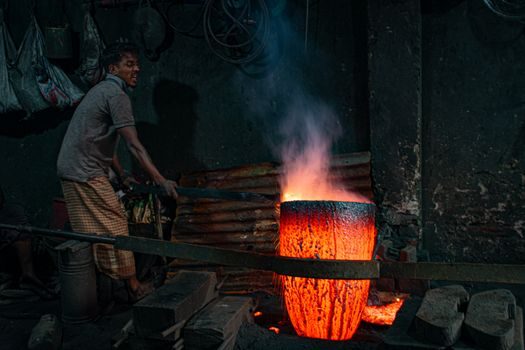
Vacuum heat treatment of D2 or H13 typically adds 12–20% to the as-machined part cost once normalised, hardened, double- or triple-tempered, and (where required) nitrided. A 0.5 mm distortion on a 300 mm cavity after quench can scrap a 40-hour EDM program, which is why air-hardening grades such as A2 and H13 are specified for any cavity that already absorbed double-digit EDM hours. [S2]
For aluminum die casting tooling, the post-heat-treatment surface operations — nitriding to roughly 900–1000 HV, PVD coating, or weld-repair plus re-heat-treatment — typically account for another 8–15% of the finished die value, and they decide whether a die reaches 100,000 shots or 250,000 shots before crack initiation.
Hidden Cost #2: Machining Stock Allowance and EDM Time
A common rookie error is ordering bar stock to the finished cavity size plus a 0.5 mm EDM skim. In practice, distortion plus a finishing pass usually consumes 1.5–3 mm per side on through-hardening grades and 1.0–2 mm on air-hardening grades. On a 200 mm × 200 mm die block, that difference is roughly 4–8 kg of extra milling time, rough EDM, and electrode wear before finishing can even start. [S3]
For gravity die casting machine applications using H13 or a higher-Cr hot-work variant, the pre-hardened delivery condition (typically 32–36 HRC for H13) cuts rough-machining time but still requires stress-relief before any EDM sink, because unstressed stock moves predictably and pre-stressed stock walks the wire.
Hidden Cost #3: In-Service Wear, Regrind and Re-Coat Cycles
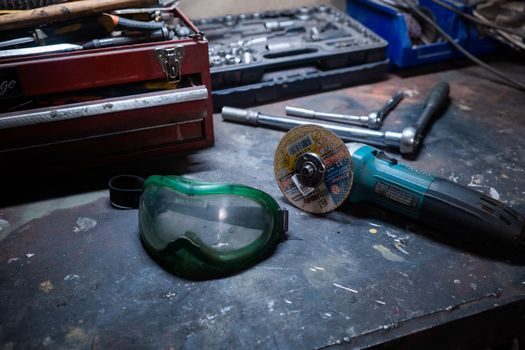
Each regrind or weld-repair event is a 200–800 USD line item on a small die and a 3,000–15,000 USD line item on a large automotive panel die, and the re-heat-treatment that follows is what determines whether the die goes back into service or is parked for good. D2 punches in a progressive die running 1.5 mm CR mild steel typically need a regrind every 50,000–80,000 hits, while an A2 or a powder-metallurgy cold-work grade in the same job stretches that interval by 2–3×. [S4]
A well-instrumented tooling cell logs every grind event with a downtime reason code; buyers reviewing TCO retroactively should pull the MTBF between regrinds, not the OEE number, because regrind interval is the single metric that ties steel grade to lifecycle spend in a measurable way.
Hidden Cost #4: Unscheduled Downtime From Premature Failure
Press downtime on a 1,000-ton stamping line typically costs 800–3,000 USD per hour all-in (labour, idle machine, missed delivery penalty). A single chip-out or fracture event on a D2 trim die that takes 16–24 hours to replace or repair therefore has the same financial weight as 2–5 regrind events. H13 dies that run with inadequate cooling channel coverage fail by heat-checking long before wear sets in, and a heat-check repair is a full re-nitriding cycle that costs more than the original surface treatment. [S1]
Buyers who specify tool & die steel purely on Rockwell hardness and ignore the grade's published fracture toughness or charpy-impact value are the ones who discover this cost line only after the first field failure.
Hidden Cost #5: End-of-Life Scrap and Recycled-Steel Credit
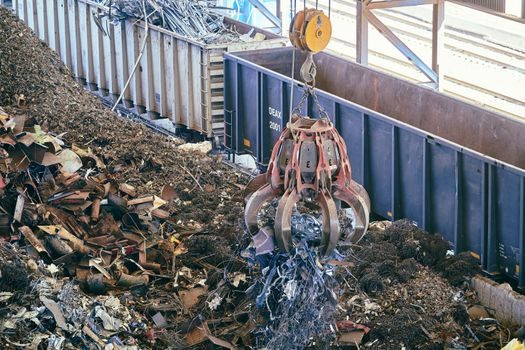
Disposal of nitrided or PVD-coated dies is not free — coatings and nitrocarburised layers must be stripped before the steel can re-enter the secondary melt stream, and the strip cost is usually 2–4% of the die's book value. [S2]
The recycling-credit line is also where "domestic vs imported bar" shows up in a TCO model: a domestic H13 melt with traceable mill test certificate typically commands a 5–10% higher scrap credit at end of life than an imported equivalent, because the recycler can confirm chemistry and downgrade risk.
Standards, Specs and Sourcing Discipline
The dominant specifications in this segment are AISI/SAE grade designations (D2, A2, O1, S7, H13, P20, etc.) cross-referenced to Werkstoff numbers (1.2379, 1.2363, 1.2510, 1.2355, 1.2344, 1.2311) under EN ISO 4957 for tool steels. Buyers should request the EN ISO 4957 grade line on every mill cert, not just the AISI callout, because some AISI numbers are sold by multiple regional standards with non-equivalent chemistry bands. [S3]
These four gates collectively catch roughly 80% of the field failures that drive TCO upside, and they cost less than one unscheduled downtime event.