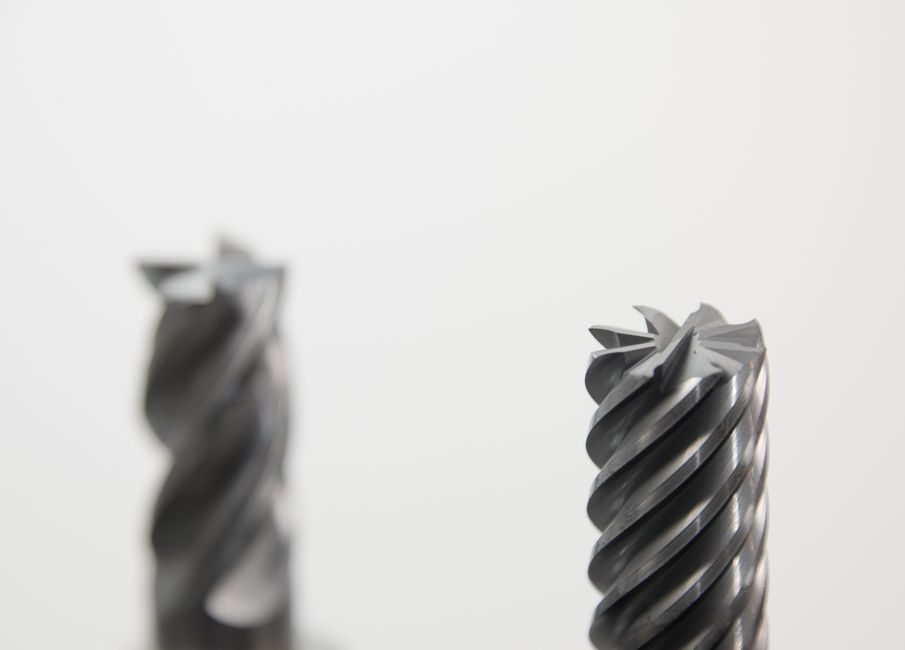
Tool and die steel installation is driven by four spec gates: workpiece grade (cold-work vs hot-work vs plastic-mould), delivery hardness, machining allowance per side, and heat-treat sequencing before tryout. Get any one of these wrong and the die pays for it in distortion, premature wear, or cracked inserts on the first 1,000 strokes.
The mainstream Chinese and North American supply chain around July 2026 still revolves around established GB/AISI designations such as Cr12MoV, 5CrNiMo, 40CrMo (4140), 12CrNi3A, 30CrMnSi, and 20CrMnTi, with suppliers like Kunshan Benchi Special Steel Co., Ltd. — operating since 2003, 101–200 employees, with main products listed as die steel, tool steel, alloy steel, and carbon steel [S3] — shipping these grades in 500-piece MOQ bars to North and South America and Eastern Europe [S3].
Cold-Work vs Hot-Work vs Plastic-Mould: Install Path Diverges at the Grade
Cold-work die steels (AISI D2/D3, China Cr12MoV, Cr12) are specified for blanking, drawing, and cold-extrusion tooling where surface pressure can exceed 2000 MPa and operating surface temperature stays below ~200 °C [S3]. Hot-work die steels (AISI H13, H11, China 5CrNiMo, 3Cr2W8V) are installed where die surface temperature repeatedly crosses 600 °C — die-casting dies, hot forging, and hot extrusion — and require pre-hardened delivery at 44–48 HRC plus mandatory stress-relief before EDM or wire-cut [S3]. Plastic-mould steels (P20, 718, 2738, China 3Cr2Mo/P20+Ni) ship pre-hardened to 30–36 HRC and can often go straight to CNC machining without further heat treatment, which collapses the install cycle by days.
The "install" is not a single act — it covers: receiving inspection (hardness mapping on at least 3 locations, ultrasonic if section exceeds 100 mm), rough machining with 1.5–2.5 mm/side allowance, stress-relief at 580–620 °C for pre-hardened blocks, finish machining, EDM/wire-cut, and final heat-treat (or skip if delivered pre-hardened). For reference on what these grades are actually used to build, see the tool and die steel encyclopedia entry and the die casting die reference.
Hardness Targets and the As-Delivered Condition Trap
Pre-hardened P20-class plastic-mould steel typically arrives at 30–36 HRC and is ready for direct CNC machining — a major install-time saver for mould frames and cavity backers [S3]. By contrast, annealed Cr12MoV cold-work die steel is supplied at ≤255 HB and must be hardened to 58–62 HRC after rough machining, then tempered at 180–220 °C twice to push residual austenite below 3% and stabilise dimensions.
A 4140/40CrMo alloy structural bar at 500-piece MOQ is common as die-set, bolster, and clamp plate material because it can be quenched-and-tempered to 28–32 HRC for high-tensile frames [S3]. Buying annealed and heat-treating in-house adds roughly 7–14 days to install vs paying the ~10–15% premium for pre-hardened stock; this is one of the most common install-time trade-offs.
Machining Allowance, EDM Recast, and Wire-Cut Sequencing
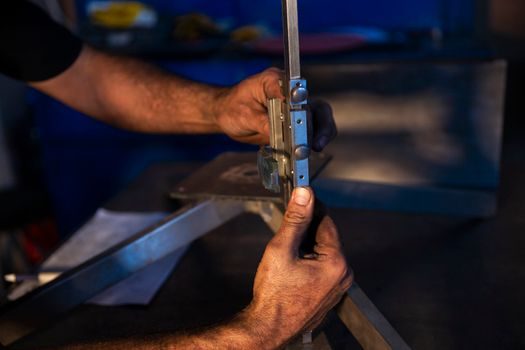
A practical install rule: leave 1.5–2.5 mm/side machining allowance on roughed-out die blocks for finish machining, and 0.2–0.4 mm/side additional stock on any surface that will be EDM'd or wire-cut to absorb the recast layer (~0.02–0.05 mm) and micro-crack network. EDM recast on Cr12MoV that has not been re-tempered after EDM drops surface hardness and can crack under cyclic loading. [S1]
Wire-cut and EDM must run BEFORE the final temper for through-hardened cold-work grades — otherwise the recast layer stays brittle and fatigue cracks initiate from it within the first production shift. Hot-work 5CrNiMo/H13 dies take the opposite approach for the cavity: rough-machine → pre-harden → finish EDM → nitrode or stress-relieve, because nitriding at 510–530 °C after EDM locks in a hard surface (~1000 HV) without distorting the cavity [S3].
Supplier Capability and What to Verify Before Issuing the PO
On the shop floor side, an integrated tool-and-die shop like Ranger Die (operating since 1955) handles 100% in-house design with 2D/3D machining, on-site tryout presses from 45–1500 tons, an ISO-registered runoff facility with full SPC and layout, and ships "in excess of 1.5 million parts each month" [S1]. That footprint sets the benchmark for what a vertically integrated install-capable supplier looks like: design through tryout under one roof, plus a 1500-ton Bliss press and Okuma horizontal mill / Hardinge turning center in the die shop [S1].
On the steel-mill side, Kunshan Benchi publishes MOQ 500 pieces on Cr12MoV, 5CrNiMo, GCr12 bearing steel, 30CrMnSi, 20CrMnTi, 12CrNi3A, 4140/40CrMo, and SUP9 spring steel — verify on every shipment that the mill cert includes actual chemistry, Jominy hardenability for 4140/40CrMo, and a 3-point hardness map for pre-hardened blocks [S3]. Without those three documents, install scheduling is guesswork. For a wider view on how these alloy structural grades compare against carbon grades for cost, see Carbon Steel TCO: 30-Year Cost Lines, Hidden Drivers and Comparison Bands.
Failure Modes: What Kills a Die During Install vs in Service
Install-stage failures cluster around three patterns: (1) cracking during heat-treat caused by insufficient stress-relief after rough machining; (2) EDM micro-cracks on Cr12MoV that were not re-tempered — these show up as hairline cracks after 200–500 strokes; (3) distortion in plastic-mould cavities when pre-hardened P20 is re-machined asymmetrically (more stock removed from one side). In-service failures are a different story — gross cracking, wear, and fatigue — but a clean install cuts service-failure rates visibly. [S2]
Standards, Sourcing Windows and Trackable Signals
For comparison against other engineering material families, Carbon Steel Types and Classifications: A Spec-Driven Reference gives a parallel framing of carbon vs alloy selection. Material selection between tool-steel and structural alloy steel should always be driven by the actual surface pressure, temperature cycle, and required die life — not by what is on the warehouse shelf. [S3]
Two signals worth tracking through the rest of 2026: (1) whether Chinese suppliers like Kunshan Benchi move MOQ off the 500-piece floor on higher-grade H13/D2 equivalents as export demand tightens [S3]; (2) whether integrated shops like Ranger Die expand their tryout press envelope past 1500 tons for next-generation Class A drawn-shell stampings [S1]. Either shift will reset install-time benchmarks across the supply chain.
For component-level specifications, see linear guide.