
Amazon Robotics, Mobile Industrial Robots, Geek+, Locus Robotics, and GreyOrange appear across multiple 2026 AMR supplier comparisons, but the strongest fit depends on navigation maturity, payload, workflow, software, and service coverage rather than ranking position alone [S1][S2][S3][S4].
What counts as a leading AMR manufacturer
An autonomous mobile robot uses onboard sensors, cameras, LiDAR, and mapping or SLAM algorithms to navigate without magnetic strips or fixed guide paths, while an AGV robot normally depends on fixed infrastructure such as rails, magnetic tape, or marked routes [S1][S2][S4].
The leading supplier set is not a single technical league table. One 2026 review evaluated 30 companies against commercial maturity, product breadth, real-world deployment, specialization, software capabilities, integration options, and global relevance, and explicitly stated that its list was not ranked from best to worst [S3].
Buyers comparing bar-code-guided automatic guided vehicles with sensor-based AMRs must also verify whether their chosen route strategy remains reliable under changing layouts and traffic.
Five makers with distinct operating strengths
Geek+ covers picking and sorting systems, including its P Series for shelf-to-person picking with payloads up to 1,000 kg and its PopPick tote-to-person line for high-density picking applications [S3][S5].
Warehouse, factory, and fleet comparisons
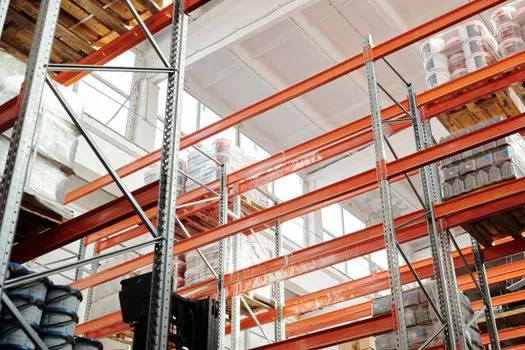
The main comparison criteria are navigation, payload, fleet scale, workflow fit, and integration burden. On navigation, sensor-based AMRs use LiDAR, cameras, and inertial data to build maps and plan routes, while barcode-guided systems depend on readable route references [S1][S2][S4].
That operating scale is valuable evidence for fleet management, but Amazon Robotics is not a general off-the-shelf procurement list for factories. The most relevant buyers are large fulfillment operators that can integrate tightly with their own processes and software.
Selecting a supplier through workflow evidence
The same guidance recommends defining the exact movement, load, pickup and drop-off points, traffic conditions, integration requirements, and service expectations before selecting a robot [S3].
A company-level shortlist does not replace a model-level duty-cycle, floor-surface, gradient, payload, and endpoint test.
Where each maker is the wrong choice

Amazon Robotics is a poor default for an end user seeking a standalone commercial AMR because its strongest evidence concerns proprietary fulfillment automation inside Amazon's own network [S2][S4]. MiR, Locus, Geek+, and GreyOrange are more plausible candidates for external buyers, but their strongest applications remain different: industrial intralogistics, picking, warehouse fulfillment, and fulfillment orchestration respectively [S3].
Autonomous forklifts from Vecna or heavy industrial platforms from OTTO and KUKA should not be treated as substitutes for low-payload shelf-to-person robots [S3]. A goods-to-person fleet also fails as a workflow solution if the constraint sits in picking ergonomics, tote presentation, inventory accuracy, or WMS transaction processing rather than transport time.
Integration and operating constraints dominate the purchase
An AMR fleet can navigate dynamic spaces, but the business result depends on mapping, traffic management, charging, WMS or ERP interfaces, safety behavior, and exception handling [S1][S2][S5]. The research estimates the global AMR market at $2.75 billion in 2026 and projects $7.07 billion by 2032, a 14.4% compound annual growth rate [S2][S4].
Buyers should also budget beyond the robot price. The 2026 supplier comparison identifies software, integration, and support as cost elements that matter more than sticker price alone [S2]. Fleet purchases also need a controlled test covering localization accuracy, obstacle response, floor condition, traffic congestion, payload variation, charging strategy, and recovery after a blocked route.
Standards and service evidence to request

ABB's AMR portfolio is described as using safety sensors and algorithms for obstacle detection and stopping, while its systems can be integrated with robotic arms, conveyors, and automated storage systems [S1]. Buyers should request the applicable safety documentation for the exact model and installation instead of relying on a generic company-level claim.
Global service is a separate discriminator. The warehouse evaluation model gives global delivery capability a 5% weighting, but it remains relevant for multi-country projects because overseas projects require local maintenance and spare-parts support [S5]. Ask each bidder for deployment counts in comparable facilities, application cycle time, mean time to repair, escalation response, software support terms, and the number of technicians serving the deployment region [S1][S5].
A defensible shortlist should preserve MiR, Geek+, Locus Robotics, GreyOrange, OMRON, OTTO, Seegrid, Vecna, KUKA, and ABB for the workflows their published product positions support, while treating Amazon Robotics as a benchmark for large-scale fulfillment rather than a general supplier shortlist [S1][S2][S3][S4].
The next procurement gate is a model-specific pilot using the actual load, route length, traffic density, pickup interface, and WMS or ERP interface, followed by a total-cost comparison covering fleet hardware, integration, support, charging, and exception handling [S2][S3][S5].