
As of 2026-06-30 the global CNC market resolves into three distinct tiers: large-format aerospace-grade OEM builders (Hunan/Nanjing Ningqing, 35+ years in CNC manufacturing, national high-tech enterprise status) [S6]; Chinese profile-processing specialists such as LEADCNC (founded 2007) running the Ultra X150 / X260-E / X380 / Turquoise 350R lines with integrated laser sawing-milling and wireless measurement [S2][S7]; and contract job shops whose capacity is measured in square footage and machine count rather than product catalog (Noble-X: 5 Midwest locations, 160,000 sq ft [S4]; Phoenix Companies LLC: 12,000 sq ft, continuously US-owned since 1967, now housing CFMI, TEK-AM, and MC Engraving [S5]).
The selection problem for a process engineer is therefore not "who is the best CNC company" but "which tier fits the work envelope" — a 5-axis aerospace gantry, an aluminium curtain-wall saw-milling centre, and a low-volume DoD PCB enclosure run live in three different commercial universes. For buyers mapping capacity to a 2026 RFQ, the audit trail in [S8] (Top Precision LLC publishes capability statement, facilities list, ISO certificate, and ITAR registration as direct downloads) is the cleanest spec-document pattern to demand from any shortlist candidate [S8].
Tier 1 — Aerospace & Heavy-Duty OEM Builders (China)
Ningqing Aerospace Intelligent Equipment (Nanjing) Co., Ltd. self-describes as a "national high-tech enterprise with over 36 years of experience, specializing in advanced CNC machine tools and aerospace equipment" [S6]. Buyers in this tier are typically Tier-1 aerospace primes or defence integrators specifying 5-axis gantries, large-format vertical/horizontal machining centres, and dedicated aerospace component cells; the commercial motion is project-based, with acceptance tied to ITAR/EAR flow-down and AS9100 rather than catalogue SKUs. For process engineers comparing OEM machine-tool builders against higher-volume categories like a filling machine or a coding machine, the gating metric is geometric accuracy over a stated work envelope, not throughput per minute — a parameter that does not exist on packaging-line equipment datasheets.
Tier 2 — Profile & Specialised Material OEMs (Aluminium, Wood, Composite)
LEADCNC's mid-2026 catalogue clusters around aluminium-profile processing: Ultra X260-E "High-Performance Intelligent Laser-equipped Sawing and Milling Machining Center", Ultra X380 "Intelligent Sawing and Milling Machining Center for Curtain Wall", Ultra X150, and the Turquoise 350R CNC Cutting Center with wireless measurement [S7]. The common envelope is a 3- or 4-axis machining head on an extruded-aluminium work bed, paired with a sawing unit and (in the X260-E) an integrated laser for weld-prep or scribing — useful for curtain-wall, window, and aluminium-furniture production lines. On the woodworking flank, iGolden CNC's "CNC wood carving machine" line frames the machine as "machine frame + CNC controller + spindle" with motion governed by G-code from CAD/CAM [S3] — the same control stack a cutting machine used in fabricated-metal shops runs, just retuned for lower spindle RPM and higher dust load.
Tier 3 — Contract CNC Job Shops (US Midwest, Mid-Atlantic, India)
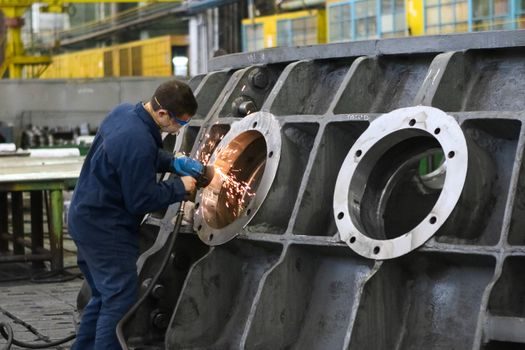
Capacity here is published as floor area and machine count. Noble-X runs 5 Midwest locations on 160,000 sq ft with vertical and horizontal CNC machining centres, EDM, precision grinding, structural steel fabrication, and large-part machining [S4]. Phoenix Companies LLC operates a 12,000 sq ft Northern Virginia facility — "continuously owned and operated in the United States since 1967" — and is now the home for the absorbed brands CFMI, TEK-AM, and MC Engraving, producing custom PCB computer enclosures for DoD, U.S. military, and corporate clients [S5]. Top Precision LLC self-identifies as a "PRECISION CNC MACHINE SHOP" with downloadable capability statement, facilities list, ISO certificate, and ITAR registration — the four documents most US defence primes request in 2026 [S8]. In India, cncMall frames itself around "Top CNC Machines Manufacturers in Ahmedabad" and "Industrial Robots Suppliers in India" with "precision-engineered machinery for superior performance and durability" and "cutting-edge solutions revolutionizing industrial processes for efficiency and precision" [S1].
Selection Criteria — How to Map Tier to Work Envelope
Four decision gates reliably separate the tiers in 2026 RFQs. (1) Workpiece envelope: gantry OEMs (Tier 1) ship machines with travel measured in metres; Tier 2 profile OEMs work in the 1.5–6 m curtain-wall range; Tier 3 job shops rarely quote above 2 m and rely on long-bed horizontal machining centres. (2) Tolerance and certification: Tier 1 buyers ask for AS9100 / NADCAP reports, Tier 2 buyers accept ISO 9001 plus material traceability on aluminium billet, and Tier 3 buyers on DoD work additionally produce an ITAR registration artefact [S8]. (3) Lot size: Tier 2 lines are designed for continuous 1-shift or 2-shift production of identical parts, whereas a job shop at Phoenix Companies routinely cycles small-batch PCB enclosures through the same cell [S5]. (4) Make-vs-buy decision: a Tier 1 OEM is rarely the right supplier for a 50-piece prototype run, and a Tier 3 job shop is rarely the right supplier for an annual 200,000-piece curtain-wall programme — capacity audits in square feet and machine count catch both mismatches.
A useful internal cross-check for buyers moving between categories: a core machine selection (foundry sand cores) and a CNC machining-centre selection both turn on platen/envelope, repeatability, and shot-weight or chip-load throughput — the gating data, not the marketing copy, is what scales. The same logic shows up in the shot-blasting machine family: machine selection there is dictated by abrasive type, throughput gates, and surface-finish spec, not by brand prestige [news].
Document Discipline and Compliance Artefacts

The clearest 2026 audit pattern is document transparency. Top Precision LLC publishes four documents as direct downloads — capability statement, facilities list, ISO certificate, ITAR registration [S8] — and Phoenix Companies LLC publishes its US-ownership history ("continuously owned and operated in the United States since 1967") plus named absorbed brands (CFMI, TEK-AM, MC Engraving) on its home page [S5]. For aerospace work, the parallel ask is an AS9100 certificate, NADCAP audit records for any special process (heat treat, NDT, surface finish), and a documented machine accuracy statement in mm/m of travel — none of which is in scope for a typical 2026 shortlist, but all of which are gating on Tier 1 programmes.
Limitations and Failure Modes Buyers Hit in 2026
Three failure modes recur across tiers. First, mixing envelope expectations: a buyer who treats a profile-processing OEM (Ultra X260-E class) as a heavy-stock-removal 5-axis gantry will overspec spindle power and underspec work-bed stiffness. Second, treating "36 years of experience" or "founded 2007" [S2][S6] as a proxy for current R&D output — the verifiable signal is the active product line on the sitemap, e.g. LEADCNC's Ultra X150 / X260-E / X380 / Turquoise 350R [S7], not the company-history counter. Third, on the job-shop side, floor area and location count (160,000 sq ft across 5 Midwest sites [S4]) are not the same as machine-park capability; a serious RFQ still asks for a machine list with travel, ATC capacity, and control model per asset, much as a labeling machine spec sheet spells out label width, speed, and applicator head.
Sourcing Routes and Verification Standards

For 2026 sourcing, the working pattern is: (a) shortlist three to five vendors per tier, (b) demand the four-document package (capability statement, facilities list, ISO/AS9100 certificate, and ITAR or equivalent export-control registration where DoD work is in scope) [S8], (c) match envelope to lot size using the four gates above, and (d) require a site or virtual FAT with measured geometric accuracy per ISO 230-2 or equivalent machine-test standard. CNC machine procurement is one of the few industrial buys where the test standard is the contract — insist on the specific ISO 230 or VDI 3441 paragraph the acceptance test will run against, not the vendor's own "accuracy statement" in the brochure.
Trackable next-node signals to monitor through Q3 2026: Ningqing Aerospace's release of new aerospace-component cell SKUs on [S6]; LEADCNC additions to the Ultra-series on [S2][S7]; and any further shop-floor consolidation announcements from US job shops modelling Phoenix Companies' acquisition of CFMI, TEK-AM, and MC Engraving [S5].
For related coverage, see Desalination 2026: RO dominance, ERD retrofit wave, and the spec map engineers use to.