
Process engineers buying a turbidity meter in June 2026 face a fragmented catalog: portable colorimeters around USD 240 from Chinese OEMs [S4], field-installation probes for raw-water intakes [S1][S10], and inline NIR scattered-light sensors for high-purity process loops [S7]. MEIDENSHA's TUD-250 frame turbidity as a pollution-degree index for water works [S1], while optek markets the TF16-N at 11° scattered light for sub-FTU detection in brewing and pharmaceutical water [S7].
HORIBA's HU-200TB-W is documented for variable-turbidity locations such as raw-water intakes and sedimentation tanks [S10]; METTLER TOLEDO lists a separate continuous-turbidity product line for fermentation, filtration and other process applications [S9]. The technical decision is which optical geometry, sensor format, and calibration chain survive your specific suspended-solids envelope — not which vendor sounds the most complete on a datasheet. A practical primer on turbidity meter optical methods and units precedes the spec gates below.
Optical Method and Unit System
Four optical geometries dominate 2026 OEM datasheets: forward-scatter (11°), 90° side-scatter (nephelometric), 90° ratio (the LaMotte 2020I "Ratiometric Design" labeling per its 2026 product record [S3]), and NIR absorbance (optek TF16-N) for high-concentration streams [S7]. MEIDENSHA's TUD-250 also publishes ranges suitable for environmental monitoring, where higher NTU spans are routine [S1].
Unit selection is not cosmetic. ISO 7027-compliant instruments use 860 nm NIR; US EPA Method 180.1 uses 400-600 nm white light with a 90° detector. A drinking-water plant under EPA primacy usually needs Method 180.1, while a European brewery or a pharmaceutical WFI loop typically specifies ISO 7027. Mismatching the unit stack forces operators to keep parallel calibration sets and dual-formula reporting — a recurring line-item cost that the buying decision rarely captures upfront. For a deeper look at how conductivity meter units (mS/cm vs µS/cm) interact with turbidity compensation in CIP loops, the spec logic is similar in shape.
Sensor Format: Portable, Field-Install, Inline Probe
Portable meters — represented by LaMotte's 2020I infrared, backlit-LCD kit and by the ~USD 243 pH-meter-style turbidity SKUs on Made-in-China [S3][S4] — are aimed at grab-sample work, well-field visits and lab QA. The LaMotte 2020I is now flagged "Item Discontinued" by the supplier in Fisher's 2026 catalog, which means buyers who spec'd it must re-qualify a replacement before stock-outs hit field service [S3].
Field-installation probes sit at the basin wall. The HORIBA HU-200TB-W is explicitly framed for raw-water intakes and sedimentation tanks where the turbidity swings widely [S10]. MEIDENSHA's TUD-250 is positioned for environmental water-quality panels with similar location logic [S1]. Inline process probes — METTLER TOLEDO's continuous turbidity line and optek's TF16-N — mount in a pipe or in a flow-cell, output 4-20 mA plus a digital channel, and require a fixed mounting hardware list and a defined cleaning regime [S6][S7][S9]. A second useful cross-reference is the clamp meter selection mindset: just as a clamp meter choice is governed by jaw geometry and CT burden, a turbidity sensor's mechanical envelope — insertion length, window material, wiper or no wiper — is governed by the pipe or basin it actually lives in.
Calibration Chain: Formazin, StablCal, and Reference Standards
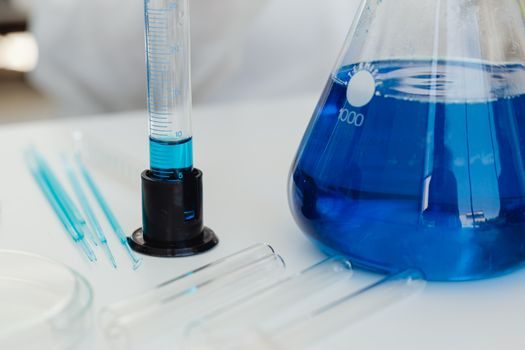
Every turbidity meter drifts; the buying question is how the calibration chain is sourced. Fisher Scientific's "Turbidity Meter Standards and Calibrators" category in 2026 stocks known-value chemical solutions from AccuStandard, Aqua Solutions, Beckman Coulter and others for standardization and calibration work [S2]. StablCal (a stable-formazin equivalent) and Formazin primary standards are the two reference chemistries the buyer must specify by name; mixing them across an enterprise invites 10-20% inter-unit bias on the same water sample. MEIDENSHA notes turbidity as the pollution-degree index for water, which implicitly makes the calibration chain a regulated asset rather than a consumable [S1].
For an inline NIR sensor like the optek TF16-N, the OEM additionally documents "Lifetime Stable Factory Calibration and Zero Point" with pre-calibrated ranges in EBC, FTU and ppm (DE) [S7]. The practical reading: if the OEM can prove factory-stability of the zero, you can run primary-standard verification less often and accept the cost-of-ownership trade. If not, plan a 4-week Formazin re-verification cadence into the maintenance budget. Accessories — sample cells, replacement lamps, chemical kits — are cataloged separately in the "Turbidity Meter Accessories and Replacement Parts" range at Fisher, with suppliers including Cole-Parmer, Grainger and Eisco [S5].
Decision Matrix: Four Optical Options Against Four Spec Gates
Below is the working comparison engineers use in 2026, drawn from current OEM datasheets and calibration catalogs. Read it as a filter, not a recommendation. [S1]
11° forward-scatter (optek TF16-N): best for very low turbidity, brewery and pharmaceutical clarity, factory-stable zero, NIR absorbance add-on for high concentrations [S7]. 90° nephelometric at 860 nm ISO 7027: best for European drinking-water compliance and most environmental panels, stable primary-standard chain, wide vendor support [S2]. 90° ratio white-light (LaMotte 2020I class, now discontinued) [S3]: best for portable grab-sample work in EPA jurisdictions, but the 2026 catalog record shows the SKU withdrawn — replacement qualification is now a project. NIR absorbance / high-concentration: best for slurries, fermenter broth, and high-solids streams where NTU is no longer the meaningful unit — output is re-mapped to EBC, FTU or ppm (DE) [S7].
Cross-criteria summary:
- Cost: portable Chinese SKUs ~USD 243 (MOQ 1 set) [S4] sit well below inline OEM probes; factory-calibrated NIR sensors command a premium tied to documentation, not just hardware.
- Range: portable colorimeters cover 0-1000 NTU typical; field-installation probes extend higher with auto-range; NIR absorbance extends to high-concentration streams where NTU loses meaning [S7][S9][S10].
- Compliance: EPA Method 180.1 favors 90° white-light; ISO 7027 favors 860 nm. Confirm which standard your authority enforces before the optics decision locks the unit stack.
- Service life: factory-stable zero reduces field verification, but the in-line wiper, lamp aging, and fouling on a basin-wall probe are still on your maintenance schedule [S7][S10].
Application Anchors: Drinking Water, Pharma, Food, Wastewater

Drinking-water treatment plants gravitate to wall-mounted field-installation units (HORIBA HU-200TB-W) at the raw-water intake and sedimentation tank, with nephelometric finish at the clearwell [S10]. The pollution-degree framing MEIDENSHA applies to its TUD-250 fits the same utility-panel mental model [S1].
Pharmaceutical, brewing and food plants route to inline NIR scattered-light sensors (optek TF16-N) for low-NTU clarity and to NIR absorbance for high-concentration fermentation and filtration streams [S7]. METTLER TOLEDO explicitly markets the continuous turbidity line for fermentation monitoring and filtration applications [S9]. Wastewater and industrial process water usually default to 90° nephelometric on an in-pipe insertion probe, with the same Formazin / StablCal chain scaled to a higher range than drinking-water work. For adjacent process-spec reading, the wastewater flow meter selection article pairs naturally: turbidity and suspended-solids load are the variables a wastewater flow spec has to defend itself against. The pressure gauge vs differential pressure transmitter page is a useful reference for the 4-20 mA HART layer that most of these inline turbidity probes share.
Limits, Failure Modes, and Sourcing Risks
Turbidity is an optical proxy for suspended particles, not a direct TSS measurement — high-color waters, air bubbles, and fouling windows all create false positives. The optek TF16-N datasheet addresses this with a reference channel at 0° in addition to eight 11° scattered-light detectors, which is the design pattern to look for when bubble rejection matters [S7]. The LaMotte 2020I's "Ratiometric Design" framing in Fisher's 2026 record was the portable-class equivalent, but the SKU is now discontinued [S3], so portable users must re-validate their SOPs around a different ratio method or accept a non-ratiometric replacement.
Supply-chain risk in 2026 is real. The 2020I discontinuation is a clean example: portable grab-sample users who built their QA around one SKU are now exposed to a 6-12 month re-qualification window [S3]. On the process side, inline OEM probes usually have stable part numbers, but the reference chemistries (Formazin, StablCal) and replacement cells are bought through distribution — Fisher's standards and calibrators category lists multiple suppliers, which is the right place to qualify a second source before you need it [S2][S5].
Sign-off Checklist Before You Quote

Lock four inputs before requesting a quote: optical method and wavelength matched to the regulated method (EPA 180.1 or ISO 7027); sensor format and mechanical envelope matched to the pipe or basin geometry; reference chemistry (Formazin primary or StablCal stable equivalent) and verification cadence; and a documentation pack that includes the factory-calibration certificate, the EU declaration if the unit ships into Europe, and a defined wiper or cleaning regime for the process-side model. Two trackable signals to watch into the second half of 2026 are the LaMotte 2020I replacement SKUs at major lab distributors [S3] and the next revision of the inline continuous turbidity lines from METTLER TOLEDO and optek [S6][S7][S9].