
Type 3 chemical clothing is specified when a worker may face a pressurised liquid jet, while Type 4 addresses saturating spray without pressure, with both garment classes governed by EN 14605 [S1][S2].
The decision starts with the exposure geometry, then narrows to the chemical, concentration, duration, garment construction, respirator, flame risk, and thermal burden, because neither type label establishes chemical compatibility by itself.
Exposure Geometry Sets the First Decision
Type 3 must be selected for directed streams such as a failed flange joint, a pressurised leaking drum, or a tank-cleaning operation where liquid can strike the garment as a jet [S1]. Its EN 14605 classification addresses liquid-tight connections, and its seams must remain sealed against liquid entry [S2].
Type 4 is the practical choice for splashes, mist, decanting, spraying, chemical washing, and light decontamination where the garment may become saturated by spray without a directed pressurised jet [S1][S3]. Its EN 14605 classification requires spray-tight connections between garment parts, and sealed seams remain necessary [S2].
A Type 4 suit used for hose-down or line-breaking work can fail at the task before chemical permeation becomes the controlling issue. Conversely, specifying Type 3 for routine low-pressure spraying adds unnecessary bulk, cost, and heat load unless the risk assessment supports the higher protection level [S1][S3].
Compare Protection, Closure, and Workload
The clean comparison is exposure severity against garment and workability. Type 3 covers a pressurised jet and calls for liquid-tight connections, while Type 4 covers saturating spray and calls for spray-tight connections [S1][S2].
Selection should not be based on garment colour, brand, or the Type 3 or Type 4 label alone. The applicable chemical and concentration must be matched to the manufacturer’s permeation data, while penetration performance must be checked for the closures, seams, and other potential entry points [S1].
Check Chemical Compatibility and Breakthrough Time

Fabric data must be tied to the exact chemical and concentration, not a generic list of “chemical-resistant” materials. Permeation is the molecular movement of a chemical through the material, while penetration concerns liquid entering through seams, closures, or pinholes; these are separate failure modes [S1].
The performance target must cover the actual exposure duration, including reasonable contingency for the task. The safety data sheet should identify the chemical and concentration, and the manufacturer’s database should supply the corresponding breakthrough information for the selected material and garment [S1].
Verify the Complete Garment Ensemble
The suit is only one part of the protective system. Type 3 examples may require welded or taped seams, a double-flap zip cover, and attached or integrated socks or boots, while Type 4 garments may use stitched-and-tapped seams [S1].
Gloves must be chemical-compatible and taped or ring-connected to the suit where the assessment requires continuous protection. An uncovered zipper or an untaped glove-to-sleeve interface can compromise the selected Type 3 construction, so closure design belongs in the pre-purchase inspection rather than being left to the wearer [S1].
Type 3 tasks can involve chemical vapour as well as liquid exposure. The respirator arrangement therefore needs to integrate with the hood and suit, using a full-face respirator, PAPR, or supplied-air protection according to the concentration and airborne exposure [S1]. For broader PPE selection, the same task-based logic applies to protective clothing, gloves, eye protection, and respiratory equipment.
Control Flame and Heat Stress
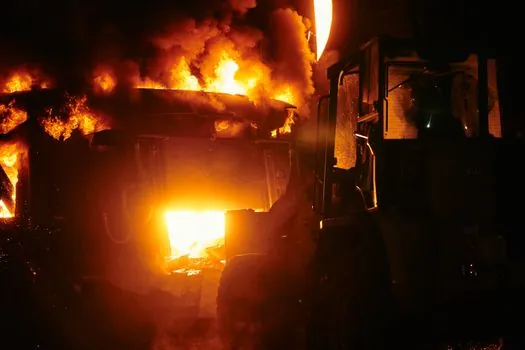
Most Type 3 and Type 4 suits should not be treated as flame-resistant. Hydrocarbon work can require an FR-rated suit or flame-resistant undergarment, and antistatic clothing may also be required in ATEX zones, with EN 1149-5, EN ISO 14116, and EN 14126 cited where applicable [S1].
In 45°C ambient conditions, the heat burden of chemical protective clothing can cause heat illness, so selection should be based on the safety data sheet and the task rather than simply on what is in the store.
Those operating limits must be reconciled with task duration, work-rest cycles, acclimatisation, and emergency response time. A Type 3 garment provides the correct barrier for a jet, but an overheat casualty is not an acceptable control strategy, and respiratory protection adds heat load that the clothing calculation cannot ignore.
Type 3 or Type 4 by Work Scenario
For a pressurised flange failure, a leaking drum under pressure, or tank cleaning involving directed liquid flow, specify Type 3 and verify its jet exposure basis, chemical breakthrough time, sealed closures, glove interface, and respiratory arrangement [S1].
For spraying, decanting, chemical washing, or light decontamination with unpressurised liquid, Type 4 is generally sufficient where the garment’s chemical data covers the substance and concentration [S1][S3]. If the planned method includes hose-down, line breaking, or a potential pressurised release, the exposure assessment should move back toward Type 3 [S1].
This selection method also prevents misuse of other clothing classifications. Type 5 under EN ISO 13982-1 addresses airborne solid particles, while Type 6 under EN 13034 covers light spray, liquid aerosols, or low-pressure, low-volume splashes without requiring a complete molecular permeation barrier; neither replaces Type 3 or Type 4 where the task involves a chemical jet [S2].
Apply Local Rules Without Misreading the Type Mark
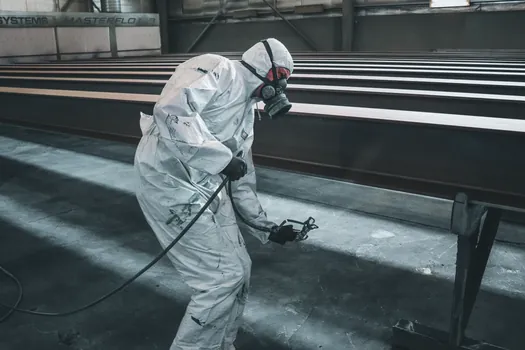
In the United States, the Type 3 or Type 4 designation is useful evidence for PPE selection, but OSHA requires a hazard assessment under 29 CFR 1910.132(d); the garment type does not replace that assessment [S2]. The same principle applies internationally: select clothing from the safety data sheet and the task rather than from what happens to be available in the store [S1].
The procurement record should identify the task exposure, chemical, concentration, garment type, material and breakthrough data, seam and closure design, respirator interface, flame requirement, and planned wear duration. It should also establish inspection criteria for damage, contamination, and degraded closures before the garment is issued.
The next trackable signal is the completed risk assessment and chemical-permeation review: if either shows a directed jet, pressure, or potential saturation beyond the Type 4 test basis, move to Type 3 and recalculate thermal and respiratory constraints.