
A single Cardan-style universal joint compensates angular misalignment up to 45°, while a paired double-joint or telescoping drive shaft extends usable combined angles to roughly 90° and adds parallel-offset capacity, making joint configuration the first decision gate for any material handling conveyor spec [S1][S3].
For conveyor applications the load envelope is set by shaft bore size, body material, and bearing type: standard alloy-steel bodies are offered in bore sizes from 3/16 in to 2 in (5 mm to 35 mm) with keyway or plain options, and high-cycle or shock-loaded conveyors should default to heat-treated alloy-steel yokes for tensile and fatigue margin [S2].
Single vs Double Joint: Angular Range and Velocity Behaviour
Single joints tolerate angular misalignment up to 45° but transmit non-uniform angular velocity, with peak-to-mean fluctuation reaching about 15% at a 30° operating angle and rising as the angle grows [S5].
Double joints (two single Cardan joints phased correctly in series) cancel the velocity variation, deliver a constant 1:1 angular-velocity ratio between input and output shafts, and add parallel-misalignment compensation that single joints cannot provide because they require the two shafts to lie in the same plane [S3][S5]. For packaging-style indexing where smooth rotation matters, the same trade-off is documented in Universal Joint Selection for Packaging Lines: Needle vs Plain, Single vs Double; for general universal joint architecture the kinematics reference is covered in the encyclopedia entry.
Bearing Type: Friction, Needle, and Lubed-for-Life Bodies
Friction-bearing universal joints rely on sliding contact at the cross/trunnion interface and tolerate heavy static loads but generate more heat at high RPM; needle-bearing joints use rolling elements and are the standard choice for high-speed axes and continuous-rotation conveyors [S3][S7].
Two body styles dominate conveyor builds: solid-body (serviceable, greaseable) and non-greaseable "lubed for life" units, where the latter is sealed at the factory and trades serviceability for reduced maintenance intervals in dusty or hard-to-access locations [S7]. Where the joint is exposed to dust, washdown fluids, or process chemicals, lubricant-retaining boots should be specified, and the lubricant grade (food-grade, marine, high-temperature) must be selected against the documented chemical and temperature exposure [S3].
Materials and Body Options for Harsh Material-Handling Duty
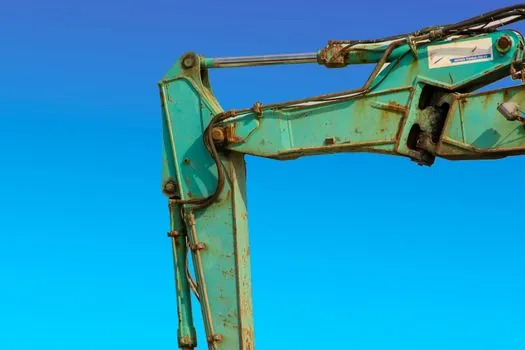
Alloy-steel bodies provide the highest load-carrying capacity for a given journal size, while thermoplastic bodies are used in light industrial applications where self-lubrication, low weight, near-zero backlash, corrosion resistance, and high-speed operation outweigh raw torque capacity [S2][S5].
For washdown, food, or corrosive environments, stainless-steel yokes with sealed boots and food-grade grease are the documented path; for abrasive or dust-laden conveyors (mining, cement, steel processing), heat-treated alloy-steel yokes with boot covers are the consistent OEM guidance because they tolerate constant rotation and sudden torque reversals without fracture or deformation [S2][S3]. The same corrosion-versus-tensile trade-off that drives advanced material selection in chemical plants applies here, and pairing the wrong body alloy with a washdown line is a common root cause of premature chemical material interface failure on adjacent bearings.
Sizing Inputs: Torque, Speed, Angle, and Misalignment Type
The four inputs that drive a correct catalog selection are peak and continuous torque, operating RPM, maximum operating angle, and the type of misalignment (angular only, parallel only, or combined) [S2][S6].
Misalignment nomenclature is fixed: angular misalignment is the angle between driving and driven shafts, axial misalignment is the end-to-end distance between shaft centers, and parallel misalignment is the lateral offset of otherwise parallel shafts; single joints cover angular only, while double joints and telescoping drive shafts cover all three modes plus greater axial separation [S3]. Good practice is to keep the operating angle low (often under 25° in steady duty) because Cardan-joint interference typically limits the maximum to about 37.5° depending on proportions, and because velocity fluctuation, bearing wear, and vibration all rise steeply with angle [S5].
Failure Modes and Operational Constraints

Documented failure initiators on conveyor u-joints are lubricant washout (water, chemicals), abrasive ingress (dust, fines), operating-angle overshoot, and shock loads from abrupt starts/stops, all of which attack the bearing journals or the yoke shaft interface first [S3].
Operationally, a single Cardan joint cannot tolerate parallel offset and must have both shafts in the same plane; backlash control is difficult in single joints and is a function of manufacturing tolerance rather than adjustment, so reversing or indexing duty should default to double-joint or constant-velocity designs where backlash budget is tight [S5]. For applications that overlap with storage and retrieval systems, the same rule applies to storage handling transfer cars and skew-angle drive layouts.
Comparison: Single vs Double vs Drive Shaft for Conveyors
On maximum angular misalignment the single joint is limited to 45°, the double joint covers 90° (45° per joint) plus parallel offset, and the telescoping drive shaft adds axial-misalignment compensation and a replaceable middle section [S3].
On velocity uniformity, only the double-joint and drive-shaft configurations deliver constant 1:1 output velocity; single joints fluctuate up to roughly 15% at 30° and more at higher angles [S5]. On maintenance access, single joints are the simplest to install and inspect, double joints require accurate phasing at installation, and drive shafts need scheduled center-bearing and slip-yoke service but allow easy in-place replacement of the whole assembly [S3][S7].
Selection Workflow and What to Send the Supplier
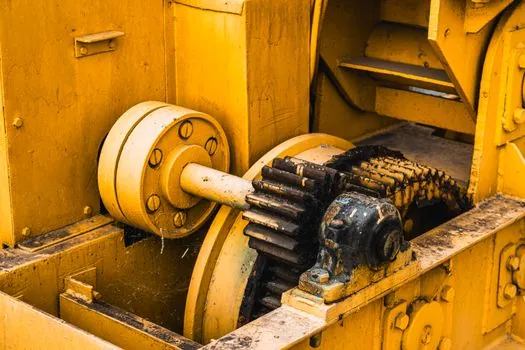
The OEM-recommended workflow is to start with operating conditions: torque (peak and continuous), RPM, angle range, misalignment type, environment, expected duty cycle, and any shock or reversal events, then match these to body material, bearing style, bore size, and boot or lubrication spec [S2][S4].
Most conveyor u-joint builds are customized to some degree, so the end user and OEM should be looped into every design stage, and the supplier should receive all alignment, load, and environment data on a single datasheet to avoid sub-optimal catalog picks [S3][S4]. A practical trackable signal for the next sourcing cycle: confirm whether your conveyor's worst-case operating angle stays below 25° (steady-state, low-vibration duty) or routinely exceeds 30° (where double-joint or constant-velocity becomes the right default), and revalidate boot/grease choice against the actual chemical and washdown exposure logged in the past 12 months [S2][S5].