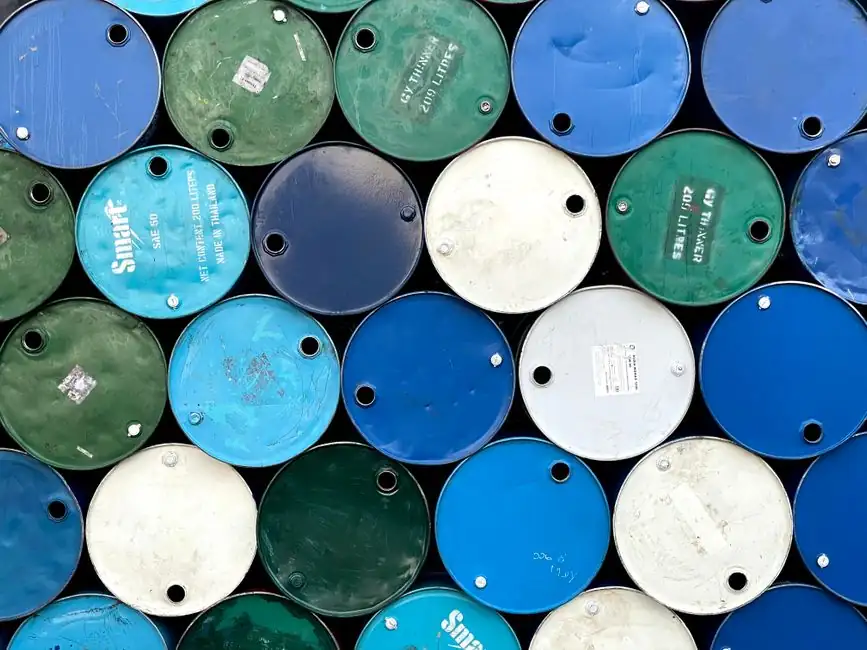
Commercial nitrile sheet containing 28-34% acrylonitrile (ACN) resists petroleum-based oils, mineral oils, vegetable oils, hydraulic fluids, petrol, diesel, and most fuels, which is why the nitrile rubber family has held the default-seal position in fuel systems for decades [S4].
The answer is chemistry, not marketing: ACN groups are polar and repel non-polar hydrocarbon molecules, so nitrile barely swells where EPDM, natural rubber, and most non-polar elastomers would soften, blister, or lose compression set within hours of fuel contact [S4][S7].
Chemistry Behind the Fuel Resistance
Nitrile butadiene rubber is a copolymer of acrylonitrile and butadiene, and the ACN fraction is the single dial that controls fuel performance: higher ACN means less fuel swell and lower gas permeability, lower ACN means better cold flexibility, with commercial sheet typically supplied at 33% ACN as the all-purpose grade [S4].
This polarity argument is the same one that disqualifies EPDM in fuel service. EPDM is non-polar and readily absorbs gasoline, diesel, and mineral oil, which is why EPDM rubber is restricted to water, steam, ozone, and weather exposure even though it wins on temperature and UV stability [S5][S9].
Material houses also report tensile strength in the 200-3500 PSI range, elongation of 300-650%, and Shore A hardness from 40 to 90, a wide enough property window that one NBR grade can cover soft gaskets, hydraulic O-rings, and firmer oil seal lips without reformulation [S3].
Operating Envelope: Where NBR Holds and Where It Stops
Standard commercial nitrile is rated for -30°C to +120°C in continuous service, with a harder upper bound around +200°F (93°C) for general gasket duty and a -40°F low end for specialty aerospace O-ring compounds, so the polymer is comfortable across most engine, pump, and refinery ambient conditions [S2][S3][S4].
The same polarity that blocks hydrocarbons makes NBR vulnerable to polar solvents: acetone, ethanol, and acetic acid will attack the polymer, and ozone or prolonged UV exposure will crack it, which is why nitrile belongs inside fuel-handling equipment, not on the outside of it [S2][S5].
For arctic diesel service, low-ACN NBR grades are blended to push the low-temperature limit down; for high-temperature crude or hot oil above 120°C, NBR hands off to hydrogenated nitrile (HNBR), FKM, or FFKM, which is the practical reason the material is "default" rather than "universal" [S1][S4].
NBR vs EPDM vs FKM vs Neoprene: A Decision Matrix

Engineers selecting a fuel-system elastomer typically compare four materials against the same four criteria, and the table below is the field decision rule [S4][S5][S6]:
Property, NBR, EPDM, FKM, Neoprene: oil/fuel resistance: excellent, poor, excellent, moderate; water/steam resistance: moderate, excellent, good, good; weather and ozone: poor, excellent, excellent, good; continuous service temperature: -30°C to +120°C, -40°C to +120°C, roughly -15°C to +200°C+, -40°C to +120°C. The rule is straightforward: if the line on the P&ID contains petroleum, NBR is the first specification, FKM is the upgrade when temperature climbs past 120°C or chemical exposure gets aggressive, EPDM is wrong for the application, and neoprene is the compromise for mixed exposure [S4][S6].
Cost reinforces that ranking. NBR is consistently the lowest-cost fuel-resistant elastomer per kilogram, FKM typically carries a 3-8x multiplier, and HNBR sits between them, so even when FKM would technically fit, procurement and reliability engineers keep NBR in the spec for non-extreme service [S5][S9].
Where NBR Seals Are Specified in Practice
Nitrile O-rings, gaskets, and lip seals remain standard in hydraulic systems, pumps, valves, fuel-handling piping, automotive fuel rails, off-road equipment, marine fuel systems, and aerospace accessory bays, because each of those service classes combines hydrocarbon exposure with a temperature window that NBR covers without exotic cost [S1][S3].
For sealing assemblies that see combined motion and pressure, a mechanical seal running on NBR secondary elements or an industrial rubber bellows on a nitrile flex member is a common configuration in petrochemical pumps, where the elastomer's ability to absorb vibration and conform to small surface irregularities keeps the interface sealed through pressure cycling [S1][S4].
Selection validation is procedural rather than aspirational: material labs measure volume swell after immersion in the target fuel, record compression set after prolonged compression at the service temperature, run thermal aging to project service life, and test dynamic wear under simulated pressure cycling, which together decide whether a stock NBR compound is good enough or a custom formulation is required [S1].
Selection Cues and Failure Modes to Watch
The single most informative spec on an NBR data sheet is the ACN percentage, because it tells the buyer, in one number, whether the compound leans toward fuel resistance or cold flexibility, and a 33% ACN commercial grade is the reasonable default for general petroleum service [S4][S7].
Failure modes are equally specific. NBR exposed to gasoline with high aromatic content can still swell 10-25% by volume if the ACN is on the low side; high-temperature spikes above 120°C accelerate compression set and shorten seal life; and long-term storage in an open warehouse will age the polymer through ozone attack, so shelf life and storage conditions are part of the spec, not an afterthought [S1][S2].
For maintenance teams sizing replacement gaskets, Shore A hardness is the next dial after ACN: 50A for flange compliance, 60A as the general-purpose stocked grade, and 70A for mechanical-wear and cut-resistance duty, with thickness chosen against bolt-load and surface-finish targets [S4].
Trackable Signals for 2026 Spec Decisions
Watch the ACN-grade declarations on incoming material certificates, because the shift from 33% to 28% ACN is the most common cause of unexplained fuel-swell failures in otherwise qualified seal stock [S4][S7].
Cross-check FKM substitution requests against the actual upper-temperature profile of the line, since retrofitting FKM in place of NBR without a thermal justification inflates unit cost 3-8x for no reliability gain, and treat any nitrile service above 120°C as the trigger to step up to HNBR or FKM rather than over-spec the existing NBR compound [S1][S5].
See also our earlier report, Why EN ISO 20345:2022 dropped SRA, SRB and SRC for a single SR mark.