
A Y-strainer is an inline, angled-body coarse filter rated to GB/T 12224, available DN15 to DN500 in PN16 to PN25, with body materials covering copper, WCB, WCC, LCB, LCC, CF8, CF3, CF8M, CF3M and screens in 304, 316, 304L, 316L stainless steel, operating from -29°C to 425°C on water, oil, and steam [S2].
A precision filter is a downstream polishing device using depth media (meltblown polypropylene, polyester, or nylon bags, or wound/cartridge elements) that typically delivers 0.5 to 100 micron absolute ratings, slower pressure-drop rise, and bag-replacement maintenance in roughly 30 seconds [S1]. The two are not substitutes; the Y-strainer protects the precision filter, not the other way around.
Filtration Rating and Media
Y-strainers are coarse-only devices: coarse filtration covers 10 to 100 mesh, medium precision covers 100 to 300 mesh, and high precision tops out near 300 to 480 mesh (roughly 40 to 50 micron at the fine end) [S3]. The filter element is a stainless steel perforated plate or woven mesh inside a Y-shaped shell, and higher mesh counts always mean finer capture [S3].
Precision filters, in contrast, are depth-media devices. A bag filter housing accepts replaceable filter bags in polypropylene, polyester, or nylon, giving a 0.5 to 100 micron rating range that the metal-mesh Y-strainer cannot approach [S1]. When sub-100 micron capture is on the data sheet, a precision filter is the only option; a Y-strainer is mechanical surface straining, not depth filtration.
One practical caveat from field guidance: stainless steel Y-type filter screens are commonly supplied in the 10 to 100 mesh window, classifying them as coarse/medium filtration devices, not polishing equipment [S6].
Pressure Drop, Temperature, and Mechanical Limits
The angled bore of the Y-strainer keeps clean pressure drop low and the body construction (WCB carbon steel or CF8M stainless) takes ratings up to PN25 and temperatures of 425°C, which exceeds the polymer limits of a precision bag filter housing [S2][S1]. Bag filter temperature and pressure resistance is constrained by the bag material, typically below 120°C for standard polypropylene and polyester media, which disqualifies precision bag filters on most steam and high-temperature hydrocarbon duty [S1].
Basket strainers, the closest mechanical cousin of the Y-strainer, are also all-metal and tolerate the same thermal envelope, but their larger housing volume means pressure drop rises faster under heavy solids loading compared with a bag filter's depth media [S1]. The Y-strainer's compact body and low clean pressure drop make it the default for tight pipe runs and vertical/horizontal mounting where a basket strainer will not physically fit [S2].
Dirt Holding, Maintenance, and Consumable Cost
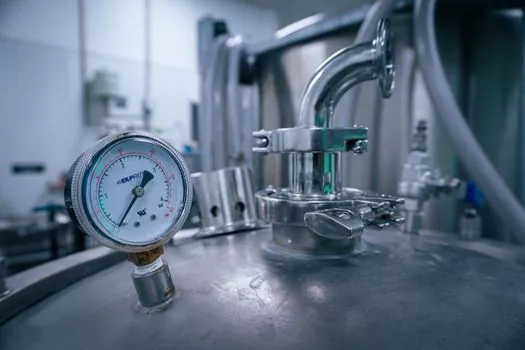
Bag (precision) filters hold more dirt per cycle because depth media captures throughout its thickness, not just on the surface, and bag replacement is reported in the 30-second range, far faster than draining and cleaning a Y-strainer screen [S1]. The recurring cost is replacement bags; the Y-strainer trade-off is no consumables but operator time to open the body, remove the screen, and flush or back-wash it [S2].
Two-units-in-series is a documented pattern: a coarse strainer upstream (Y or basket) acts as a pre-filter, extending the life of the downstream precision bag or cartridge filter and improving overall system efficiency [S1]. In duplex strainer arrangements one side stays online while the other is cleaned, removing the maintenance downtime penalty that single Y-strainers carry [S9].
Decision Matrix: Y-Strainer vs Precision Filter
For a direct comparison on the four criteria that drive specification, the data from OEM guidance lines up as follows. The Y-strainer wins on temperature, pressure, and consumable cost; the precision filter wins on rating and dirt-holding-per-cycle. [S1]
Filtration rating: Y-strainer 10 to 480 mesh (about 3000 to 40 micron), precision filter 0.5 to 100 micron [S3][S1]. Maximum temperature: Y-strainer 425°C, precision bag filter typically below 120°C (bag material limited) [S2][S1]. Pressure class: Y-strainer PN16 to PN25 standard (higher on request), precision filter housing limited by bag and housing design [S2][S1]. Maintenance cost: Y-strainer zero consumables but manual cleaning, precision filter ongoing bag replacement but 30-second change-out [S2][S1].
For the engineer choosing between them, the decision is rarely either-or. The Y-strainer protects equipment from coarse debris; the precision filter delivers final product clarity. A Y-strainer as a pre-filter ahead of a precision filter is the standard architecture for closed-loop water, HVAC circulating water, and chemical dosing skids [S2][S3].
Material, Standards, and Service Media
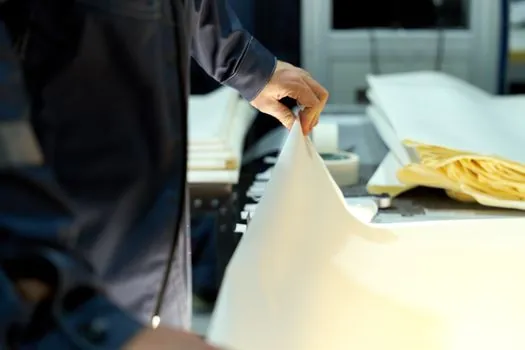
Body materials on a Y-strainer span carbon steel (WCB/WCC) for general water and oil, low-temperature carbon (LCB/LCC) for cryogenic, and stainless grades CF8/CF3/CF8M/CF3M for corrosive or hygienic service; screens are independently selectable as 304, 316, 304L, or 316L [S2]. Flanged connection standards on a typical YKY-type Y-strainer include JB/T 79.1, GB/T 9124.1, and HG/T 20592, and the design standard cited is GB/T 12224 [S2].
Applicable media for a Y-strainer are water, oil, and steam at the temperatures listed; for steam at 425°C the WCB body variant is the common pick, while CF8M is the default for chloride-bearing or mildly acidic water [S2]. Precision filter selection is media-driven at the bag level (polypropylene for chemical compatibility, polyester for higher temperature, nylon for solvent resistance) rather than body-driven [S1].
Selection Rules by Use Case
Specify a Y-strainer when the goal is equipment protection, the fluid is steam, hot oil, or raw water, the line is tight on space, the budget is constrained, and the contaminants are large, hard particles that flush off a metal screen [S1][S2]. Specify a precision bag filter when the data sheet calls for under 100 micron capture, fluid clarity is a release criterion, dirt loading is heavy, downtime must be minimised, or the contaminant is viscous or gelatinous and would blind a metal screen [S1].
For pump suction protection, heat-exchanger inlet protection, and steam line trash service, a Y-strainer is the right primary device [S2]. For paint, ink, electroplating, food and beverage clarification, pharmaceutical intermediates, fine chemicals, and any final polishing stage before packaging, a precision bag filter is the correct primary device [S1]. In systems that must not be taken offline, a duplex Y-strainer arrangement keeps one side live while the other is serviced, removing the single-strainer availability penalty [S9].
Application Map and Failure Modes
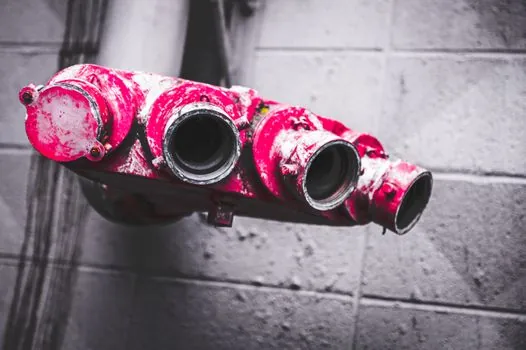
Y-strainers are documented across municipal water, HVAC circulating water, oil and gas pipelines, pumping stations, chemical processing, marine, and petrochemical service, and they are explicitly called out as a coarse screen to keep debris out of pumps, valves, and instruments [S3][S5]. In HVAC, the Y-strainer sits ahead of chillers, cooling towers, and fan-coil units to prevent radiator and coil fouling [S3].
The two recurring failure modes for a Y-strainer are (1) drain-plug-up installation, which lets debris settle away from the blow-down port and defeats flushing, and (2) ignoring the flow-direction arrow on the body, which sends debris into the wrong chamber and accelerates pressure-drop rise [S2]. The recurring failure mode for a precision filter is exceeding the bag's temperature or chemical limit, which collapses the depth media and dumps captured solids downstream. The two devices mitigate each other's failure modes when stacked in series, which is why the basket-strainer-then-bag-filter architecture keeps reappearing in OEM guidance [S1].
Trackable signals to watch: rising differential pressure on either device, visible debris in blow-down discharge, and any drop in downstream instrument or heat-exchanger performance. For projects where the engineering decision between a Y-strainer pre-filter and a precision final filter must be defended on a P&ID, the Y-strainer selection guide gives a usable mesh/OAR/material/pressure-class walk-through, while a basket strainer review is the right read where larger dirt capacity matters more than the Y-strainer's compact footprint.