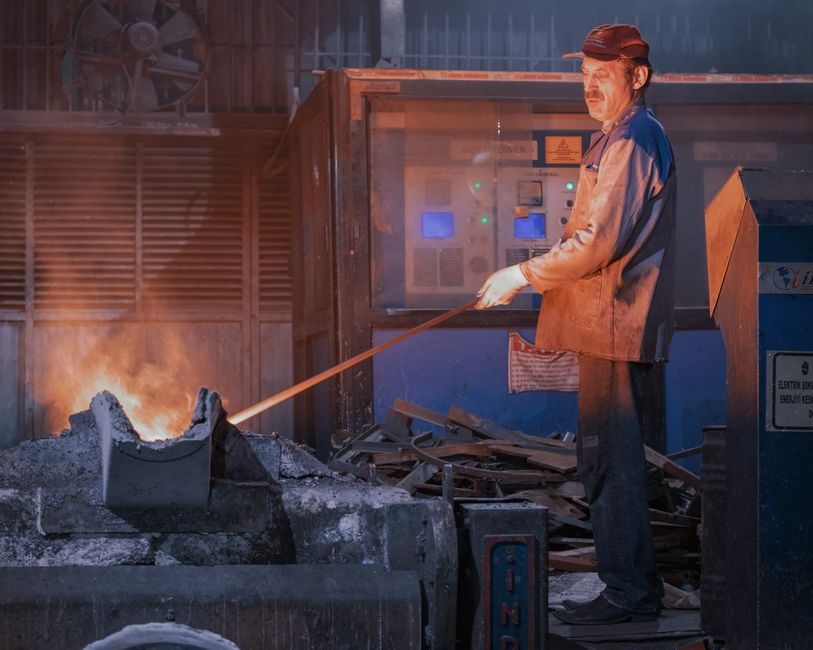
Hot-chamber die casting machines in the 25-160 ton clamping-force band remain the default workhorse for zinc-alloy production, with North-American stand-alone zinc job shops running fleets of 20-30 presses per facility [S2][S3].
Zinc buyers in 2026 face a fairly mature spec sheet: Zamak 3 and Zamak 5 chemistries, hot-chamber gooseneck injection, platen sizes tied to shot weight, and an equipment ecosystem clustered around three or four Asian OEM platforms and a North-American job-shop tier [S1][S7][S9].
Zinc die casting machine definition and scope
A zinc die casting machine is a hot-chamber, gooseneck-fed cold-chamber-style press sized for low-melting-point Zamak-family alloys (melting range roughly 380-420 °C), distinct from aluminium or magnesium cold-chamber cells that inject molten metal into a horizontal shot sleeve [S1]. The hot-chamber architecture keeps the metal pool submerged in a sealed pot furnace, with the gooseneck and plunger submerged at all times, so cycle times for thin-wall zinc hardware routinely land in the 1-3 second injection window.
For a working definition of the broader machine category and its variants, the die casting machine reference lays out the hot-chamber vs cold-chamber split. Where the buy is specifically zinc, the zinc die casting machine entry tracks the alloy-specific process window, including die temperature control bands and release-agent practice that keep zinc-alloy cycle times under 60 s on most hardware.
Selection criteria: tonnage, platen, shot weight, and stroke
Clamping force is the first spec to lock. The 25-ton SH-25 class unit shown in OEM listings targets small connector and hardware parts with shot weights under 1 kg [S9], while 160-ton horizontal hot-chamber presses cover lock-hardware and door-furniture castings where projected area and flash-land pressure demand a heavier clamp [S1][S5].
Beyond clamp tonnage, four spec levers consistently drive the buy: platen size (tie-bar spacing) in mm, shot weight in grams or kg, die-height stroke, and injection plunger diameter. Projected casting area at roughly 30-40 MPa specific injection pressure sets the clamp tonnage floor, while shot weight is sized to 70-85 % of the cold-shot capacity to keep a safety margin against slug pickup and air entrapment.
Buyers cross-shopping magnesium or aluminium cells should not assume the same machine class transfers cleanly. The magnesium die casting machine reference documents the SF6 cover-gas and slower shot-profile demands that magnesium needs, while aluminum die casting machine entries explain why aluminium moves to a cold-chamber 400 °C-plus metal pool, a fundamentally different thermal design from a zinc gooseneck.
Who a zinc hot-chamber cell is for, and who it is not for

Zinc hot-chamber cells fit buyers running Zamak 2, 3, 5, or 7 alloys in volumes where the cycle-time edge of submerged injection pays back the furnace footprint. Typical fits: door and window hardware, electrical connector bodies, faucet and sanitary-ware components, decorative trim, and small mechanism housings where net-shape or near-net-shape casting trims secondary machining [S1][S5][S6].
It is the wrong cell for high-volume aluminium structural castings, magnesium thin-wall electronics housings, or any part with a projected area or wall-thickness profile that demands 800-2,500 ton cold-chamber clamps. The chemistry mismatch is hard: zinc begins to attack steel tooling above roughly 420 °C, and ferrous-tool dissolution is much faster in molten zinc than in aluminium, so die-life accounting diverges sharply from an aluminium cell [S3].
Comparison: hot-chamber zinc vs cold-chamber aluminium vs magnesium cells
For buyers cross-shopping machine types, the spec sheet breaks along four decision criteria. First, alloy and melting point: zinc Zamak at 380-420 °C, aluminium 380-660 °C alloy-dependent (with the higher-melt Al-Si family pushing past 600 °C), magnesium AZ91 at roughly 575-635 °C. Second, machine architecture: zinc and magnesium both run hot-chamber gooseneck injection, aluminium almost always cold-chamber horizontal shot. Third, clamp tonnage band: zinc 25-160 t covers most hardware, magnesium 80-1,600 t spans electronics to instrument-panel, aluminium commonly 200-4,500 t for structural castings. Fourth, cycle time and tool life: zinc cycles fastest with longest die life in ferrous H13 tools, magnesium needs SF6 cover gas and special die steel, aluminium gives the lightest castings but wears dies fastest on high-Si alloys [S1][S5][S9].
The architectural read-through is the hot-chamber die casting machine coverage, which lines up tonnage and alloy choices against cycle-time economics. For vacuum-assisted zinc or zinc-aluminium hardware, vacuum die casting machine entries explain the evacuation step and where porosity gains actually pay off in pressure-tight hardware.
Real use cases, machine sizing, and part examples

SH-25-class 25-ton hot-chamber units show up on Chinese OEM cards as small zinc-alloy casting cells for hardware, plumbing fittings, and low-voltage connector bodies, with the supplier's quoted 25-ton clamp and compact platen sized for parts under roughly 200 g cold-shot weight [S9]. At the next tier, mid-tonnage hot-chamber presses in the 80-160 t band drive faucet, door, and window-hardware lines, and full automatic sand-core molten-metal cells for plumbing bodies use a hot-chamber press mated to sand cores, not metal dies, when internal geometry is needed [S5].
North American zinc job shops run 20-30 presses per site on average, mixing tonnage bands to give customers a single-vendor path from 10 g zamak connectors to 5 kg hardware castings. The 23-machine, 93,000 sq. ft. Pennsylvania job-shop footprint is typical, with ISO 9001:2015 certification through TUV-Rheinland, plus in-house CNC machining, drilling, tapping, and minor assembly as the standard secondary stack [S2]. Larger dedicated zinc producers run 30 or more presses across multiple cells, with deep ISO 9001 or IATF 16949 quality systems targeted at automotive and window-hardware OEMs [S3][S6].
Limitations, constraints, and failure modes
Three failure modes dominate the zinc die casting machine buy. First, gooseneck and plunger wear: the submerged steel gooseneck takes the brunt of zinc attack and typically needs re-machining or replacement every 80,000-200,000 cycles depending on alloy and shot profile. Second, flash and die-temperature drift: a die running below roughly 150 °C surface temperature on zinc can flash, while running above 220 °C invites solder-stage soldering of zinc to the die surface, neither of which is acceptable for cosmetic hardware. Third, injection-plunger slug pickup: a shot weight set above ~85 % of the cold-shot capacity pulls zinc oxide slugs into the casting and produces inclusions downstream. [S1]
For buyers scaling up, automation limits also matter. Zinc cells handle 6-axis robot extraction and trim-press integration cleanly because parts run hot but well below aluminium temperatures, and gripper wear is correspondingly lighter; however, the 1-3 s injection window leaves a tight handoff to the robot, and conveyorised cells need to be sized for that timing rather than for the longer 4-8 s windows of aluminium cold-chamber cells.
Sourcing, standards, and supplier landscape in 2026
The 2026 supplier base for zinc die casting machines clusters in two tiers. Tier one is Chinese OEM platforms marketing 25-ton to 1,600-ton horizontal hot-chamber presses through B2B portals and verified-supplier channels, with 1,246 hot-chamber die casting machine suppliers listed on one major portal as of mid-2026 [S7]. Tier two is North-American job shops that do not sell the press itself but consume most of the regional zinc casting capacity under ISO 9001:2015, IATF 16949, or customer-specific quality systems [S2][S3].
Price bands for finished zinc castings in 2026 are tight: small connector bodies at roughly $0.30-$1.80 per piece at 100-piece MOQ on the open market, hardware parts in the $0.18-$30.00 range depending on size, plating, and tolerance, and OEM zinc-aluminium alloys at the upper end where finishing and tighter GD&T are required [S4][S10]. The buy-side guidance: lock tonnage, platen, and shot weight first, then validate cycle-time and robot-extraction claims against an existing production video, and price the cell including a hot-chamber gooseneck spare, not just the press base price.
Trackable signals for the next buying cycle: IATF 16949 audit results at the larger North American dedicated-zinc job shops (a strong proxy for automotive-line qualification), and revised IEC electrical-safety or PLC-control retrofits on Chinese OEM hot-chamber lines as the Chinese supply base moves onto mainstream European control platforms.
For related coverage, see Aluminum Die Casting Machine vs Vacuum Die Casting Machine: 6 Spec Levers.