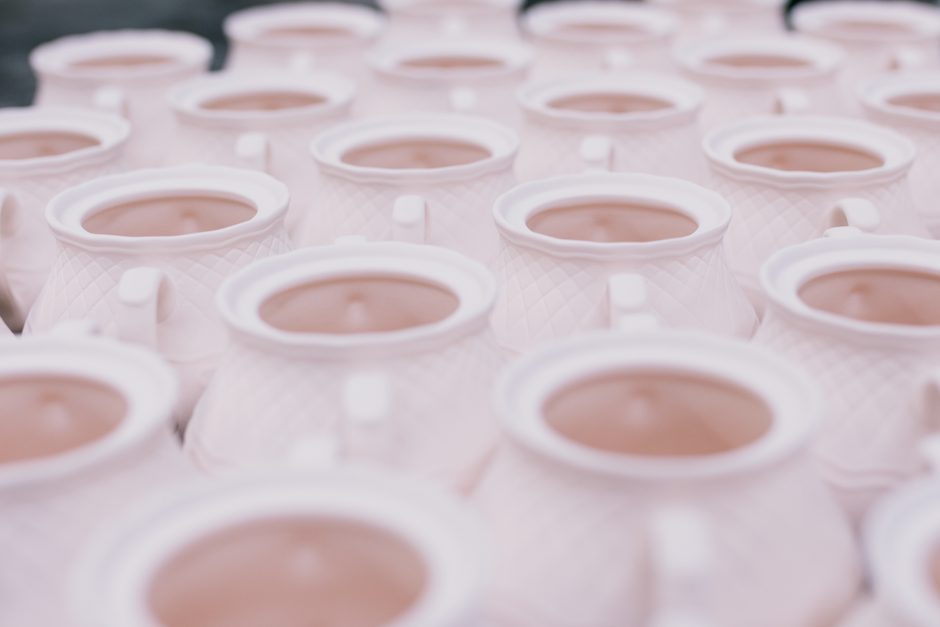
Zirconia (ZrO2) components covered here specify 99% ZrO2 purity with Mohs 9 hardness and bulk density above 6.0 g/cm3, requiring the forming chain of dry press, ceramic injection molding, hot pressing, or isostatic pressing followed by atmospheric, hot-press, or hot isostatic sintering before precision, laser, or ultrasonic machining [S1][S2].
Scope of this guide covers three installed product families: structural ZrO2 parts, ZrO2 grinding media (0.1-50 mm), and ZrO2-toughened alumina wear linings, each with its own receiving inspection, mounting method, and commissioning test [S1][S2][S3].
Material Identity and What It Means on Site
XMCERA's published ZrO2 datasheet lists 99% ZrO2 powder prepared by solid-phase reaction and shaped by dry press, ceramic injection molding, hot pressing, isostatic pressing, or injection molding; the sintered blank then passes through precision, laser, or ultrasonic machining before shipment [S1]. ZrO2 beads on the same commercial channel are graded 0.1-50 mm, hold density above 6.0 g/cm3, and are quoted with Mohs 9 hardness and acid/alkali resistance for coating and pigment milling [S2].
The reference for related bearing-grade ceramics is set out in the ceramic bearing encyclopedia entry, and the broader comparison between ZrO2 and Al2O3 is captured in alumina ceramic.
Receiving Inspection: What to Check Before Installation
Acceptance values pulled from the source datasheets: ZrO2 purity 99% minimum, density >6.0 g/cm3, Mohs 9, and dimensional conformance against the drawing after precision/laser/ultrasonic machining [S1][S2]. Each carton should ship with a lot number, batch chemistry, and sintering route recorded; treat that paperwork as part of the part, because ZrO2's mechanical behaviour is governed by the stabiliser (typically 3 mol% Y2O3 for Y-TZP) chosen during powder prep [S1].
For grinding-media deliveries, sieve a 50 g sample through the rated size window; out-of-spec beads above 50 mm or below 0.1 mm indicate a screening failure at source and a high break-in rate once the mill is charged [S2]. Visually scan under a 10x lens for chipping along the equator of each bead — chipped spheres fragment first and contaminate the product. For structural parts, use a tapping test (porcelain-style ring) and reject any blank that sounds dull, which signals sintering under-temperature or residual porosity above the typical <0.1% closed-porosity expectation for hot isostatically pressed ZrO2 [S1].
Forming Route Decides the Mounting Strategy
Comparison of the four published ZrO2 forming routes against three decision criteria relevant to install engineers: [S1]
1) Dry press — best for thin, flat parts; lowest tooling cost; tolerances after sintering are looseest, so mount with a compressible gasket or a metal sleeve that absorbs the geometric variation.<br>2) Ceramic injection molding (CIM) — best for complex 3D geometry; needs binder burnout before sintering, so expect 1-2% extra linear shrinkage; oversize the housing bore by that margin.<br>3) Isostatic pressing (cold or hot) — gives the most uniform density for wear liners and grinding beads; install with full adhesive bedding because the surface is too smooth for mechanical interlock alone [S1].
Installation Procedure: Sleeve, Adhesive, Torque
First-pass procedure for a ZrO2 structural part going into a metal housing: 1) clean both faces with isopropyl alcohol and lint-free wipe, 2) check the bore diameter against the part's post-sintering tolerance (typically ±0.1% for CIM, ±0.05% for isopressed parts), 3) dry-assemble to confirm the part floats without binding, 4) apply a thin, continuous bead of flexible epoxy (≥0.1 mm, ≤0.3 mm wet film) on the metal side only, 5) press the ZrO2 part in with a soft-faced arbor, not a steel drift — a steel hammer on ZrO2 will chip the contact rim in one stroke. [S1]
Grinding-media installation: pre-weigh the mill charge, fill to 45-55% of working volume (typical for bead mills processing coatings and pigments), and ramp the agitator speed to 30% of nameplate for the first 15 minutes to bed the beads against the liner [S2]. For wear liners such as the ZrO2-toughened alumina hexagonal and mosaic tiles listed on industrial sourcing catalogues, install with the manufacturer-supplied ceramic-filled adhesive, then back the joint with a 1.5-2 mm compressible spacer so thermal expansion of the steel shell does not load the ceramic in tension [S3]. Cross-rolled sliding contact can use the same ZrO2 family; a worked example is in crossed roller guide.
Joining and Fastening: Where ZrO2 Breaks
ZrO2 has high compressive strength but a fracture toughness of only 5-10 MPa·m^0.5, so any installation that pre-loads the part in tension is a future crack — symptoms appear weeks later as a fine radial line that grows with each thermal cycle. Use a metal sleeve with an interference fit in the 0.05-0.10% range, and route the load through the sleeve, not the ceramic. [S2]
Threaded ZrO2 inserts must be metal-reinforced or used only in compression-loaded joints; never tighten a ZrO2 nut against a ZrO2 bolt, because the friction coefficient (~0.2 dry) will gall and then snap the male thread on first removal. Where the assembly has to be opened repeatedly, pick a metal fastener into a ZrO2 female thread, or, better, a ZrO2 washer under a steel bolt head. For linear-motion applications that run ZrO2 rolling elements against a steel race, refer to the lubrication and preload notes in linear guide.
Commissioning Test and Acceptance Criteria
Acceptance is verifiable with three field checks. (1) Visual: no edge chipping greater than 1 mm, no surface crack longer than 3 mm, no joint line showing daylight through the bond. (2) Functional: run the system at 50% rated load for 30 minutes, then full load for 60 minutes while monitoring vibration; the RMS baseline for a healthy ZrO2 bearing or bead-mill charge is steady, with no transient spikes above 2x running level — spikes indicate bead fracture [S2]. (3) Thermal: bring the assembly through one full heat-up and cool-down cycle; ZrO2's coefficient of thermal expansion (~10.5 x 10^-6 /K for Y-TZP) is closer to steel than alumina is, so a joint that survives one cycle at 200 °C differential will generally hold the rated service life.
Limitations to flag for the maintenance log: ZrO2 is not specified above roughly 800 °C in structural service (creep onset in Y-TZP), it is not rated for hydrofluoric or hot concentrated sulfuric acid despite the general "acid-proof" claim, and grinding beads below 0.1 mm pack and cake in wet mills — switch to a finer media grade or reduce solids loading [S2].
Sourcing, Standards, and What to Ask the Mill
Standard reference points to put on the purchase order: ISO 13383-1 for the classification of technical ceramics, ISO 6474 for ZrO2 surgical-grade material where the part touches a medical fluid path, and ASTM C1161 for flexural strength of advanced ceramics at room temperature — name the standard only when it genuinely governs the property you are buying, and pin the test bar geometry and surface finish on the certificate of analysis [S1]. For the broader family context across oxide, nitride and carbide ceramics the entry zirconia ceramic gives the cross-reference map.
Trackable signals to watch over the next procurement cycle: a) Chinese suppliers continue to publish new ZrO2 part catalogues (Suzhou Manyoung New Materials and Xiamen Middia Biological Ceramic Technology both list ZrO2 components on their English channels as of 2026-07-22) [S4][S5]; b) abrasive-grade ZrO2-toughened alumina tiles and hexagonal liners remain listed under Wear-Resistant Material on industrial sourcing directories, indicating sustained demand in mining and cement chute lining [S3].