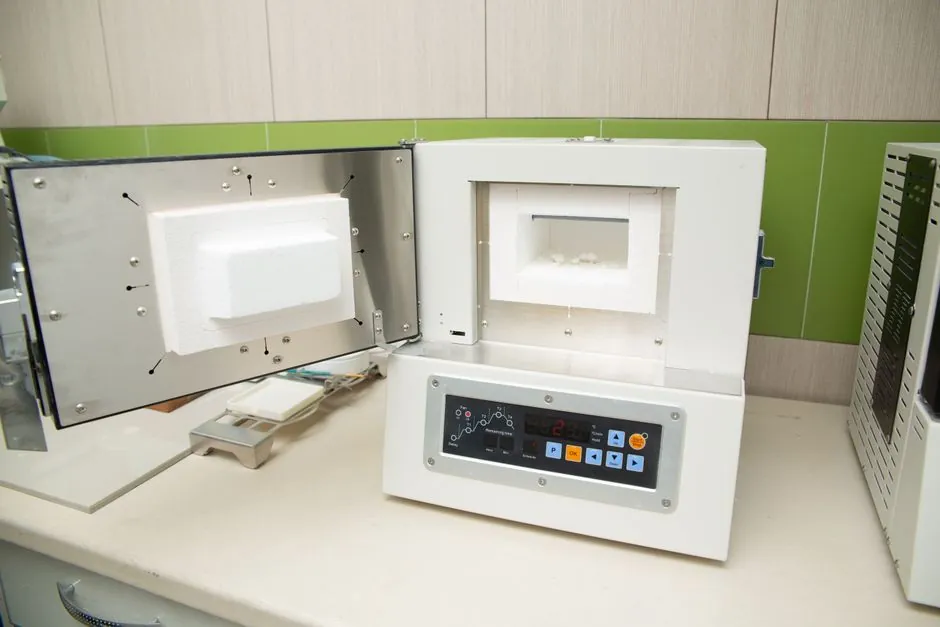
Medical-grade zirconia ceramics, chiefly 3 mol% yttria-stabilized tetragonal zirconia polycrystal (3Y-TZP) and magnesia-partially-stabilized grades (Mg-PSZ), now anchor the spec sheets for femoral heads, dental implants, surgical blades, pacemaker feedthroughs, and neurostimulator housings, where ISO 10993 biocompatibility and fracture toughness of 5-10 MPa·m½ are non-negotiable [S1][S2][S5].
The selection window narrows fast once a device crosses from short-term surgical instrumentation (where alumina and ZTA are still competitive) into permanent implantables, because low-temperature aging (LTD), wear-debris biology, and MRI non-magnetism all push the spec back to zirconia [S1][S10]. Process engineers specifying for 2026 OEM programs should treat the ZrO₂-Y₂O₃ family as the default and the ZrO₂-MgO and Mg-PSZ variants as the fallback for severe-steam or high-moisture implants [S5][S7].
Material Families: Y-TZP, Mg-PSZ, and ZTA on the Medical Spec Sheet
Yttria-stabilized grades (ZrO₂-Y₂O₃, 3Y-TZP) deliver the highest flexural strength of any medical-grade zirconia, with published values of 900 MPa (Z-100) and 950 MPa (Z-200) on the ZrO₂-Y₂O₃ line, plus 1100 MPa on a high-performance ZM-100 variant, against 450 MPa for a ZB-100 yellow variant [S7]. Density sits at 6.0-6.04 g/cm³, compressive strength hits 2200-2400 MPa per the GB/T 8489-2006 test method, and elastic modulus is 210 GPa, versus 3.75-4.2 g/cm³ for medical-grade alumina ceramic A-100/A-200/A-300 [S5][S7].
Mg-PSZ (ZrO₂-MgO) trades flexural strength for hydrothermal stability: published Mg-PSZ flexural strength is 480 MPa, with 1600 MPa compressive strength per GB/T 8489-2006, the lower numbers useful where autoclave cycles and wet body environments are constant [S5]. Compared with the broader industrial ceramic landscape, zirconia is the only engineering oxide routinely clearing the 5 MPa·m½ fracture-toughness floor that FDA-cleared joint prostheses demand, while alumina sits near 3-4 MPa·m½ and ZTA at 5.5 MPa·m½ [S3][S5].
Biocompatibility and Sterilization: ISO 10993, Steam, and MRI Compatibility
ISO 10993 cytotoxicity and sensitization testing is the documented biocompatibility pathway for the medical-grade Y-TZP grades, and 3Y-TZP is also specified as non-magnetic, a hard requirement for any implant or probe that will sit inside or adjacent to an MRI bore [S2]. For surgical blades and orthopedic repair materials, the same datasheet lists resistance to high-temperature steam sterilization as a primary advantage, a property the ZrO₂-Y₂O₃ chemistry retains across hundreds of autoclave cycles without the strength loss seen in some alumina grades [S2].
BCE Special Ceramics' medical-technology page (2026-06) frames the material-vs-process decision around whether the part remains permanently in the body or is only temporarily inserted into body cavities, and confirms zirconia is one of the few oxide ceramics specified for both classes [S10]. Where a non-permanent tool needs to survive steam and hot-air sterilization, a 9 Mohs hardness Y-TZP blade keeps edge retention far longer than martensitic stainless, and the ceramic bearing tribology the same chemistry enables transfers directly to articulation surfaces in hip and knee femoral heads [S1][S10].
Mechanical Specs That Decide Pass/Fail on a 2026 Implant Datasheet
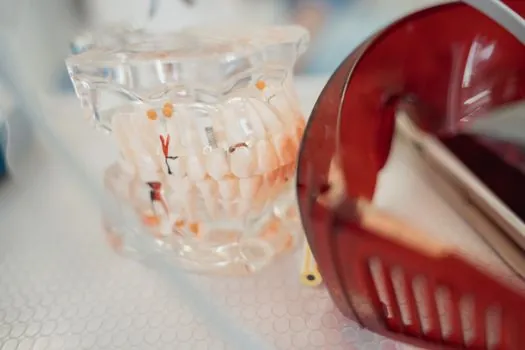
The hard mechanical gates, in the order they tend to fail during incoming inspection, are flexural strength (ASTM C1161-13 test geometry), fracture toughness, Vickers hardness, and Weibull modulus, because a sub-20 Weibull modulus on a load-bearing implant drives field-fracture risk that no design margin can absorb [S2][S5]. Published medical-grade Y-TZP runs 900-1100 MPa flexural, 5-10 MPa·m½ fracture toughness, ≥1250 HV (with one Dayoo knife-ring spec quoting 1300 HV), dielectric strength ≥10 kV/mm, volume resistivity 10¹⁴ Ω·cm, and Weibull modulus 25, a stack that lets design engineers run thinner load-bearing sections than alumina would allow [S1][S2][S5].
Zirconia also pulls ahead in thermal-shock tolerance: the AZ-100 Al₂O₃-ZrO₂ composite shows a ΔT of 470°C versus 200-220°C for the 97-99.7% alumina A-series, a useful buffer when an implant or surgical tool is repeatedly steam-flashed between 25°C and 134°C [S3]. Density 5.95-6.05 g/cm³ for Y-TZP versus 3.75-3.92 g/cm³ for alumina is the trade-off: Y-TZP is heavier per volume, so for weight-sensitive prosthetics like finger joints or pediatric implants, ZTA (4.2 g/cm³) is sometimes re-introduced as a compromise [S3][S5][S7].
Application Map: Femoral Heads, Dental Implants, Neurostimulators, Pacemakers
Zirconia is now specified across artificial joint femoral heads, dental implants and crowns, surgical blades, orthopedic repair materials, and implantable electronics housings, with neurostimulator and cardiac-pacemaker feedthroughs being the fastest-growing medical sub-segment in 2025-2026 OEM quote activity [S1][S2][S3][S7]. The OEM datasheets published in mid-2026 explicitly list medical sensor housings, insulating parts in medical electronics, and precision components in biomedical engineering as standard ZrO₂-Y₂O₃ applications, with biocompatible, electrically-insulating, and sterilizable properties called out as the three primary buying criteria [S3][S7].
Dental implants are dominated by fully-stabilized zirconia (FSZ) because the chemistry combines wear resistance with the white, tooth-like aesthetic that patients and clinicians now expect from a non-metal restoration [S5]. For load-bearing articulation in hip and knee prostheses, transformation-toughened zirconia (TTZ, the Y-TZP / Mg-PSZ hybrid) is the documented choice where fracture toughness under cyclic load is the killer spec [S1][S5]. Zirconia ceramic also undercuts PEEK and metal housings for MRI-conditional implantable electronics, where a non-magnetic, non-conductive hermetic feedthrough is required [S3].
Design and Manufacturing Gates: Tolerances, Surface Finish, and Aging Risk
UPCERA's 2026-06-25 custom-component guide treats surface and stress-distribution design as the two highest-leverage variables in a zirconia medical part, because even a material rated at 1100 MPa flexural will fail in vivo if a sharp internal corner concentrates stress above the Weibull limit [S9]. Dimensional tolerance is universally "as design drawing or OEM" on Chinese supplier datasheets, with one Dayoo production line rated at 2,000,000 pieces per month, evidence that the manufacturing base is now sized for serial OEM medical builds rather than prototypes [S1][S4].
Low-temperature degradation (LTD, the tetragonal-to-monoclinic phase shift in humid environments) is the single largest spec risk on a 10-year-implant datasheet, and Y-TZP is more sensitive than Mg-PSZ, which is why some OEMs dual-source the two chemistries [S5]. Sterilization compatibility (steam autoclave, gamma, EtO) and surface-finish targets (Ra values to support osseointegration on dental roots, or sub-µm finishes on articulation surfaces) round out the manufacturing gates, all of which a 3Y-TZP or Mg-PSZ zirconia ceramic can clear with the right sintering and post-CIP cycle [S9][S10].
Comparison: 3Y-TZP vs Mg-PSZ vs ZTA vs Alumina on Four Implant-Decision Criteria
On flexural strength, 3Y-TZP (900-1100 MPa) and the high-performance ZM-100 (1100 MPa) lead, with Mg-PSZ at 480 MPa, ZTA at 480 MPa, and alumina at 280-370 MPa [S3][S5][S7]. On fracture toughness, 3Y-TZP reaches 5-10 MPa·m½, Mg-PSZ 8-10 MPa·m½, ZTA 5.5 MPa·m½, and alumina 3-4.5 MPa·m½, so Mg-PSZ actually wins the toughness contest but loses on strength [S3][S5].
On density, alumina (3.75-3.92 g/cm³) and ZTA (4.2 g/cm³) win for lightweight prosthetics, while Y-TZP and Mg-PSZ (5.65-6.05 g/cm³) are heavier but stronger and tougher [S3][S5][S7]. Zirconia ceramic's dielectric strength of 10 KV/mm and electrical insulation properties make it suitable for medical-grade ceramic insulators in neurostimulators and cardiac pacemakers, with ZM-100 grade offering 1100 MPa flexural strength [S1][S3][S7].
Sourcing and Standards: ISO 10993, ASTM C1161, and 2026 Supplier Landscape
The standards stack that engineers should anchor a 2026 medical-zirconia spec to is ISO 10993 for biocompatibility, ASTM C1161-13 for flexural strength, ASTM C1198-09 for elastic modulus, ISO 18754:2003 for density, and GB/T 8489-2006 for compressive strength, all of which appear as named test methods on the published supplier datasheets [S5]. GB/T 19001-2016 / ISO 9001:2015 is the documented quality-system certification carried by the largest Chinese OEM zirconia suppliers (Dayoo, Adcera Tech, BCE Special Ceramics), with Adcera Tech publishing dedicated ZrO₂ part lines for both neurostimulator and cardiac-pacemaker OEMs as of mid-2026 [S3][S4][S7][S10].
For cross-industry context on how the same 3Y-TZP chemistry is being specified outside medicine, see the parallel 2026 spec map for aerospace zirconia ceramic selection, which uses the same Y-TZP / Mg-PSZ split and the same ASTM C1161 / ISO 18754 / GB/T 8489 stack but ranks on thermal-cycling and toughness instead of biocompatibility. For the broader oxide-ceramic decision tree that includes alumina, ZTA, and ZrO₂, the alumina ceramic reference is the natural pre-read, and the ceramic tile page is the closest non-medical proxy for surface-finish and sintering-window parameters.