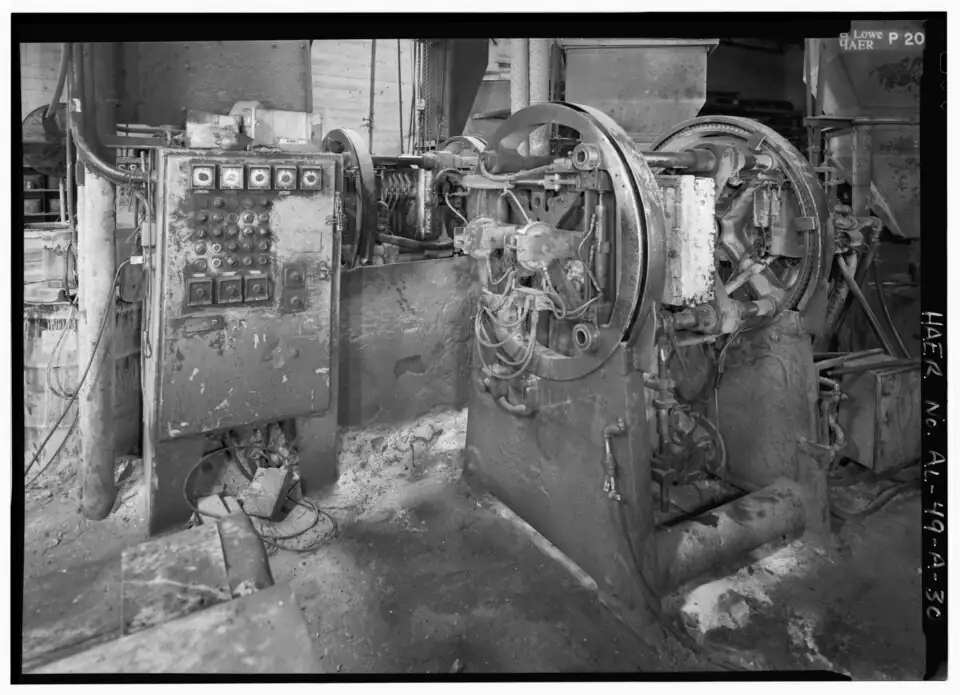
A shell core machine is foundry equipment that forms sand cores and shell molds by the thermal Croning process. It blows or dumps resin-coated sand into a heated metal core box, where the binder melts and cross-links within seconds to produce a hard, dimensionally accurate core. Because curing is driven by heat rather than by a gas catalyst, the machine integrates a heated tool, a sand magazine and blow head, and precise temperature and timing control, distinguishing it from cold box and hot box equipment that rely on different binder chemistries.
This guide explains how the machine and the process work together, the main machine types, the resin-coated sand it consumes, the specifications that drive selection, and the relevant foundry standards. The aim is to let a procurement or process engineer scope a shell core line and write a defensible technical requirement in one sitting.
This guide is written for foundry purchasing engineers and process engineers. It covers six chapters from the definition and history of the Croning process, through machine classification, binder chemistry, materials and standards, key specification parameters, to the selection decision sequence, with seven FAQs and maker comparisons. Process and material references draw on the public foundry literature, including the Croning shell process described in the foundry lexicon, classic USPTO shell-process patents, and established coremaking equipment documentation. Equipment figures are typical ranges, not a single vendor specification.
Chapter 1 / 06
What is a Shell Core Machine
A shell core machine, also called a shell core shooter or shell molding machine, is a foundry coremaking machine that hardens resin-coated sand by heat to form sand cores and shell mold halves. The core is the internal sacrificial pattern that creates hollow passages inside a casting: water jackets in an engine block, oil galleries in a cylinder head, or the bore of a pump body. The machine delivers metered resin-coated sand into a metal core box held at high temperature, holds it until a firm cured layer forms, then ejects a rigid core. Unlike a pressure die or a permanent mold, the core box is reused thousands of times while each sand core is consumed in a single pour.
Functionally the machine combines four subsystems. First, a sand magazine and blow head or dump reservoir that stores and delivers the free-flowing coated sand. Second, a heated core box, normally split into two halves, whose working surfaces are held at roughly 230 to 320 degrees Celsius by electric cartridge heaters or gas burners. Third, a clamping and ejection mechanism that closes the box against blow pressure and strips the finished core. Fourth, a control system, today usually a programmable controller with a touchscreen, that sequences blow, cure or dwell, and discharge while regulating temperature and timing. The defining feature, and the reason the equipment is a distinct category, is that curing energy is supplied by the hot tool, with no catalyst gas and no separate gassing manifold.
The process the machine performs is the Croning process, named after Dr. Johannes Croning, who developed thermosetting resin-coated sand molding in Germany during the Second World War. The method was patented in the 1940s and spread internationally after the war as the shell molding or C-process. It introduced a fundamentally new idea to the foundry: instead of clay-bonded green sand rammed by force, a thin coating of solid phenolic resin on each sand grain could be melted and thermoset against a hot surface to lock the grains into a rigid, accurate shell. That single idea underlies every shell core machine built since.
Two related but distinct outputs come from the same family of equipment. Shell molds are thin curved shell halves that together form the external cavity of a casting and are clamped or glued together for pouring. Shell cores are the internal sacrificial shapes. Many shops run shell core shooters and shell molding machines side by side, and the terminology overlaps in practice, but the core machine is optimized to blow sand into a closed box and form complex, often hollow, internal geometry, while a molding machine more often uses a flat heated pattern plate and a dump or roll-over action.
The reason a foundry tolerates the higher sand cost and the energy of heating tooling is the quality of the result. Shell coremaking holds linear tolerances on the order of plus-or-minus 0.3 millimeters and produces cast surface roughness around Ra 3.2 micrometers, far smoother than green sand. Cores come out hard, with sharp edges and thin sections intact, and they store and handle well. For high-volume automotive and hydraulic castings, that accuracy translates directly into less machining stock, fewer scrapped castings, and lower finishing labor, which is the commercial logic of owning a shell core machine.
Chapter 2 / 06
Machine Types and Configurations
Shell core machines are classified by how the sand is delivered to the tool and by the motion of the core box. The two delivery families are the dump or roll-over machine, descended from the original shell molding station, and the blow or shoot machine, which is the dominant configuration for modern core production. The table below compares the principal configurations on the metrics that matter at selection time.
Configuration
Sand Delivery
Core Box Motion
Best Suited To
Dump / roll-over molding station
Gravity from inverted reservoir
180 degree rotation
Shell molds, flat patterns, thin shells
Fixed-box bottom blow
Pressurized blow, 4 to 8 bar
Stationary
Simple solid and hollow cores
Fixed-box top blow
Pressurized blow, 4 to 8 bar
Stationary
Complex and deep cores
Tiltable / oscillating shooter
Blow plus tilt to drain
Tilt and oscillate
Complex hollow cores, drain-back
Automatic shell machine cell
Blow with robot discharge
Mechanized index
High-volume unattended runs
The dump or roll-over station is the classic shell molding configuration. A reservoir of resin-coated sand is clamped over a heated pattern plate or core box, the assembly rotates 180 degrees so sand falls onto the hot surface under gravity, the heat partially cures a firm shell, and a second rotation lets the loose, uncured sand drain back into the reservoir for reuse. This mechanism naturally produces a hollow shell of controlled thickness and is well suited to shell molds and to relatively flat or open geometry. It is mechanically simple and forgiving, but slower than a blow machine and less able to fill deep or intricate cavities.
The fixed-box blow or shoot machine is the workhorse of core production. Compressed air at roughly 4 to 8 bar drives sand from the magazine through a blow plate into a closed, vented core box in a fraction of a second, packing it to uniform density. Bottom-blow machines, with the sand tank below the box, suit simpler solid and hollow cores, while top-blow machines suit deeper or more complex shapes. After the blow, the box dwells while the heated walls cure the shell; for hollow cores the loose center sand is then drained and reclaimed, while solid cores cure fully. Fixed-box machines deliver short cycle times and consistent density, which is why they dominate volume coremaking.
The tiltable or oscillating shooter combines a pressurized blow with controlled tilting so that, after a shell forms, the uncured center sand pours out cleanly. This configuration is favored for complex hollow cores where drain-back must be reliable and complete. At the top of the range, an automatic shell machine cell wraps a blow machine in mechanized core discharge to a conveyor and optional robotic handling, allowing largely unattended operation. The well-known Shalco U-180, U-360, and U-900 machines, now built or remanufactured by EMI as new or improved units such as the Model 803, are representative of this automatic shell-machine lineage, performing blow, invest, cure, and rock steps with temperature and time set from an operator screen.
A final distinction is single-station versus multi-station and integrated cells. A standalone machine is simplest to install and maintain. Multi-station carousels and integrated core shops, of the kind supplied by Laempe Moessner Sinto and Sinto group brands, add sand preparation, automated tool change, and post-treatment so that several core boxes cycle in parallel. The right level of integration depends on volume: a jobbing foundry may need one flexible machine, while an engine-block line justifies a fully automated cell.
Chapter 3 / 06
The Croning Process and Binder Chemistry
Understanding the binder chemistry is the key to running a shell core machine well, because every machine setting, from box temperature to dwell time, is ultimately tuned to the behavior of the resin film on the sand grains. The shell process uses a two-stage, or novolac, phenol-formaldehyde resin together with a latent hardener and a lubricant. The process cycle and its temperature regime are summarized below.
Process Step
Typical Temperature
Typical Duration
What Happens
Core box preheat
230 to 320 °C
Held continuously
Tool surface ready to melt resin
Blow / invest
230 to 320 °C
Under 1 s blow
Coated sand fills and packs the box
Cure / dwell (shell build)
230 to 320 °C
10 to 90 s
Resin melts, hexamine cross-links shell
Drain-back (hollow cores)
230 to 320 °C
A few seconds
Uncured center sand pours out for reuse
Optional post-cure
Up to 315 °C oven
1 to 2 min
Shell hardens fully, then strip
The novolac resin is a solid, fusible phenol-formaldehyde resin made with an excess of phenol so that it is permanently meltable on its own and will not thermoset until a hardener is supplied. Coated onto sand and heated, it first melts and flows around the grain contacts, then sets once the hardener activates. The novolac is chosen precisely because it stays stable as a solid coating during storage and only reacts on demand at the hot tool, which is what makes a free-flowing, shelf-stable coated sand possible.
Hexamethylenetetramine, or hexamine, is the latent hardener that converts the meltable novolac into a rigid thermoset. It is added at roughly 10 to 15 parts per 100 parts of resin. When the coated sand reaches curing temperature, the hexamine decomposes and supplies the formaldehyde-equivalent cross-links that the novolac lacks, locking the resin into an infusible network that bonds the sand grains. Because hexamine carries nitrogen, excessive levels can contribute to nitrogen-related casting defects such as pinholes, so the dose is kept to what the cure requires. Calcium stearate is added in small amounts as a lubricant and release agent: it improves the flowability of the coated grains during the blow and helps the cured core release cleanly from the box.
The coated sand itself is produced by the hot-coating method, the dominant commercial route. Sand is heated, solid or molten novolac resin is mixed in and films onto the hot grains, and an aqueous hexamine solution is then added. The water flashes off, cooling the grains and solidifying the resin film, and the mass breaks up into free-flowing coated sand. The result is a granular material that pours and blows like dry sand at room temperature yet cures hard in seconds against a hot tool. This is the material the shell core machine is built to consume.
The thermal cure has a clear operating window. Below roughly 200 degrees Celsius the resin will not melt and distribute evenly, leaving soft, friable cores. In the normal 250 to 300 degrees Celsius band, a firm shell builds steadily and shell thickness scales with dwell time, so longer contact and higher temperature give a thicker, stronger shell at the cost of cycle time. Pushed too hot, above about 350 degrees Celsius, the resin can scorch at the surface before the interior cures, producing blisters and gas defects. Research on resin-coated sand also shows that higher cure temperature and longer cure time increase thermal distortion and can reduce hot strength, so the process target is the minimum cure that achieves the required shell, not the maximum the machine can deliver.
Chapter 4 / 06
Resin-Coated Sand, Tooling and Standards
The consumable that a shell core machine runs on is resin-coated sand, and tool and sand quality together determine core quality. The base refractory is most often washed and dried silica sand, with zircon, chromite, or olivine sand used where higher refractoriness or lower thermal expansion is needed, for example to resist veining on heavy steel castings. Grain shape and size distribution are central: rounded to sub-angular grains pack and release better, and the grain fineness, commonly described by an AFS grain fineness number, is selected to balance surface finish against permeability. Finer sand gives a smoother cast surface but lower gas permeability, which raises the risk of gas defects if venting is inadequate.
Resin content on the coated sand is typically 2.0 to 4.0 percent by weight. Raising the resin level increases core strength and surface hardness but also increases gas evolution during pouring and the cost per kilogram, so foundries run the lowest resin level that meets the strength and finish requirement. The coated sand is normally qualified by tensile or transverse bending strength of standard test specimens cured under controlled conditions, by loss on ignition as a proxy for resin content, and by melt and flow characteristics that predict how it will blow and build a shell. These property tests are the practical basis for incoming-material acceptance.
Core box tooling is the other half of the equation. Boxes are usually machined from cast iron or steel for the heat capacity and dimensional stability the hot process demands; aluminum bronze is used where faster heat transfer helps. The tool must incorporate adequate vents so displaced air escapes cleanly during the blow, ejector pins or plates positioned to strip the core without cracking it, and a release strategy, since calcium stearate in the sand assists but does not replace good draft and surface finish on the cavity. Thermocouples are fitted so the controller can hold the working surface within a few degrees of set point, because temperature uniformity across the cavity directly controls how evenly the shell builds.
The table below summarizes the common refractory choices and where each is used. As always, the table guides first selection only; the resin supplier and tooling maker should confirm the combination against the specific alloy, section thickness, and pouring temperature before a line is committed.
Refractory Sand
Typical Resin Content
Best Used For
Note
Silica
2.0 to 4.0%
General iron, aluminum, brass cores
Lowest cost, watch expansion veining
Zircon
2.0 to 3.0%
Steel and heavy iron, hot spots
Low expansion, high cost
Chromite
2.5 to 3.5%
Steel, chilling effect needed
High thermal conductivity
Olivine
2.5 to 3.5%
Manganese steel, basic alloys
Non-silica, no free silica
On the standards and safety side, several frameworks apply. The American Foundry Society publishes the AFS grain fineness number method and standard sand and core testing procedures widely used to specify and accept coated sand. Foundry process emissions and worker exposure are regulated, since phenol-formaldehyde binders and hexamine release phenol, formaldehyde, and ammonia on curing and pouring, so local exhaust ventilation and emission controls are mandatory and crystalline silica dust exposure is controlled under occupational health limits. The machine itself, as industrial equipment, falls under general machinery safety regimes such as the EU Machinery Directive and ISO 12100 risk-assessment principles in markets that require CE marking, covering guarding of the clamping motion, hot-surface protection, and pneumatic safety.
Chapter 5 / 06
Key Specification Parameters
Reading a shell core machine specification sheet means separating the handful of numbers that determine fitness for the job from the marketing figures. Eight parameters do most of the work: shot or shell-forming capacity, core box and platen envelope, blow pressure, clamping force, heating power and method, temperature control, cycle time, and automation interface. Each is explained below.
Shot volume and core capacity set the largest core the machine can make. Production shell core shooters offer shot volumes from roughly 10 to 150 liters, and a given machine forms cores up to several kilograms per shot. The shot volume should comfortably exceed the core box cavity volume so the box fills in a single shot at uniform density; a machine that needs two shots to fill a box will show a density seam. For dump or roll-over molding stations the equivalent figure is the reservoir volume and the effective blow or contact area of the heated plate.
Core box and platen envelope is the physical limit on tooling. It is given as the maximum heated platen area and the maximum and minimum core box depth, for example a heated plate around 0.5 by 0.7 meters with a box depth envelope of roughly 0.2 to 0.5 meters on a large automatic machine. No matter how large the shot volume is, a core cannot exceed the platen footprint and depth the machine accepts, so this envelope is checked against the biggest tool in the program before anything else.
Blow pressure and clamping force work as a pair. Blow pressure, typically 4 to 8 bar of compressed air, drives the sand into the box; higher pressure improves filling of deep or thin sections but increases the force trying to open the box. Clamping force must exceed that opening force with margin, or the parting line will flash and the core will lose dimensional accuracy. Spec sheets that list a generous shot volume but a modest clamping force should be read carefully, because the clamping figure, not the shot figure, often limits the largest practical core.
Heating power, method, and temperature control determine cure consistency and energy cost. Tooling is heated electrically by cartridge heaters or by gas burners; electric heating offers tighter zone control and easier automation, while gas can be cheaper to run where gas is inexpensive. Quoted heating capacity ranges from a few kilowatts on small electric machines to several hundred thousand BTU per hour on large gas-fired shell machines. What matters operationally is closed-loop thermocouple control holding the working surface within a few degrees of set point across the cavity, since temperature uniformity governs even shell build.
Cycle time and automation drive productivity. Cycle time is dominated by the cure or dwell needed to build the required shell thickness, typically tens of seconds, plus blow, drain, and discharge. Automation features that affect throughput and labor include mechanized core discharge to a conveyor, robotic core handling, automatic core box change to cut changeover time, and integrated post-cure ovens and gassing or coating stations on combined lines. The remaining interface parameters, such as PLC and HMI type, recipe storage, and data logging, matter for traceability and for fitting the machine into a wider plant control system.
One subtlety specific to the shell process is that shell thickness is a process variable, not a fixed machine rating. For hollow cores the cured shell is usually 6 to 15 millimeters thick, set by how long the sand contacts the hot tool. A machine with fine temperature and timing control lets the operator dial in the thinnest shell that still holds the core together, saving sand and cycle time, whereas a machine with coarse control forces a conservative, thicker, slower setting. Resolution of temperature and timing control is therefore a real, if easily overlooked, specification.
Chapter 6 / 06
Selection Decision Factors
To turn the preceding chapters into a specific machine choice, work through the decision sequence below. Most selection mistakes come not from a single wrong number but from deciding the headline machine before the core program and the binder are pinned down. These eight steps can serve as a fixed RFQ template for shell coremaking equipment.
Define the core program first: list the largest and most complex cores, their volume, weight, geometry, and whether they are solid or hollow. Hollow cores that need reliable drain-back favor a tiltable or roll-over configuration; deep complex solid cores favor a top-blow fixed box.
Fix the binder and sand: confirm resin-coated sand grade, refractory type, resin content of 2 to 4 percent, and the cure temperature window before sizing the machine, since heating power and temperature control are specified to the sand, not the other way round.
Size capacity and envelope: require shot volume comfortably above the largest box cavity, and verify the heated platen area and box depth envelope accept your biggest tool. Capacity headroom protects against future larger cores.
Match blow pressure and clamping: specify blow pressure in the 4 to 8 bar range for your geometry and require clamping force with margin over the resulting opening force, to prevent flash and dimensional drift on the parting line.
Choose heating and control: electric cartridge heating with multi-zone closed-loop thermocouple control for tight, automatable temperature uniformity, or gas firing where energy cost favors it. Confirm the control holds the surface within a few degrees of set point.
Set automation level to volume: a single flexible machine for jobbing work, mechanized discharge and recipe storage for steady runs, full robotic cells with automatic tool change and integrated post-cure for high-volume lines such as engine-block coremaking.
Plan environment, health, and safety: budget local exhaust ventilation and emission control for phenol, formaldehyde, and ammonia released on cure and pour, crystalline silica dust control, hot-surface and clamping guarding, and CE or local machinery-safety compliance.
Total cost of ownership: machine price plus tooling, coated-sand consumption at 2 to 4 percent resin, energy to heat tooling, sand reclamation, maintenance, and the value of reduced casting machining stock and scrap. The accuracy benefit of the shell process is realized downstream, so judge the line on finished-casting cost, not core cost alone.
One last and commonly overlooked dimension is serviceability and supplier support: availability of heater, valve, and blow-plate spare parts, tooling-maker proximity for core box repair and modification, control-system supportability over a ten to twenty year machine life, and local service engineers for thermal and pneumatic faults. These seem secondary at purchase but determine downtime once the line is in production. Established coremaking suppliers such as Laempe Moessner Sinto and Sinto group brands, EMI with its remanufactured and improved Shalco-derived machines, and regional builders such as Vermaco, Ganesh, and ATHI offer different balances of automation, price, and local support, so the right choice depends on volume, geography, and the existing maintenance capability of the foundry.
FAQ
What is the difference between a shell core machine and a cold box core machine?
A shell core machine cures the core thermally. It blows or dumps resin-coated sand into a metal core box heated to roughly 230 to 320 degrees Celsius, where the solid novolac resin melts and the hexamine hardener cross-links it, hardening the sand in 10 to 90 seconds. No gas is injected. A cold box core machine cures at room temperature by passing an amine catalyst gas, such as DMEA or TEA, through a phenolic-urethane binder, so the core box stays unheated and a separate gas generator plus scrubber is required. Shell cores have higher surface hardness and a smoother cast finish, while cold box cores cycle faster and use less energy.
What temperature should a shell core box run at?
The core box working surface is typically held between 230 and 320 degrees Celsius, with 250 to 300 degrees Celsius the most common operating window for standard novolac resin-coated sand. Below about 200 degrees Celsius the resin will not melt and flow evenly, producing soft or friable cores. Above roughly 350 degrees Celsius the resin can scorch at the surface before the core interior cures, which causes blistering and gas defects. The exact set point is tuned to the resin grade, the desired shell thickness, and the cycle time, then held by electric cartridge heaters or gas burners under closed-loop thermocouple control.
What is resin-coated sand and how much resin does it contain?
Resin-coated sand, also called precoated or Croning sand, is silica or zircon sand whose grains are coated with a thin film of solid two-stage novolac phenolic resin plus hexamethylenetetramine (hexamine) as the latent hardener and calcium stearate as a flow and release aid. Resin content is typically 2.0 to 4.0 percent by weight of the sand, with hexamine added at roughly 10 to 15 parts per 100 parts of resin. The coating is applied by the hot-coating method, in which molten resin is mixed onto heated sand and the hexamine solution is then added to cool and solidify the film into free-flowing coated grains.
What is the Croning process and who invented it?
The Croning process, also called shell molding or the C-process, is the thermal coremaking and molding method that shell core machines perform. It was developed by Dr. Johannes Croning in Germany during the Second World War and patented in the 1940s. The method uses thermosetting phenol-formaldehyde resin-coated sand poured or blown against a heated metal pattern or core box: the heat partially cures a firm shell at the tool surface, the loose center sand is drained for reuse, and the shell is then fully cured. It produces cores and molds with excellent dimensional accuracy and a smooth cast surface, which is why it remains standard for engine blocks, cylinder heads, and hydraulic castings.
What surface finish and tolerance can shell coremaking achieve?
Shell coremaking and shell molding are valued for accuracy. Linear tolerances on the order of plus-or-minus 0.3 millimeters are routinely held, and cast surface roughness of about Ra 3.2 micrometers, sometimes finer, is achievable, far better than green sand. The fine resin-coated grains and the rigid cured shell reproduce sharp detail and thin sections faithfully and resist erosion during pouring. This combination reduces machining stock and finishing labor on the casting, which is the main commercial reason foundries pay the higher sand and energy cost of the shell process for engine, pump, and valve components.
How do I size shot volume and clamping force when selecting a machine?
Match the sand magazine and shot capacity to the largest core you make, with margin: shot volume should comfortably exceed the core box cavity volume so the box fills in one shot. Production shell core shooters offer shot volumes from roughly 10 to 150 liters and form cores up to several kilograms per shot. Clamping force must hold the core box closed against blow pressures of about 4 to 8 bar without flash; undersized clamping causes parting-line flash and dimensional drift. Also confirm the heated platen area and core box depth envelope fit your tooling, since these limit the maximum core footprint regardless of shot capacity.
Which manufacturers build shell core machines?
Established suppliers include Laempe Moessner Sinto (Germany), a leading coremaking equipment maker; EMI (Cleveland, Ohio), which remanufactures and improves the well-known Shalco U-180, U-360, and U-900 shell machines and builds the Model 803 successor; and Sinto and its group brands for integrated core shops. Several Indian and Chinese builders, including Vermaco, Ganesh, ATHI, and Primafond-style suppliers, offer roll-over and fixed shell core shooters at lower cost for general foundry work. Selection should weigh automation level, tool-change time, gassing and post-cure integration, and local spare-part and service availability rather than headline price alone.