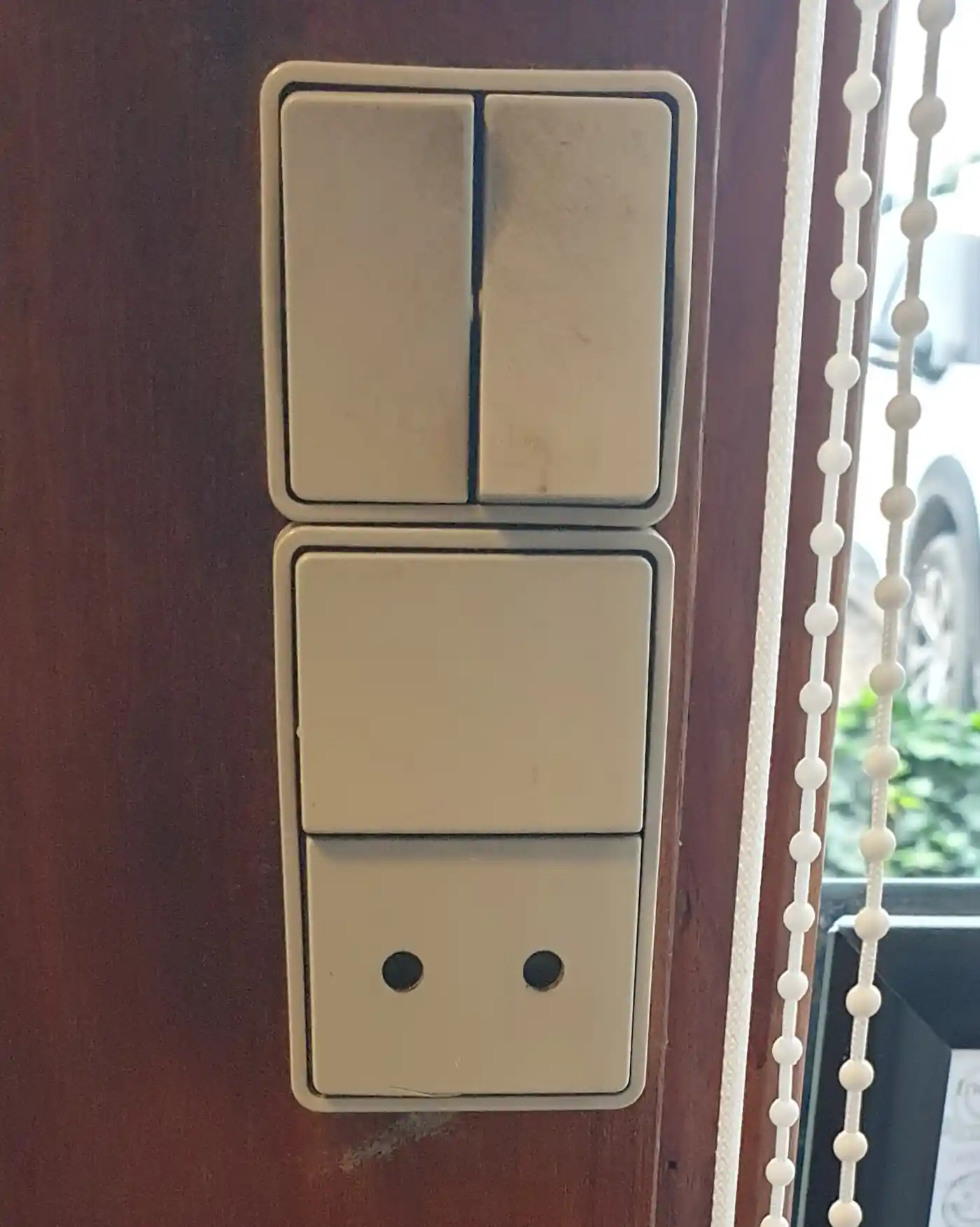
The supplied dictionary sources define a switch as a control consisting of a mechanical, electrical, or electronic device for making, breaking, or changing the connections in a circuit. That single definition, drawn from English language reference material, is the conceptual anchor for the entire industrial category. The plural form switches in technical writing therefore refers to a family of components that share the act of completing or interrupting a conductive path, regardless of the physical principle used to actuate them.
Beyond the generic circuit definition, the sources confirm the breadth of the switch category through phrases such as switch on, switch off, switch in, power switch, limit switch, pressure switch, membrane switch, optical switch, photoelectric switch, vacuum switch, foot switch, and ignition switch. Each phrase pairs a common English collocation with a specific industrial subfamily, and the same sources list example sentences describing timer switches, code switches, and radiation sensitive switches for prevention of latchup. The remainder of this page uses that vocabulary as the seed for the engineering treatment that follows.
Industrial switches are electromechanical, electronic, or solid state devices that make, break, or change the connections in a circuit. They form the decision layer between sensors, controllers, and actuators in factory automation, process control, and machine building. This reference page consolidates the working principles, parameter language, configuration families, selection logic, and compliance framework that procurement and engineering teams apply when specifying switches.
Chapter 1 / 06
Fundamentals and Working Principle
The dictionary entries cited define a switch as a control consisting of a mechanical, electrical, or electronic device for making or breaking or changing the connections in a circuit. In an industrial context that statement translates into a component with at least two stable states, one of which presents a low impedance between its input and output terminals and the other of which presents a high impedance. The transition between those two states is the act of switching, and the engineering of every switch type is the engineering of how that transition is triggered, how much energy it dissipates, and how reliably it can be repeated.
Industrial switches differ from generic circuit elements in that they are exposed to a defined set of environmental and operational stresses. They may be asked to interrupt inductive loads, to operate under contamination from oil or coolant, to survive a fixed number of mechanical cycles, or to read a process variable such as pressure, level, or position. The collocations in the source material, including limit switch, pressure switch, foot switch, and membrane switch, each imply a different actuation mechanism but all rely on the same underlying definition of making or breaking a circuit.
Solid state variants use semiconductor junctions to perform the same make or break function without any moving contact. The example sentence about a device that switches into conduction when the voltage exceeds a breakover limit describes the threshold behaviour of such a component. Whether the switching element is a metal contact, a reed, a Hall effect sensor, a phototransistor, or a triac, the externally observable function is identical, and that is the reason the word switch covers so many physically different products.
Reliability of a switch is governed by the interaction between its contact system, its housing, and the load it controls. Dictionary examples in the source set refer to wall switches, light switches, timer switches, and code switches, each of which carries an implicit duty cycle, environment, and operator interface. Industrial procurement therefore treats the word switch as a functional descriptor and then maps it to a specific principle, rating, and form factor before release to production.
Mechanical switch: a device whose contacts are physically moved by an actuator such as a lever, plunger, or roller, listed in the source dictionary as the canonical example of the word.
Solid state switch: a semiconductor device such as a transistor or triac that changes conduction state when an input crosses a threshold, illustrated by the breakover voltage example.
Reed switch: a sealed contact pair that closes in the presence of a magnetic field, used in level and proximity applications.
Photoelectric or optical switch: a device that responds to a light threshold, listed in the source collocations as optical switch and photoelectric switch.
Pressure switch: a device that actuates when a process fluid pressure crosses a setpoint, listed in the source as pressure switch.
Limit switch: an electromechanical position switch used to detect the end of travel of a moving part, listed as limit switch with the Chinese label 限位开关.
Chapter 2 / 06
Specifications and Key Parameters
The technical parameters of an industrial switch are the numeric and categorical attributes that allow two otherwise similar products to be distinguished on a datasheet. The sources supplied do not contain numeric parameter values, so this section defines the parameter names and the engineering meaning of each, and the table below records the values as varies by model. Procurement engineers should always read the parameter name and unit rather than the value alone, because the same name can map to different test conditions across vendors.
The first parameter family is electrical rating. Rated voltage and rated current describe the maximum steady state values that the switch can carry without exceeding its temperature rise limit, and the example sentence The heater is on a timer switch in the dictionary sources confirms that a switch is routinely selected on the basis of the load it serves. Switching capacity, expressed in volt amperes or kilowatts, combines those two values for a defined load class such as resistive, inductive, or motor.
The second family is mechanical life. For electromechanical switches this is expressed as the minimum number of operating cycles the device must complete before contact resistance or actuation force drifts beyond its specification. The example in the sources referring to a light switch that is turned on and off repeatedly underwrites the importance of cycle life even in a domestic context; in industrial service the same parameter is the dominant driver of preventive maintenance intervals.
The third family is environment. Ingress protection, expressed as the IP code, defines resistance to dust and water; operating temperature defines the range over which the switch will hold its ratings; and vibration and shock define suitability for machinery with rotating or impacting masses. The dictionary collocations foot switch, membrane switch, and vacuum switch each imply a different environmental envelope and therefore a different set of relevant environmental parameters. Because the source material does not quote numeric values for any of these, every cell in the specification table below is recorded as varies by model and the engineer is referred back to the vendor datasheet for the actual rating.
Parameter
Definition / engineering meaning
Typical source-of-truth
Value range (industrial category)
Rated voltage (V)
Maximum steady state voltage the switch can switch or carry
Vendor datasheet, per IEC/UL rating
varies by model
Rated current (A)
Maximum steady state current the switch can switch or carry
Vendor datasheet
varies by model
Switching capacity (VA or kW)
Product of rated voltage and rated current for a stated load class
Vendor datasheet
varies by model
Mechanical life (cycles)
Minimum number of operating cycles before contact or actuation parameters drift out of spec
Vendor datasheet, test per category standard
varies by model
Electrical life (cycles)
Number of operations under rated load before contact failure
Vendor datasheet
varies by model
Operating temperature (°C)
Ambient range over which ratings are held
Vendor datasheet
varies by model
Ingress protection (IP code)
Resistance to dust and water per an IP rating standard
Vendor datasheet
varies by model
Actuation force or torque (N or N·m)
Force or torque required to operate the actuator
Vendor datasheet
varies by model
Contact form (SPST, DPDT, etc.)
Number of poles and throws the contact set can realise
Vendor datasheet, circuit drawing
varies by model
Termination type
Form of the electrical connection, e.g. screw, solder, plug, cable
Vendor datasheet
varies by model
Chapter 3 / 06
Types and Configurations
The source dictionary lists a wide set of compound nouns formed with switch, and each of those compounds is a distinct configuration family. Switch on, switch off, and switch in describe the three fundamental operations a switch can perform on a circuit. The remaining compounds, including power switch, light switch, control switch, limit switch, pressure switch, membrane switch, optical switch, photoelectric switch, vacuum switch, ignition switch, foot switch, and electronic switch, are configuration families defined by the actuator, the load, or the sensing principle they employ.
Actuator defined families include the limit switch, which detects the end of travel of a moving part, and the foot switch, which is operated by an operator's foot to leave the hands free. Both are mechanical switches but they differ in their human machine interface and in the way they are mounted. The source phrase switch cabinet, translated as 开关柜 or 配电箱, refers to the enclosure in which multiple switches are aggregated rather than to a switch type itself, and is therefore a system level configuration rather than a component configuration.
Sensing defined families include the pressure switch, the optical switch, and the photoelectric switch. The pressure switch translates a process pressure into a contact state, the optical switch translates a light level into a contact state, and the photoelectric switch uses a beam to detect the presence or absence of a target. The source sentence referring to a radiation sensitive switch for prevention of latchup extends the same family to ionising radiation. Each of these families shares the dictionary definition of making or breaking a circuit but uses a different physical input.
Construction defined families include the membrane switch, the vacuum switch, and the electronic switch. The membrane switch uses a printed flexible circuit and a tactile overlay; the vacuum switch uses a vacuum envelope to protect the contacts; the electronic switch uses a semiconductor element. The dictionary also lists switch control, which is a control architecture rather than a device, and switch over, which is the act of transferring a process from one source to another. Procurement decisions usually combine one item from each column, for example a panel mounted mechanical limit switch with screw termination and DPDT contacts.
Power switch: source collocation, refers to the main device that energises and de energises a load.
Light switch: source collocation, a switch dedicated to a lighting load; the dictionary example There is a switch on the wall for turning on the lights confirms the domestic archetype.
Control switch: source collocation, used to drive a control loop rather than a power load directly.
Limit switch: source collocation, electromechanical position sensor at the end of travel of a moving part.
Pressure switch: source collocation, actuated by process pressure crossing a setpoint.
Membrane switch: source collocation, a printed flat switch with a flexible overlay.
Optical and photoelectric switch: source collocations, both translate a light signal into a contact state.
Vacuum switch: source collocation, a switch whose contacts operate inside a vacuum envelope.
Ignition switch: source collocation, the switch that powers a vehicle or engine starting circuit.
Foot switch: source collocation, an actuator intended for foot operation.
Chapter 4 / 06
Selection Criteria for Procurement
Selection of an industrial switch starts with the load. The dictionary example The switches close the contacts and complete the circuit underlines that the switch is the element that decides whether current can flow, so the rated voltage, rated current, and load class of the downstream device are the first numbers to fix. A motor load requires a switch with a higher inrush rating than a resistive heating load of the same steady state power, and a solenoid or transformer load requires a switch with a derated inductive breaking capacity. The procurement specification should always quote the load type alongside the steady state values.
The second criterion is the physical interface. The dictionary collocations wall switch, panel switch, foot switch, and membrane switch each imply a different mounting style and a different operator interaction, and the same word switch is reused across all of them. Engineering drawings should call out the panel cutout, the actuator style, the termination style, and the indicator style so that the switch is mechanically compatible before its electrical rating is even considered. The example sentence She switched on the light shows the human action that any operator interface switch must support, and the procurement specification should match that action to the actuator.
The third criterion is environment. The presence of dust, water, oil, or corrosive chemicals drives the IP rating and the housing material. Operating temperature range, vibration, and shock determine whether a standard industrial switch will hold its ratings or whether a ruggedised or hermetic part is required. Because the sources do not supply numeric environmental values, every environmental line item in the procurement specification must be backfilled from the vendor datasheet and from the site survey of the installation.
The fourth criterion is compliance. The buyer should require evidence of the relevant safety and electromagnetic compatibility standards for the destination market, and should record the standard numbers on the purchase order so that they can be verified at goods receipt. The next chapter lists the families of standards that apply. Where the load is safety critical, the switch should be selected with positive opening contacts and a defined safety rating, and the procurement specification should require the vendor to confirm both the rating and the test method.
Define the load: voltage, current, load class, inrush, and power factor, drawn from the controlled circuit rather than from the switch family.
Define the actuator: lever, plunger, roller, pushbutton, foot pedal, or membrane, drawn from the operator and machine kinematics.
Define the environment: IP code, temperature, humidity, vibration, shock, and chemical exposure, drawn from the site survey.
Define the interface: panel cutout, termination style, indicator, and labelling, drawn from the engineering drawing.
Define the compliance: safety standard, EMC standard, and any sector specific standard, drawn from the destination market.
Define the documentation: datasheet, certificate, test report, and drawing, drawn from the company quality manual.
Chapter 5 / 06
Standards, Compliance and Testing
Standards for industrial switches fall into three families. The first is the safety family, which covers the construction, the creepage and clearance distances, the temperature rise, and the dielectric strength of the device. Safety standards are mandatory in most markets and are enforced by national regulators. The dictionary collocation power switch implies a device that is in scope for this family because it can directly control energy to a load.
The second family is the application or product standard. Limit switches, pressure switches, and proximity switches each have product specific standards that define the test sequence, the marking, and the performance classes. These standards are usually harmonised with regional safety frameworks so that a switch certified to one is accepted across multiple markets. The dictionary sentence about a wall switch in a domestic setting illustrates the boundary at which a product standard meets a wiring installation rule, and the same boundary exists in industry between the switch product standard and the panel or cabinet standard.
The third family is the quality and management family. These standards cover traceability, lot identification, change control, and corrective action, and they are checked at vendor audits rather than at goods receipt. The dictionary example referring to switch on the wall in a domestic context and the industrial example of a limit switch at the end of a machine axis are both subject to quality system oversight even when their product standards differ.
Testing follows the same partition. Type tests are run on representative samples and prove that the design meets the standard; routine tests are run on every unit and prove that the unit is consistent with the type test sample; site tests are run after installation and prove that the switch is functioning inside its declared environment. The dictionary sources do not quote any specific clause numbers, so engineers should obtain the current edition of the relevant standard from the issuing body before locking a test plan. Where a switch is used in a safety function, the test plan should additionally cover the diagnostic interval, the safe state, and the proof test interval required by the functional safety standard.
Safety family: construction, creepage, clearance, temperature rise, dielectric strength, mandatory in major markets.
Product family: type tests and routine tests for limit, pressure, proximity, and foot switches, harmonised across regions.
EMC family: emission and immunity tests for electronic and solid state switches, harmonised across regions.
Functional safety family: applies when the switch is part of a safety function, with defined performance levels and proof test intervals.
Quality system family: traceability, change control, and corrective action, checked at vendor audit.
Installation family: wiring rules and panel building rules, checked at site acceptance test.
Chapter 6 / 06
Market Landscape and Buying Process
The market for industrial switches is supplied by a mix of global automation vendors, specialist switch manufacturers, and regional panel builders. The dictionary sources are English language reference material and do not contain market share figures or vendor revenue, so any numerical claim about market concentration would be an invention and is deliberately omitted. The engineering treatment below is therefore limited to the structure of the buying process, which is the same regardless of which vendor is selected.
The buying process begins with the engineering specification described in chapter 4, and ends with goods receipt, vendor rating, and design change feedback. Between those two endpoints the typical steps are request for quotation, technical clarification, sample evaluation, certification check, commercial negotiation, order placement, order acknowledgement, goods receipt inspection, and vendor performance review. The dictionary collocations switch cabinet and switch control indicate that the switch is often bought together with a control panel, and procurement may therefore run the switch buy inside a wider panel buy or inside a wider machine build contract.
Pricing in the switch category is driven by the rating, the certification, the life expectancy, and the volume. Higher voltage, higher current, longer life, and a wider certification portfolio each increase unit cost, and the trade off is normally decided by the maintenance interval and the cost of downtime. The dictionary example The heater is on a timer switch implies a low cost, high volume commodity application in which the dominant selection criterion is fit rather than premium performance. The dictionary example about a radiation sensitive switch for prevention of latchup implies a low volume, high specification application in which the dominant selection criterion is special capability rather than price.
After delivery, the buyer should keep a register of installed switches that records vendor, part number, rating, location, and installation date. The register is the basis for preventive replacement before the end of mechanical life, for traceability in the event of a failure, and for feedback into the next design cycle. Because the source material does not supply any specific register format, the buyer should define one internally and align it with the company quality system. Done well, this closed loop is what turns a switch from a commodity line item into a managed component of the production system.
Engineering specification: defines load, actuator, environment, interface, and compliance.
Request for quotation: sent to approved vendors with the specification and the required documentation.
Sample evaluation: confirms the switch meets the specification in the real environment.
Certification check: confirms the vendor holds the standards claimed on the datasheet.
Commercial negotiation: confirms price, lead time, and minimum order quantity.
Goods receipt inspection: confirms the delivered units match the purchase order and are undamaged.
Vendor performance review: feeds back quality, delivery, and service into the next quote.
FAQ
What is an industrial switch in one sentence?
An industrial switch is a mechanical, electrical, or electronic device used to make, break, or change the connections in a circuit, as defined in the English language reference material. The same definition covers wall switches, panel switches, limit switches, pressure switches, and solid state variants, with the industrial specification adding ratings, life, and environmental parameters on top of that generic meaning.
How does an electromechanical limit switch differ from a solid state proximity switch?
An electromechanical limit switch uses a physical actuator such as a lever, plunger, or roller to move a contact set, while a solid state proximity switch detects a target without contact and switches a semiconductor output. Both satisfy the dictionary definition of making or breaking a circuit, but the electromechanical part has a defined mechanical life expressed in cycles and the solid state part has no moving contact and therefore a much longer electrical life.
Which parameter should be fixed first when selecting a switch for a new machine?
The first parameter to fix is the electrical rating of the load, because the rated voltage and rated current of the switch must equal or exceed those of the controlled device. Only after the rating is fixed should the engineer consider the actuator style, the environmental rating, the termination, and the compliance, in that order, because a switch with the wrong rating will fail regardless of how well it satisfies the other criteria.
Are standards for switches the same worldwide?
The major safety and product standards for switches are largely harmonised across regions, but the wiring installation rules that surround the switch differ by country. A switch certified to the international product standard will usually be accepted in multiple markets, but the panel that houses the switch must still meet the local installation code, and the procurement order should record both the product standard and the installation standard.
What is the meaning of positive opening contacts in a safety switch?
Positive opening contacts are contacts whose separation is driven by a non spring mechanism, so that the contact opens reliably even if the contact has welded. They are a requirement for switches used in safety functions because they prevent the failure mode in which a mechanical switch stays closed after the actuator has been released, which would defeat the safety function.
How is mechanical life different from electrical life on a switch datasheet?
Mechanical life is the number of operations the switch can perform with no load on its contacts, and is dominated by wear on the actuator, the spring, and the mechanism. Electrical life is the number of operations the switch can perform under its rated load, and is dominated by contact erosion and contact welding. The mechanical life is always higher than the electrical life, and the electrical life is the figure that should drive preventive maintenance.
What is the simplest way to compare two switches during procurement?
Build a parameter table that lists rated voltage, rated current, mechanical life, electrical life, IP rating, operating temperature, contact form, and certification for each candidate, and verify that every cell is filled with a value from the vendor datasheet. Where the sources do not supply a value, record varies by model rather than guessing, and require the vendor to confirm the value in writing before order release.