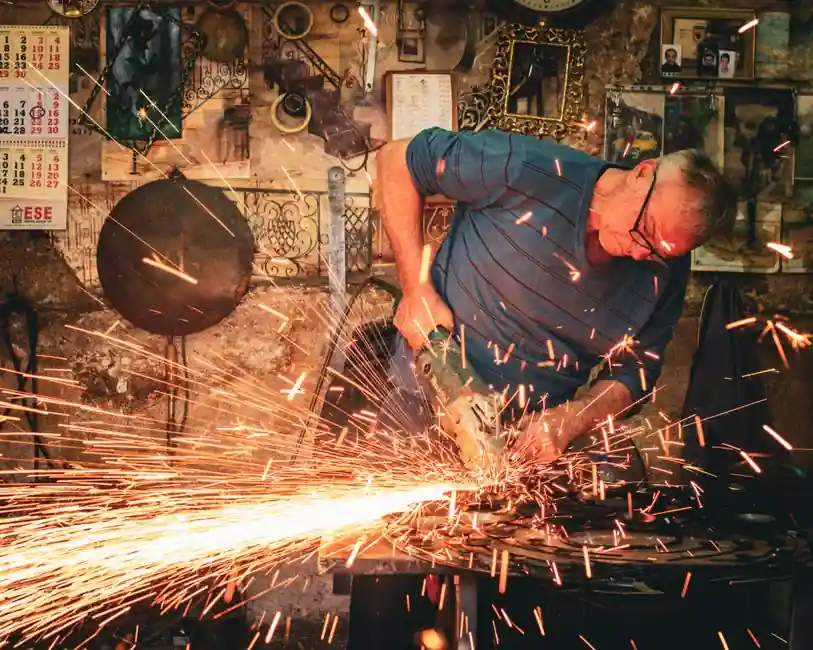
Three disc diameters dominate the angle-grinder market: 115mm (4.5"), 125mm (5"), and 230mm (9"); each steps up cutting depth, motor load, and operator fatigue in roughly that order [S1][S4].
All three sizes in the RYOBI 2026 line-up share a 22.2mm inner diameter and M14 spindle thread, with the 100mm class being the only outlier at 16mm bore and M10 thread [S1]. That commonality means a tradeshop can standardise on one set of 22.2mm abrasive consumables and only swap guards between the 115/125/230 bodies, rather than re-stock a separate consumable family per tool size.
Cutting depth, not disc diameter, is the real number to compare
Maximum cut depth is roughly a quarter of the disc diameter, so a 115mm disc cuts about 28-30mm deep, a 125mm disc reaches 32-35mm, and a 230mm disc clears 60-70mm in a single pass on flat stock [S3].
For home and site work, 125mm is widely treated as the universal default because the extra 5mm of radius over 115mm adds a usable 5-10mm of cut envelope and the same M14/22.2mm consumable fits both [S2][S5]. A 230mm tool is only justified once the workpiece regularly exceeds 6-8mm plate, the operator needs straight long cuts in concrete, or the cut depth of the smaller discs forces multiple passes that wear discs faster than they remove material [S3][S4].
Compatibility and safety: never run an oversize disc on an undersize body
A 125mm disc must not be fitted to a 115mm grinder: the guard geometry blocks it, and even if forced, peripheral speed at the larger radius exceeds the disc's rated maximum RPM, so burst risk rises sharply [S1][S5].
The bore standard is forgiving, however. 115mm, 125mm, and 230mm all use a 22.2mm inner diameter with an M14 spindle, so a 115mm flap disc will physically fit a 125mm or 230mm body, though the smaller abrasive wears faster and exposes more of the backing pad [S1][S2]. Key fitment rules from the manufacturer guidance: the bore must sit flush against the inner flange, the disc periphery must clear the guard with even gap, the guard must never be removed, and the disc's rated maximum RPM must equal or exceed the tool's no-load speed [S1].
Selection map: which size fits which job
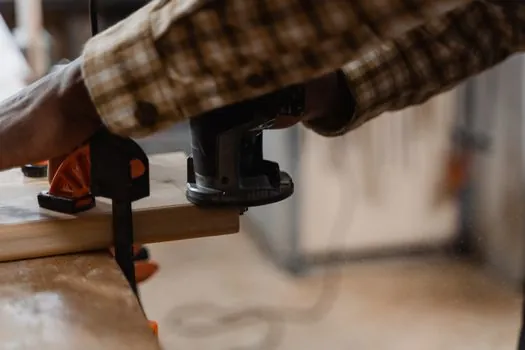
115mm suits trim work, blade sharpening, and one-handed overhead use where a smaller body and lower mass reduce fatigue; 125mm is the all-rounder for general metalwork, deburring, and rebar work; 230mm is for heavy section steel, masonry, and floor work where cut depth and power outweigh weight and disc cost [S3][S4][S5].
Decision matrix for picking disc size:
1. Cut depth needed: under 25mm = 115mm; 25-40mm = 125mm; over 40mm or straight long cuts = 230mm. The 125mm tool typically runs 750-1100W input, a 230mm tool needs 2000W+ for clean cuts in plate steel, and 115mm cordless models from 18V platforms now sit around 750W equivalent for short intermittent cuts [S3][S4].
2. One-handed use and overhead work: 115mm wins on mass and grip circumference; multiple experienced users note the slim 125mm bodies from Makita and DeWalt still allow one-handed operation, but the 230mm is firmly a two-handed tool [S2].
3. Consumable cost and availability: 115mm and 125mm discs are the cheapest and most stocked, with 115mm flap discs fitting 125mm bodies via shared 22.2mm/M14 fitment; 230mm discs cost several times more per piece and are bought mainly for dedicated heavy work [S2][S5].
4. Motor and power: for a 125mm grinder the practical minimum is around 800W for continuous metal cutting, with soft-start preferred; 230mm needs a much more robust motor to keep peripheral speed up under load [S5].
Power-source trade-off: corded, cordless, and pneumatic
Corded 115/125mm grinders at 6-9A are the cost-effective workshop default and deliver unlimited runtime, while modern 18V brushless cordless models now match corded cutting performance for most intermittent work at the cost of battery amp-hour limits [S3].
Pneumatic angle grinders, common in shipyard and OEM line work, run 90-120 PSI at 3,000-12,000 RPM, draw 4-8 CFM, and typically cover the 4-7 inch disc range; they are intrinsically safer in wet or explosive environments but require a compressor and hose management that 230mm mains-powered work generally avoids [S3]. Cordless 230mm grinders exist but battery mass and cost have kept corded mains dominant for that size.
What 115mm and 125mm cannot do well
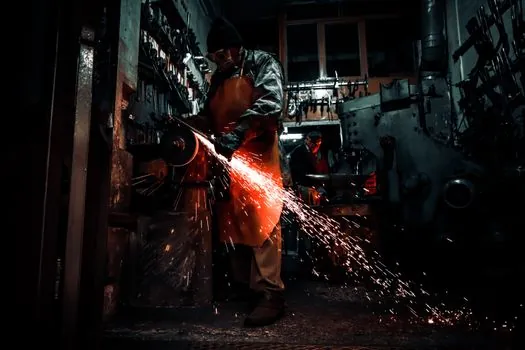
Neither 115mm nor 125mm is suited to heavy stock removal, long straight concrete cuts, or large-diameter pipe cutting; a 230mm is the right tool there, accepting the extra 1.5-2kg of mass and the larger guard sweep [S3][S4].
Within the small class, the 115mm runs out of cut depth quickly on plate over about 6mm and the smaller abrasive disc wears faster under sustained load, pushing total cost-of-consumables above a 125mm in shops that run the tool hard [S2][S5]. The flip side is genuine: for trim, sharpening, and tight-corner work, a 115mm is materially easier to place than a 125mm, and the 10mm difference in radius shows up in places a 125mm simply will not enter [S4].
Sourcing, standards, and practical buying signals
Disc certification to EN 12413 (bonded abrasive products) and a printed maximum operating speed in m/s, not just RPM, are the two non-negotiable markings to check before mounting any wheel on any of the three sizes [S1].
Watch for: (a) the printed max RPM on a 230mm disc versus the no-load speed of the tool, since underspeed is fine but overspeed is a burst hazard; (b) the 22.2mm/M14 fitment confirmation on the consumable packaging, because a few specialty 115mm discs still ship on 16mm bores in some regions; (c) guard diameter matching the disc class, since the 125mm disc will physically seat on a 115mm body but the standard 115mm guard will block it [S1][S5]. For an application comparison beyond cutting, the angle grinder overview covers duty-cycle ratings, and a floor grinder is the right reference when the 230mm class is being pushed toward surface grinding rather than cutting. For shops standardising on one consumable family, the disc coupling reference notes that the same 22.2mm bore pattern recurs across portable abrasive tools.
This topic is covered further in Activated carbon supply in 2026: PFAS demand and domestic capacity build-out.