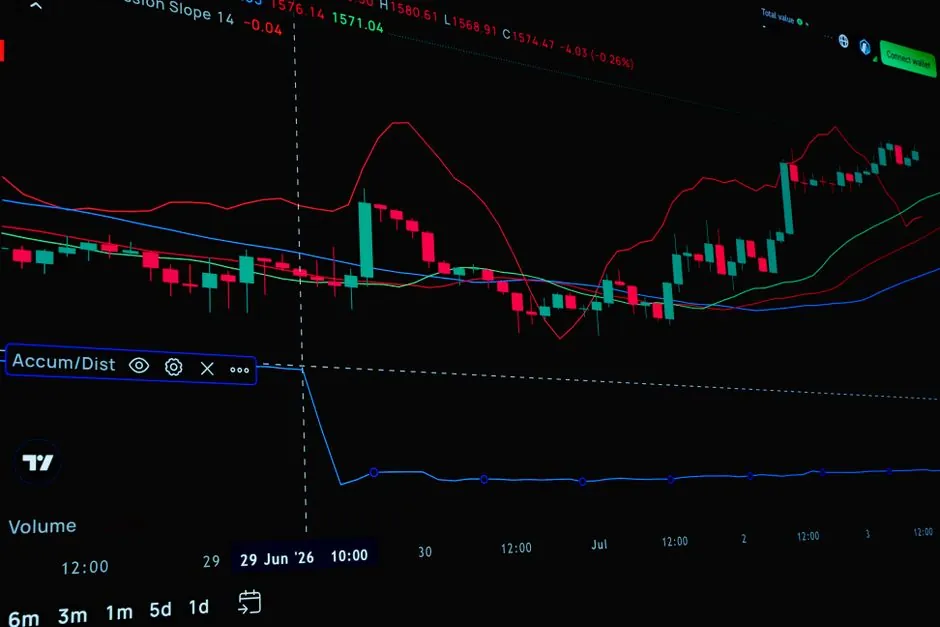
High-capacitance MLCC prices for AI servers climbed 50%–60% by June 2026, compared with a 15%–20% increase for common parts [S5].
Buyer action differs sharply by segment: constrained high-capacitance and AI-server parts carried lead times of 20–40 weeks and price increases of up to 60% in 2026, while commodity grades remained comparatively stable [S6].
Price Pressure Is Concentrated in High-Capacitance Devices
High-capacitance components for AI servers performed far worse than the general market, rising 50%–60% from late February through June 2026 [S5]. Common parts increased 15%–20% over a comparable period, and some Shenzhen spot quotations reached two to three times earlier levels by July [S3].
The underlying issue is not one uniform cost increase. AI platforms, automotive electronics and other high-reliability applications are competing for small-form-factor parts with high capacitance, low equivalent series inductance, specified voltage ratings and controlled dielectric characteristics [S4].
AI Platforms Changed the Demand Mix
The wider consumer-electronics MLCC market was estimated at USD 16.32 billion in 2026 and is forecast to reach USD 34.49 billion by 2031, a stated 16.15% growth rate [S1]. AI-centric edge devices can double MLCC content per board [S1].
Compare Parts by Price Rise, Availability and Design Fit

For procurement, high-capacitance AI-server MLCCs, ordinary commodity MLCCs and specialty low-ESL devices should be evaluated separately rather than through a single market index. High-capacitance AI-server parts showed the largest increases and longest lead times; common parts rose materially but less; low-ESL 0402 parts carried a stated 40%–60% price premium over standard equivalents [S1][S3][S5].
Cost Drivers Sit Beyond the Invoice Price
The strongest cost drivers are high-end production utilization, constrained raw-material inputs and the cost of securing product-specific approvals. Taiyo Yuden’s second price adjustment of the year took effect on September 1 [S3].
Certification and requalification also carry direct engineering costs. A proposed alternate must match capacitance, voltage, dielectric, package size, tolerance, temperature characteristic and ESR or ESL behavior, then pass the assembly and reliability process. A lower unit quote that triggers redesign, qualification or field-failure risk is not a lower total cost.
Total cost of ownership therefore includes the purchase-price increase, expediting and freight, inspection, qualification, inventory carrying, production downtime and the cost of an unavailable second source. A 60% constrained-part increase can still be economical when it prevents a server-line stoppage, but it is unjustified for noncritical commodity positions where demand remains stable [S6].
Packaging and Electrical Requirements Define the Real Substitute
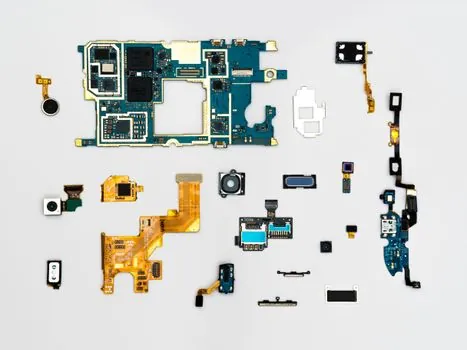
A buyer cannot treat capacitance as the only interchangeability criterion. The relevant selection set includes case size, voltage rating, dielectric class, tolerance, temperature range, ESR, ESL and reliability qualification [S4]. High-capacitance AI designs may require 0402, 0603, 0805 or 1206 packages, while tight board areas constrain the physical alternatives.
Concrete examples illustrate why package selection matters. An 0805, 22 µF part was described as an in-demand spot-market item, while a 1206, 47 µF, 10 V, X5R part had four of five polled traders reporting no stock [S5]. A Murata 1206 47 µF, 10 V, X5R designation therefore identifies a concrete constrained configuration, not a generic MLCC category.
Low-ESL parts address a different requirement from high-capacitance bulk decoupling. 5G and Wi-Fi 7 radio architectures demand ultra-low-ESL decoupling [S1]. The embedded passive components category is relevant when assessing components integrated inside package structures, but it should not be treated as a drop-in alternative to a board-mounted MLCC.
Lead Time Is the Strongest Scarcity Signal
High-capacitance and AI-server-grade MLCC lead times were reported at 20–40 weeks [S6]. A lead time extending beyond 20 weeks for high-end specifications signals that purchase orders may not translate into near-term material availability.
There are three practical signals to track. First, compare each approved part number's quoted lead time with its historical 3–6 week baseline rather than relying on a general shortage headline [S5]. Second, separate manufacturer, authorized-distributor and spot-market channels because their pricing mechanisms differ. Third, monitor whether high-end utilization remains above the 90% threshold reported in June 2026 [S5].
Buyers should not substitute on capacitance alone. Any alternate must preserve package dimensions, voltage rating, dielectric class, tolerance, temperature characteristics and low-inductance behavior. For related memory-system cost pressure, the DDR5 RDIMM price trend and per-GB cost guide provides a separate framework because server memory and capacitor supply are exposed to different constraints.
Market Timing Still Requires Measured Commitments
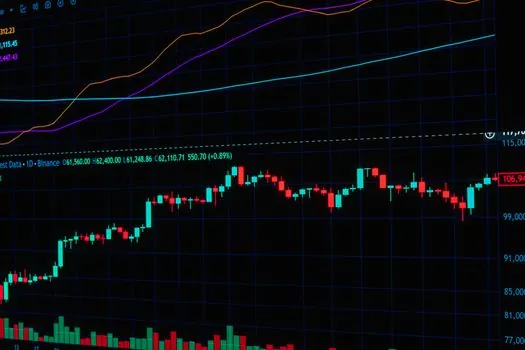
The market entered an upcycle after approximately four years of excess-inventory reduction from 2022 into early 2026, leaving distributors with limited stock when AI-server and electric-vehicle orders accelerated [S3]. By July, distributors that bought earlier were selling many parts at average prices 20%–25% above earlier levels [S3].
That cycle does not justify treating spot quotes as a reliable planning benchmark. One market example moved from about RMB 10 per 1,000 units to approximately RMB 40, while some reels reportedly rose from RMB 100 to RMB 400–500 [S5]. Such quotations are transactional reference points, not stable component valuations.
The defensible buying position is to protect qualified, constrained high-capacitance positions first, lock allocation before accepting quoted lead times, and use controlled safety stock for parts with demonstrated production-stoppage cost. Monitor lead times, manufacturer utilization and any change from the reported 20–40 week range. If lead times shorten while utilization falls below 90%, additional speculative buying becomes less defensible [S5][S6].