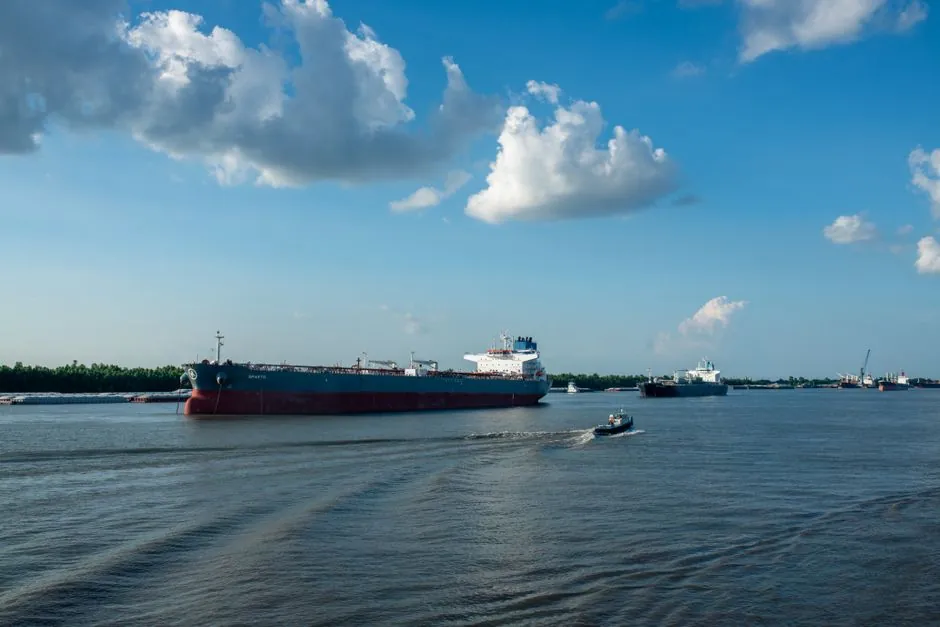
September 2026 regional methanol prices ranged from $0.48/kg in the Middle East to $1.33/kg in North America, with Northeast Asia at $0.52/kg and Europe at $1.06/kg [S2].
The comparison covers regional methanol pricing, the pipeline of low-carbon and renewable methanol projects, and the expanding network of ports where methanol is available as a cargo or marine fuel [S1][S2].
Regional Price Signals Define the Methanol Market
September 2026 methanol prices differed sharply by region: Africa $0.54/kg, Northeast Asia $0.52/kg, Europe $1.06/kg, South America $0.58/kg, the Middle East $0.48/kg, Southeast Asia $0.50/kg, and North America $1.33/kg [S2]. The regional spread was therefore $0.85/kg between the Middle East and North America [S2].
Price direction also differed. From the preceding September assessment, Africa rose 10.2%, Northeast Asia rose 15.6%, the Middle East rose 17.1%, South America fell 4.9%, Southeast Asia fell 3.8%, and North America fell 7.6%, while Europe was unchanged [S2]. A marine buyer comparing ports cannot treat these assessments as interchangeable because production economics, import competition, and downstream chemical demand vary by market.
The first-quarter comparison shows why a single annual methanol price is a weak procurement metric: Africa was $0.35/kg in March 2026 [S2]. By September, Northeast Asia had reached $0.52/kg and Africa $0.54/kg, while South America was $0.58/kg, illustrating substantial movement within 2026 [S2].
Marine Demand Is Constrained by Port Coverage
The Methanol Institute's interactive maps track ports where methanol is available as a cargo or marine fuel [S1].
Renewable and low-carbon methanol supply is also developing through a much larger project pipeline than the port network. The Methanol Institute's interactive maps track a growing pipeline of low-carbon and renewable methanol projects worldwide [S1].
Renewable methanol capacity may reach around 2 Mt by the end of 2026, with longer-term growth depending on regulatory developments [S6]. The methanol market data portal is not a direct pricing source, so operators should use the underlying price and port records rather than infer bunker availability from equipment references.
Marine Buyers Face Four Different Price Systems

The main comparison is between Middle East, Northeast Asian, European, and North American methanol assessments, but each reflects a different commercial system [S2]. The Middle East offered the lowest September 2026 price at $0.48/kg, Northeast Asia was $0.52/kg, Europe was $1.06/kg, and North America was $1.33/kg [S2].
Against four criteria, regional landed cost matters more than the headline price. For purchase cost, the Middle East and Northeast Asia were lowest in September 2026. For freight exposure, buyers must add shipping and terminal costs, while the research does not provide a universal freight surcharge. For supply resilience, the 54-port network and 292-project pipeline show expanding capacity but constrained marine access [S1]. For fuel-carbon value, conventional, biomethanol, e-methanol, and low-carbon methanol cannot be compared by price per kilogram alone because their production pathways and lifecycle attributes differ [S1].
The China assessment reports that the methanol spot price rose throughout January 2026, reaching $250 per metric ton [S8]. Currency, location, methodology, and delivery basis must therefore be checked before these figures are used in a bunker procurement comparison.
Cost Drivers Extend Beyond the Bunker Quote
For Africa, stable upstream natural-gas feedstock costs and sustained production expenses at existing levels provided balanced support to prevailing methanol market prices in the first quarter ending March 2026 [S2].
Shipping distance affects total delivered cost, but no uniform freight rate appears in the research.
Total cost of ownership includes installation, maintenance, energy, and fuel operations.
Marine Fuel Demand Has Distinct Buyer and Exclusion Profiles

Marine fuel demand is directly relevant to ship operators with compatible methanol-capable propulsion, terminals with commercial bunkering operations, and suppliers holding methanol cargoes [S1][S4]. It is also relevant to chemical producers because conventional methanol demand comes from derivative and end-use industries, including formaldehyde, acetic acid, olefins, biodiesel, and specialty chemicals [S1][S2].
The strongest near-term demand case sits with vessels able to use methanol and routes that provide reliable cargo or bunkering access. S&P Global scheduled a half-day briefing on 2 November 2026 covering how methanol and alternative marine bunker fuels are affecting energy demand, confirming that marine fuel economics and methanol supply are being evaluated together [S4].
Methanol is not a universal marine-fuel answer for operators without compatible propulsion, approved storage and fuel-system arrangements, access to supply, or a commercial reason to accept the resulting cost and emissions profile. The research also points to contracting and bankability constraints for green methanol, making offtake availability a separate issue from commodity availability [S6][S7].
Procurement Should Track Five Operational Signals
A defensible 2026 procurement process uses five trackable signals: the regional methanol assessment, cargo and port availability, the status of the 292 renewable and low-carbon projects, vessel-fuel compatibility, and delivered-cost terms [S1][S2]. These signals separate a low spot quotation from a supply that can be delivered at the required port and consumed safely.
Price monitoring must be date-specific and location-specific. September 2026 prices ranged across 7 regions, from $0.48/kg to $1.33/kg [S2], while the China-linked series reached 3,520 CNY/t in November 2026 [S5]. Buyers should reconcile assessment units, contract dates, currencies, Incoterms, cargo volumes, and quality specifications before comparing quotations.
The deeper review is covered in Methanol Dual-Fuel Ship Orders Contract Sharply in 2026, which adds vessel-order context to the fuel-demand question. The immediate commercial signal is the spread between the $0.48/kg Middle East assessment and the $1.33/kg North American assessment, alongside any change in the count of 54 ports offering or developing bunkering [S1][S2].