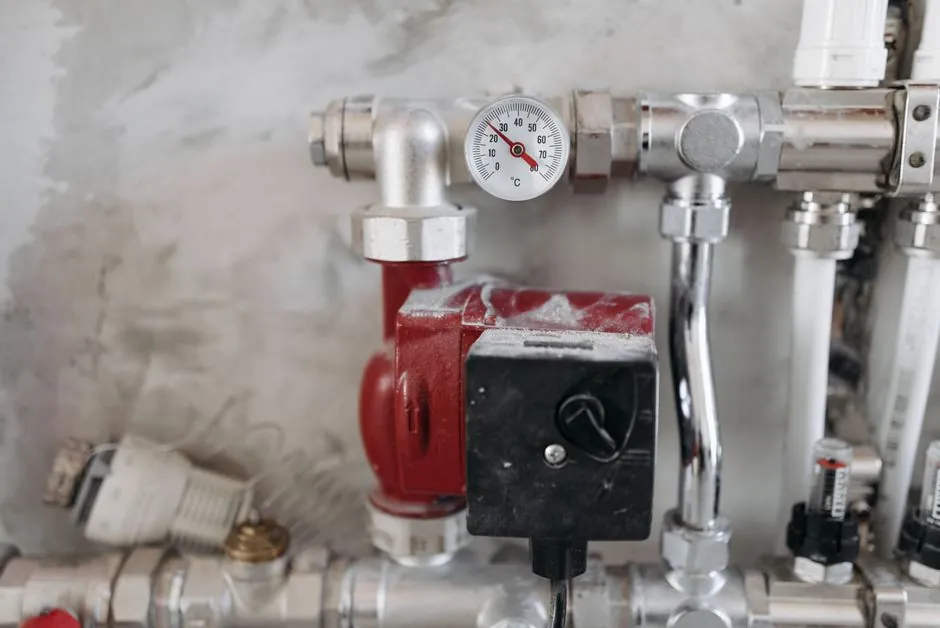
A flush-welded 316L stainless diaphragm with no O-ring crevices, paired with 3-A and EHEDG certification, is the baseline spec that qualifies a pressure transmitter for repeated CIP and SIP exposure on food, beverage and pharmaceutical skids [S1][S2].
Across the current OEM catalogue, typical SIP ceilings land at 150 °C for general-service hygienic transmitters, while premium variants such as the Baumer PFMH and PBMH reach 200 °C with a fully welded process connection and ≤0.1 % FS precision class [S3]. Process connections are dominated by Tri-Clamp (DN 1 1/2" and DN 2"), Varivent, DIN 11851 and aseptic NEUMO/VARIINLINE flanges, with WIKA's SA-11 covering that exact set and adding 316Ti wetted material for caustic compatibility [S5].
What "hygienic" means in a flush diaphragm pressure transmitter
Hygienic design is mechanical first, electrical second: a flush-welded 316L diaphragm eliminates the O-ring crevice and dead leg where a threaded pressure tap would otherwise trap product residue and survive a CIP cycle poorly [S1][S7]. The wetted path is typically 316L or 316Ti stainless with FDA-approved fill fluid, and the housing must reach IP67 or IP69K to survive the high-pressure washdown that follows every batch [S1][S5].
EHEDG certification validates cleanability of the aseptic joint, while 3-A sanitary standards cover the materials, surface finish and mechanical design rules that allow the sensor to drain fully and self-dry in place [S2][S3]. The two certifications are complementary, not redundant: EHEDG focuses on the process connection geometry, 3-A covers the full wetted assembly.
Process connections and their real differences
Tri-Clamp is the workhorse connection on dairy, beverage and pharma skids because it breaks down for inspection without tools, and is stocked in DN 1 1/2" and DN 2" as standard catalogue options [S5]. Varivent and NEUMO BioConnect are specified where a zero-dead-volume inline ring is mandatory, typically on fermenters and chromatography skids where a Tri-Clamp gasket ledge is unacceptable [S5].
For retrofits on existing pipework, DIN 11851 (dairy thread) is still common, but the threaded joint is harder to CIP-validate and is generally downgraded to non-product-side service such as utility water or buffer [S1]. Baumer's PP20H and PBMH lines deliberately offer both clamp and threaded variants from the same body, with the clamp-only versions avoiding any mounting thread on the wetted side to eliminate a potential harboured-volume point [S3].
CIP and SIP temperature ceilings compared across current models

The general-purpose hygienic class, represented by the WIKA SA-11, Baumer PP56H, and the BD Sensors DMP 331 P, is rated for process temperatures up to 150 °C continuous and SIP-compatible at the same ceiling, which covers the bulk of pasteuriser and filler applications [S1][S3][S5]. High-temperature variants from Baumer, including the PFMH and PBMH with 200 °C media-temperature options, are specified for UHT and pure-steam loops where the standard 150 °C ceiling is insufficient [S3].
Autoclavable variants such as the PBMH autoclavable add fully autoclavable construction for repeated 134 °C steam sterilization cycles, which is the requirement for bioreactor harvest lines and small-volume aseptic filling [S3]. Wetted material is overwhelmingly 316L; the SA-11 lists 316Ti explicitly for installations where chloride stress-corrosion cracking is a concern on hot caustic rinse [S5].
Accuracy, output signal and electronics choices
Precision class ≤0.1 % FS is the current benchmark for premium hygienic transmitters, delivered by the Baumer PFMH, PBMH and PBMN lines, while the mid-tier PP56H sits at ≤0.3 % FS and the value PP20H at ≤0.5 % FS [S3]. The WIKA SA-11 ships in ±0.25 % and ±0.50 % of span accuracy grades with 4-20 mA two-wire as the standard output, plus 0-10 V, 0-5 V, 0-20 mA and CANopen on request [S5].
For Industry 4.0 retrofit, Baumer's PP56H adds IO-Link Dual Channel, which gives secondary process data (temperature, diagnostics) over the same cable and is increasingly specified on European skid builders that need remote commissioning without breaking the hygienic enclosure [S3]. Pressure ranges cover vacuum through 0-40 bar for clamp-style hygienic bodies, extending to 0-400 bar in the G 1/2 A process connection for utility-side service [S3].
Who this class is for, and where a standard industrial transmitter still wins
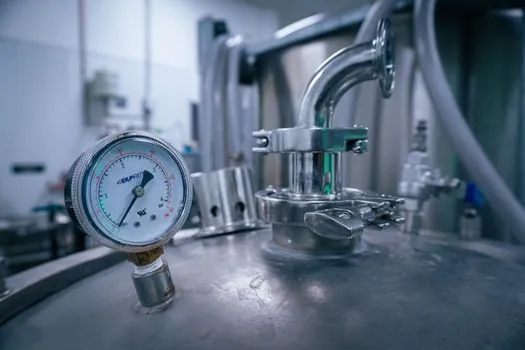
Specify a 3-A / EHEDG flush diaphragm transmitter on any line where the wetted side touches product, where the sensor is exposed to daily CIP with hot caustic and phosphoric acid, or where SIP at ≥121 °C is part of the validated sterilization cycle [S1][S2][S4]. Typical valid applications are pasteuriser differential pressure, fermenter headspace, filler bowl level via hydrostatic pressure, and chromatography skid inlet pressure [S1][S5].
Do not specify this class for utility steam, compressed air, or CIP return-line routing where the sensor sees only rinse water downstream of the product: a standard pressure transmitter with a threaded G 1/2 connection and IP67 housing is fully adequate, costs roughly half as much, and avoids the 150 °C thermal-shock constraint of the hygienic body. For tank level on a hygienic vessel, the same flush diaphragm is also a drop-in replacement for a capacitive probe when the product is foaming or has a low dielectric constant, and pairing it with a differential pressure transmitter at the fermenter base allows vented-head level measurement with a single calibration.
Limitations, failure modes and selection pitfalls
The dominant failure mode on hygienic lines is thermal-shock fatigue of the diaphragm from repeated SIP cycles; specifying a cooling element between the diaphragm seal and the electronics housing extends diaphragm life and is the standard mitigation on lines that SIP more than once per day [S1]. Surface finish matters as much as certification: a 316L diaphragm with Ra > 0.8 µm will pass 3-A on paper but fail an EHEDG cleanability audit, so insist on the surface-finish callout, not just the certification logo [S1][S2].
Second, IP69K is not the same as IP68: the SA-11 offers IP65 / IP67 / IP68, which covers washdown and temporary immersion but not the 80 °C, 100 bar close-range jetting that IP69K implies; for a cleanroom filler bowl, verify the actual test rating on the vendor datasheet, not the marketing line [S5]. Third, the absolute pressure transmitter variants are required for sealed fermenters and autoclave headspace where the reference side cannot be vented to atmosphere; a gauge reference will drift on every SIP cycle as the wet/dry leg breathes [S3].
Sourcing, standards and the 2026 vendor landscape
European OEMs (WIKA, Baumer, BD Sensors) continue to dominate the high-end hygienic segment with full 3-A, EHEDG, FDA and CRN coverage, and they ship process temperature variants to 200 °C with ≤0.1 % FS precision class [S3][S5]. Chinese suppliers including LEEG, Ould Sensors and Fande have closed the gap on certification, with LEEG's SMP858-TSF-S and Ould's PT-605 explicitly listing 316L integral welding, CIP/SIP compatibility and 3-A / EHEDG options on the 2026 datasheets [S2][S4][S7].
For practical sourcing, request the EHEDG certificate number, the 3-A file number and the Ra surface-finish value as separate line items on the PO; mismatches between datasheet and certificate are the single most common cause of audit findings on new hygienic skid builds. One trackable signal for 2026: the wider roll-out of IO-Link and Ethernet-APL variants on flush diaphragm bodies, which is visible in the current Baumer portfolio and likely to be matched by the next WIKA and BD Sensors catalogue updates for Industry 4.0 skid retrofits [S3].
Related analysis: ASME B30.3-2025: Tower Crane Compliance Essentials.