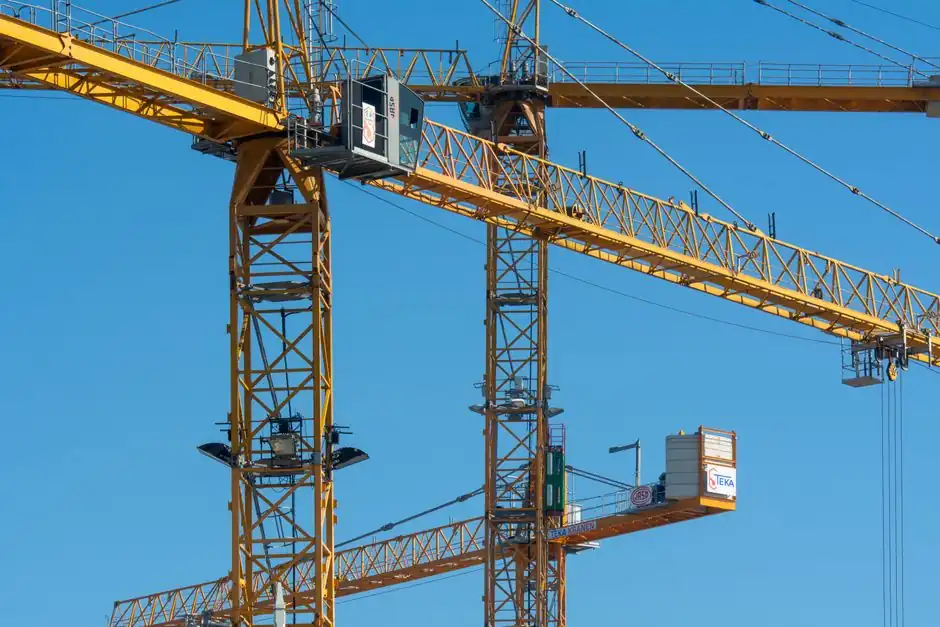
ASME B30.3-2025 is the 2025 edition of the American National Standard for tower cranes, priced at $90 in print (order J03325) or PDF (J0332Q) and published with ISBN 9780791877470, succeeding the 2012, 2016, and 2019 editions in the B30.3 line [S2].
The standard covers construction tower cranes and permanently mounted tower cranes powered by electric motors or internal combustion engines, including luffing-boom, trolley-on-horizontal-jib, and combined-radius configurations on fixed or traveling bases, including climbing tower arrangements [S2]. Mobile cranes fitted with tower attachments fall under ASME B30.5, and self-erecting tower cranes fall under ASME B30.29, neither of which is in B30.3's scope [S2].
Scope Boundary Against B30.4, B30.5, and B30.29
B30.3 applies only to cranes within its defined scope when they are used in lifting operations; requirements are not retroactive to configurations outside that envelope [S2]. Tower configurations retained within B30.4 (Portal, Tower, and Pedestal Cranes, 2020 edition) are limited to non-climbing variations, and B30.4 explicitly excludes the tower crane requirements that live in B30.3 [S4]. For self-erecting machines, the controlling document is B30.29, while mobile cranes with temporary tower attachments defer to B30.5, even when the physical silhouette resembles a tower crane [S2]. Operators should confirm the chassis, erection method, and radius-adjustment mechanism before assuming B30.3 is the governing document, because a misclassified crane can void the inspection program required by Chapter 3-2 [S3].
Personnel Duties: Owner, User, Site Supervisor, Rigger, Signalperson
The owner must furnish a crane that meets Chapter 3-1 construction requirements, with manufacturer-specified components, complete load rating charts and diagrams, and any additional technical information requested by the user [S3]. The owner is also responsible for delivering field erection, dismantling, operation, and maintenance information plus warning decals, and for establishing an inspection, testing, and maintenance program per Chapter 3-2 [S3]. The user must verify compliance with B30.3 plus site-specific regulations, confirm a frequent inspection per para. 3-2.1.3 has been performed before initial site use, confirm owner documentation per para. 3-2.1.1, and confirm the crane has the necessary capacity for the planned configuration [S3]. The user must assign operators meeting paras. 3-3.1.1 and 3-3.1.2, and supervisors meeting the qualified-person criteria for crane activities [S3]. These role definitions matter because lift success on a tower crane depends on rigger and signalperson conduct as much as operator skill, and B30.3 assigns each role a discrete list of pre-lift, in-lift, and post-lift duties [S3].
Inspection Cadence: Frequent, Periodic, and the 60-Month Major
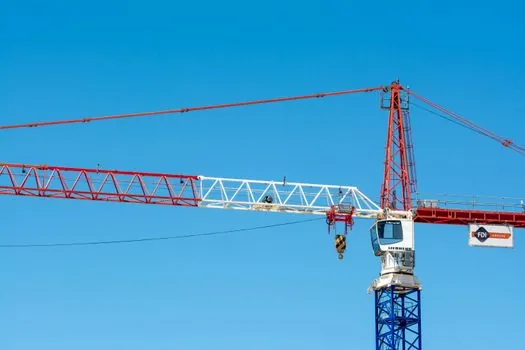
B30.3 formalizes a tiered inspection regime: frequent inspections before each shift or use, periodic inspections on a defined interval, and a major inspection every 60 months that may require dismantling slew rings and non-destructive examination of critical structural nodes [S7]. The user-side pre-use check explicitly cites para. 3-2.1.1 documentation verification and para. 3-2.1.3 frequent inspection completion as gating items before the first lift on a new site [S3]. Operators on similar ASME B30 platforms, like the concrete placing boom regime covered under ASME B30.27-2019 inspection scheduling for concrete placing booms, follow the same frequent-then-periodic layering, which is a useful cross-reference when a single site runs both crane classes. Load testing after assembly or repair is required under the B30 family, and any structural modification must be reviewed by a qualified engineer, documented, and re-tested before return to service [S4].
Structural and Stability Design Rules Embedded in B30.3
B30.3 mandates provisions for boom stops, anti-two-blocking devices, travel and swing limiters, and emergency stop functions, all of which are tied to the radius-adjustment mechanism declared in the scope (luffing boom, trolley on horizontal jib, or both) [S4]. Climbing and self-climbing configurations are explicitly included, with the supporting structure allowed to increase tower height as the building rises, which forces designers to re-verify capacity, base reactions, and tie-in loads at every jump [S2]. Capacity charts and load rating diagrams must be present on the machine and referenced before any lift, and a frequent inspection must confirm the configuration matches the chart in use, not a generic rating [S3]. Operators must read hand signals, load charts, and clear communication protocols, and unqualified operators are not permitted to run the machine, regardless of NCCCO or local license status, unless they meet paras. 3-3.1.1 and 3-3.1.2 [S3][S4].
Comparison: B30.3 Tower Crane vs. B30.4 Portal/Pedestal vs. B30.5 Mobile vs. B30.29 Self-Erecting

The four controlling volumes split by chassis, erection method, and radius-adjustment mechanism, and the table below maps the key decision criteria for specifiers choosing the governing document: [S2]
Criteria 1, Mounting: B30.3 covers fixed or traveling bases plus climbing towers, B30.4 covers rail-mounted portal and fixed-base pedestal, B30.5 covers mobile carrier-mounted, B30.29 covers self-erecting [S2][S4]. Criteria 2, Radius adjustment: B30.3 accepts luffing boom, trolley on horizontal jib, or both, B30.4 accepts boom luffing or trolley on horizontal boom, B30.5 uses telescoping plus luffing on a mobile base, B30.29 is typically a folding jib that telescopes and luffs from a transportable base [S2][S4]. Criteria 3, Power: B30.3 allows electric motors or internal combustion engines, B30.4 mirrors that, B30.5 is overwhelmingly diesel with some electric, and B30.29 frequently uses electric or hybrid for fast cycling [S2][S4]. Criteria 4, Inspection depth: B30.3 requires a 60-month major inspection that may include slew-ring dismantling, B30.4 follows a frequent plus periodic cycle without a fixed 60-month structural teardown for every variant, B30.5 emphasizes outrigger and quadrant checks, and B30.29 emphasizes daily erection and stowage checks [S4][S7].
Operator and Rigger Conduct During the Lift
During the lift, the operator must keep the load within the charted capacity for the actual radius and configuration, follow the signalperson's directions, and stop the lift if wind, visibility, or communication breaks down [S3]. The site supervisor or lift director coordinates the rigging plan, confirms the rigging crew has sized slings, shackles, and spreader beams for the load, and verifies that no personnel are under the load at any time [S3]. B30.3 also addresses side-pull prohibition, traveling and swing limiters, and emergency stop functions, all of which feed back into operator training requirements and the pre-lift brief that the qualified supervisor is required to run [S3][S4]. Wind, lightning, rain, and ice conditions trigger documented out-of-service rules, and the machine must be secured against uncontrolled rotation or travel when left unattended, typically by applying slewing brakes and parking the trolley at a prescribed jib position [S4].
Documentation, Records, and Modification Control
The owner must maintain a documentation package covering the crane's structure, design, purpose, operation, maintenance, and safety requirements, and that package must travel with the machine when it changes site or ownership [S6]. Any modification, including changes to jib length, counterweight stack, or climbing frame, must be reviewed by a qualified engineer, recorded in the machine file, and re-tested under the rated-load test protocol before the crane returns to lifting service [S4]. Inspection reports and load-test records must be retained, and the user must be able to retrieve them on demand to satisfy the para. 3-2.1.1 verification gate that precedes initial site use [S3].
The next trackable signal is the next B30.3 reaffirmation cycle, which historically runs on a 3 to 6 year cadence (2012, 2016, 2019, 2025), with the 2025 edition being the most recent published version on the ASME codes and standards portal [S2]. Site teams should also watch for any updates to Chapter 3-2 inspection tables in the next reaffirmation, because the 60-month major inspection is the single largest planned-outage item in the tower crane lifecycle and drives both spare-parts stocking and dismantling crew scheduling [S7].
Detailed specification references: measurement test 3, tower crane, and signal tower light.