
What Sets the Price for a 400-Ton Move
There is no standard per-mile price for moving a 400-ton transformer; the quotation must be built around the actual route, equipment, timing, and local approvals [S2]. Weight is the starting point, but the transformer dimensions, road geometry, bridge limits, overhead-clearance conflicts, and pad-access conditions can determine which permits and transport methods are required [S2].
A move requiring rail-to-road transloading, difficult terrain, specialized jacking equipment, or extensive utility coordination can move above the baseline quote [S5].
Road, Rail, and Multimodal Comparison
Road transport gives direct site access but depends on axle configuration, road strength, turning radius, bridge capacity, and clearances; large power transformers commonly require engineered multi-axle trailers rather than ordinary flatbeds [S2].
Rail can reduce road exposure for long hauls, but the move may still require factory pickup, rail loading, rail unloading, a final road leg, and transloading at one or both ends [S4][S5]. Barge transport can serve coastal or port-to-site movements, yet it adds marine handling, draft, port, weather, and cargo-interface requirements.
The main options compare as follows:
Hawaiian Electric transported two 80-ton transformers, the largest type used at its substations, between substations in Hawaii. That case shows why route restrictions matter more than straight-line distance in a transport quotation.
Loading, Transloading, and Offloading Scope
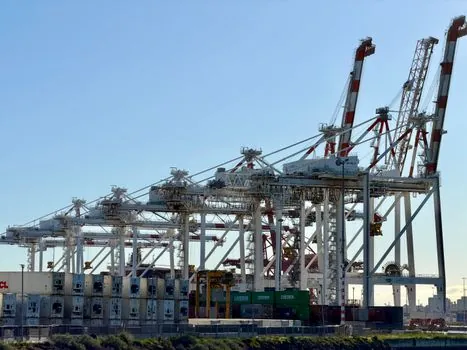
The transport price should specify whether it includes loading at the factory, rail or port handling, unloading at the destination, movement to the transformer pad, and final positioning [S4]. Crane or rigging needs are separate cost drivers because an oversize cargo arrives at the site before its final destination has been reached [S2].
A documented 249,000-pound transformer move to Jerome, Idaho, required a 400-ton jack-and-slide system to transload the unit from a railcar to trailers [S5]. The same project illustrates why a route with transfer points can require specialized equipment even when the cargo itself remains below 400 tons.
Three scope boundaries should be fixed in the request for quotation:
Unclear scope is a major source of change orders. It can also create a false low quote, particularly when the estimate includes the trailer but excludes permits, police support, crane time, matting, or transloading [S2][S3].
Permits, Escorts, and Schedule Effects
Each state issues its own oversize and overweight approvals, so a multi-state 400-ton move requires route-by-route coordination rather than one blanket permit [S2]. Permit processing and utility coordination can add weeks beyond the transformer's actual drive time [S2].
Escort requirements depend on route geometry and local rules.
A larger unit carries greater consequences from a tire, bearing, suspension, or road-surface problem, so a contractor's spare-parts plan and breakdown procedure should be reviewed before award.
Transformer Protection During Transport

A 400-ton transformer requires an engineered shipping and lifting plan because shock, vibration, or uncontrolled tilt can loosen windings, shift the core, and cause insulation failures that may appear only after energization [S2]. Oil-filled units commonly ship drained and nitrogen-padded when specified by the manufacturer, reducing carried mass and limiting oil-leak exposure [S2].
The transport method must be checked against the manufacturer's shipping condition, allowable tilt, shock limits, lifting points, center-of-gravity plan, and component-removal sequence. These are equipment-specific instructions, so generic trailer capacity alone does not establish that the transformer can be moved safely.
Large power transformers weigh 150–400 tons and require engineered multi-axle trailers rather than flatbeds. A 400-ton unit therefore sits at the upper end of the large-power-transformer transport class rather than representing a smaller distribution shipment.
Total Cost of Ownership and Quote Structure
The purchase price of the transformer is separate from transport cost, and transport cost is separate from the cost of an incident. A low bid that excludes site access, special permits, crane standby, transloading, or route modification can become more expensive after mobilization [S2].
The total-cost-of-ownership test should compare at least four commercial scenarios:
The relevant maintenance cost after delivery is not the transport invoice itself. The avoided cost is damage-related inspection, oil recovery, core and winding repair, or transformer replacement. A power transformer can take 12 months or longer to manufacture [S2]. For a 400-ton unit, a shipping failure can therefore create an outage exposure far larger than a modest crane or rigging variance.
The DOE estimated in 2010 that large power transformers rated from 75 MVA to 500 MVA cost approximately $2 million to $7.5 million (2012-06) [S1]. This historical equipment-price estimate is not a transport quotation, but it shows why protecting a 400-ton transformer during transport is economically material.
How to Validate a 400-Ton Transport Quote

A defensible quote needs 10 operational inputs: exact equipment weight, dimensions, center of gravity, origin, destination, route mileage, permitted route, shipment condition, required transfers, and requested delivery date. Without the origin and destination, the $100,000-to-$500,000 range is only a screening budget, not a procurement estimate [S4].
Request a line-item schedule covering route survey, permits, engineering, trailer or rail equipment, escorts, traffic control, loading, transloading, unloading, cranes, rigging, site preparation, standby, taxes, and contingency. State whether fuel, overtime, permits, and crane mobilization are included [S2].
For procurement context, the equipment price itself should be separated from delivery. A 1 MVA oil-filled transformer cost estimate can establish the supply-price side of the calculation, while the 400-ton transport analysis handles the route-dependent logistics and installation interfaces.
The next trackable signals are the carrier's route survey, permit lead times, crane and trailer availability, and final delivery window. Obtain all four before approving the transportation budget, because each can move a 400-ton move materially above the initial $100,000-to-$500,000 screening range [S2][S4].