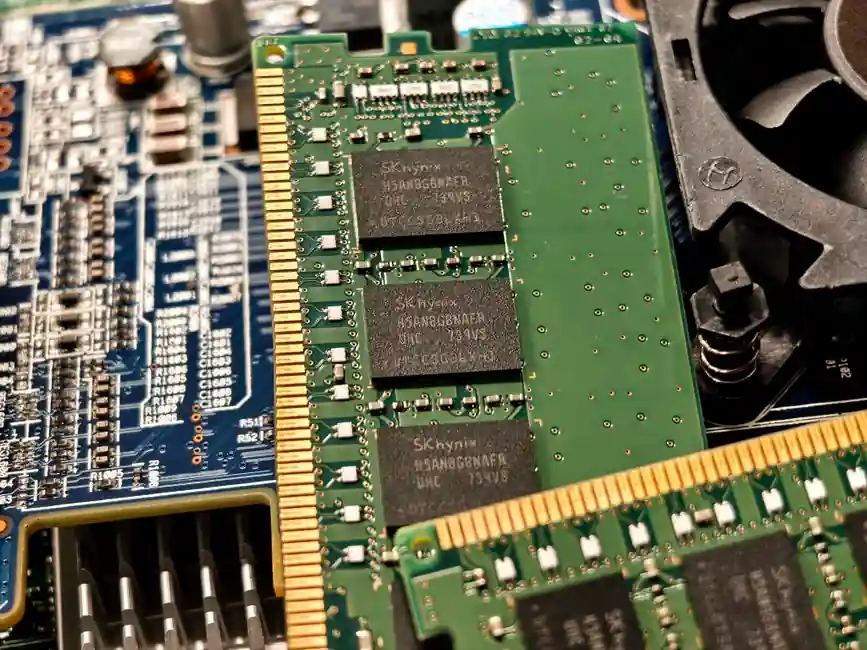
Tariffs can add 25% to 55% to the customs value of selected China-origin PCB imports, while some imported PCB assembly components carry a 35% duty.
The applicable rate depends on product classification, country of origin, exclusions and the date of entry, so buyers should calculate the tariff on the complete shipment rather than the factory price alone.
Tariff rates vary by PCB classification
Bare printed circuit boards normally enter under HTS 8534.00, but layer count, material and board construction still affect the correct subheading. Many entries have a Free base duty while remaining subject to additional China tariffs [S5].
Published tariff monitoring lists 30% for double-sided boards and four-layer rigid PCBs under HTS 8534.00.00. It lists 55% for single-sided boards and multilayer boards other than two- and four-layer construction under the same code [S6].
These figures illustrate why a generic PCB duty rate is inadequate for procurement. A two-layer design and an eight-layer design can produce different customs outcomes even when the buyer sees both as circuit boards.
PCB assemblies need a different calculation
A printed circuit assembly contains mounted items such as resistors, integrated circuits, connectors, sensors, processors and memory devices. Its customs classification depends on the assembly's function, so an industrial controller, medical device, power supply or measuring instrument may not use the code assigned to a data-processing board [S5].
Some PCB assemblies for automatic data-processing equipment may fall under HTS 8473.30, while other assemblies require different classifications [S5]. A 25% Section 301 tariff may apply to China-origin PCBs and some PCB assemblies unless a valid exclusion applies [S5].
The component stream creates another exposure. A 25% tariff applicable to PCB assembly components was increased by 10 percentage points in February 2025, producing a 35% rate on most affected imported electronics from China [S3]. The duties can also reach U.S. manufacturing operations that use Chinese electronic components [S3].
Calculate the tariff on the customs value
The tariff is not a fixed addition to the factory invoice. For a customs value of $10,000, a 25% duty contributes $2,500, a 30% duty contributes $3,000, and a 55% duty contributes $5,500 before freight, brokerage and other import costs are included. [S5]
For a 35% duty on a $4,000 component value, the tariff is $1,400. That example shows how component-level duties can affect an assembly even when the importer pays a quoted price for the completed PCBA.
A defensible landed-cost model includes FOB value, international freight, tariff, customs fees, broker fees and final delivery. Freight should not be treated as a tariff percentage because it is a separate landed-cost component, although the research material does not specify a standard freight percentage.
Compare sourcing options on four criteria
China-origin PCB imports offer the broadest disclosed tariff exposure: 25% for many bare boards and PCBAs subject to Section 301, with listed PCB rates reaching 55% for specified constructions [S5][S6]. Tariffs on China-origin rigid and flex boards were described as typically 25% to 30% in a purchasing guide [S4].
Non-China sourcing can avoid these country-specific measures, but the universal 10% tariff still applies to imported PCBs, components and materials alongside tariffs tied to the country of origin [S1]. Domestic U.S. PCB fabrication may avoid import duties, but its comparative price depends on labor, tooling, engineering and volume rather than tariff rates alone.
Across four criteria, China-origin sourcing has potentially lower factory pricing but higher tariff exposure, domestic production has lower import-duty exposure but different manufacturing economics, and nearshore production can reduce some transit and duty exposure. Buyers should compare total delivered cost, customs clearance risk, production capacity and schedule rather than quote percentages in isolation.
Exclusions can change the duty result

Certain qualifying two-layer and four-layer rigid PCBs may use Section 301 exclusion code 9903.88.69 through November 9, 2026 [S5]. The exclusion does not establish that every PCB qualifies, because its product description and supporting documentation must match the imported board.
Classifying a two-layer board as eligible does not prove eligibility. A buyer should verify the board construction, country of origin, Chapter 99 treatment and exclusion validity before placing the order. Failure to present the correct code can cause customs corrections, delayed clearance or unexpected duty charges [S5].
Duty-free de minimis treatment has been suspended for low-value shipments, so the $800 threshold should not be used as the basis for 2026 landed-cost planning [S5]. Small prototypes and production quantities therefore require the same disciplined classification review as large orders.
Low-value imports expose the tariff share
A documented small order illustrates how non-tariff charges can dominate the duty line. Thirty boards had a stated manufacturing cost of $1 and DHL shipping of approximately $25 [S2].
These examples are not universal tariff rates. They show why the tariff percentage alone is an incomplete purchasing metric, particularly for prototypes where fixed freight and clearance costs are large relative to board value.
For engineering buyers, a tariff calculator should retain the same retaining ring-like discipline applied to other cost documents: preserve the classification, origin evidence, exemption code, quoted value and calculation date for every imported lot.
Origin evidence affects the landed-cost model

Country of origin must be established separately for each imported PCB or assembly because tariffs can apply by country, product code and exclusion status [S1][S5]. A multi-country bill of materials does not automatically produce a blended duty rate; the importer must document the origin applicable to the shipment and verify that classification and exclusion conditions are satisfied.
For a multi-country assembly, the buyer should attach purchase records, manufacturing records, product descriptions and exclusion support to the customs file. The product value used for the calculation should also be traceable to the commercial invoice, because unexplained value adjustments make the resulting duty estimate impossible to audit.
Documenting origin is also necessary when comparing suppliers. Two quotes with equal factory prices can produce materially different landed costs if their tariff classifications, exclusions or origin evidence differ. A supplier claiming that a shipment is tariff-free should identify the applicable HTS code, Chapter 99 provision and exclusion, rather than leave the assumption embedded in the quote.
Tariff quotes need revision controls
Tariff schedules can change across product codes and origins, with rates on electronics described as commonly falling between 10% and 40% depending on classification [S4]. For China-origin rigid and flex PCBs, the purchasing guide placed typical tariffs at 25% to 30% [S4], while another 2026 guide described a 25% Section 301 addition for many PCB imports [S5].
Procurement teams should place an expiry date on every tariff estimate and request a new landed-cost quote before a quoted order enters production. The estimate should state the HTS code, normal base duty, additional Section 301 treatment, exclusion code, origin, freight basis and customs-value assumptions.
Buyers can also track the effect of tariff classification on mechanical hardware used on the same equipment. Classification decisions for a locking assembly or a lock nut can affect the cost of an imported machine even when the PCB is sourced separately.
The practical answer is not one universal PCB-assembly tariff. Use the customs value, actual product construction, country of origin and exclusion status for each shipment, then compare complete landed costs. A quoted 25%, 35% or 55% rate is only the starting duty amount, not the final purchasing cost.