A 90 m³/h concrete batching plant typically costs $70,000–$115,000 FOB, while installed project spending can reach 1.8 to 1.9 times the equipment price [S2].
The benchmark HZS90 configuration combines a 1.5 m³ twin-shaft mixer, inclined belt aggregate feed, and three 100-ton or two 150-ton cement silos [S2].
90 m³/h Plant Price Range and Quote Basis
The HZS90 benchmark price is $70,000–$115,000 FOB, with four 40-foot high-cube containers and one 40-foot open-top container allocated for export [S2]. That figure covers factory equipment, not foundations, freight, electrical installation, silos beyond the stated package, commissioning, or operating labor.
Other market bands place a new stationary wet-batch plant at 60–90 yd³/h for $400,000–$900,000, while a high-capacity automated plant at 90–120+ yd³/h starts at $800,000 and can exceed $2.5 million [S1]. The gap reflects reporting scope rather than a contradiction: one range is an export-oriented FOB machinery benchmark, while the other includes heavier stationary, wet-batch, and automated configurations.
For procurement, the quotation should state whether it includes the JS1500 mixer, inclined aggregate belt, weighing systems, electrical cabinets, control software, dust collection, cement conveying equipment, and the specified 3 × 100-ton or 2 × 150-ton silos [S2]. A plant described simply as “90 m³/h” is not a comparable offer until the mixer, feed system, storage, controls, and exclusions are attached to the price.
Wet Batch, Dry Batch, and Automated Configurations
A central wet-batch mixer at 90 m³/h normally requires more capital than dry batch, which leaves final mixing to the truck drum [S1]. Published configuration data shows that a central mixer alone can add $80,000–$400,000, while large twin-shaft ready-mix mixer configurations may cost $200,000 or more [S1].
Automation changes the comparison as well. Manual controls may reduce an equipment quotation by $30,000–$80,000, while fully automated systems with recipe management, ticketing software, remote diagnostics, and reporting can add $40,000–$150,000 over basic digital controls [S1]. A 20-year-old proprietary controller may require a $30,000–$80,000 upgrade before dependable operation [S1].
For a contractor specifying a concrete batching plant, wet batch offers plant-side mixing and tighter control of the delivered mix, while dry batch lowers initial cost and supports relocation. Automated stationary equipment is suitable for continuous ready-mix output; it is excessive for intermittent pours unless production frequency justifies the control premium.
Technical Requirements at 90 m³/h
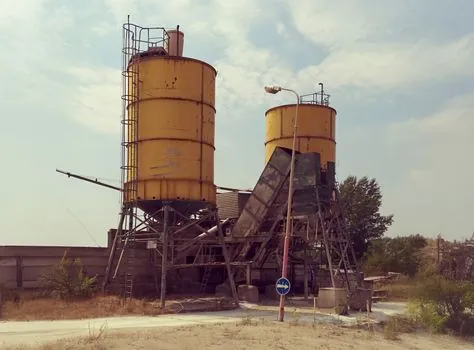
One documented 90 m³/h configuration uses a 1,500-litre wet-concrete mixer and an 1,800-litre dry-concrete capacity, with 25 mm abrasion-resistant wear plates [S5]. The same unit specifies 8+8 twin-shaft mixing arms, a 3,200 kg aggregate weighing belt, four 2,000 kg load cells, a 100-ton cement silo, a 12-inch double butterfly valve, and a cement screw conveyor rated at 18 tons per hour [S5].
Those component ratings show why nominal plant capacity alone is insufficient. The 90 m³/h nameplate describes an operating envelope, but actual output depends on batching cycles, aggregate moisture correction, material supply, truck dispatch, and downstream placement capacity. A 90 m³/h plant cannot create 90 m³ of usable concrete every hour unless delivery and placement systems support that flow.
A 90 m³/h plant is better suited to contractors, ready-mix producers, and infrastructure projects with sustained demand than to small installers with occasional pours. It is also the wrong choice where site access, aggregate supply, or power infrastructure cannot support a stationary installation. For those conditions, a mobile or dry-batch configuration may deliver a lower total cost despite lower nominal capacity.
Landed Cost, Civil Work, and Installation
Equipment purchase represents only 55%–65% of total capital expenditure for a typical 2026 plant project [S2]. At an HZS90 FOB price of $70,000–$115,000, applying that proportion implies a broader capital framework of roughly $107,500–$219,000, before project-specific engineering, taxes, financing, and owner-supplied works are added [S2].
The balance commonly includes ocean freight, civil foundations, cement storage, electrical service, and commissioning [S2]. Foundations must be engineered for the mixer, aggregate structure, silo loads, conveyor supports, and dynamic operating loads rather than copied from a generic foundation drawing. Electrical scope must also cover feeder capacity, motor starting, cable routing, grounding, control panels, and protection coordination.
For a 90 m³/h export package, freight is itself a measurable driver because the listed configuration requires four 40HQ containers and one 40OT container [S2]. Route, port charges, lifting equipment, road permits, insurance, and local transport can change the landed cost materially. A quote that excludes delivery, erection, and commissioning is not a project investment comparison.
Operating Cost and Total Cost of Ownership
One published operating model estimates self-production at $70–$90 per m³, compared with approximately $150 per m³ for purchased concrete [S3]. A separate case study based on a 17,000 yd³ job reported $1.38 million in total production cost, or approximately $81.46 per yd³ [S4].
These figures point to the operating case rather than proving a universal saving. The decisive variables are cement, aggregate, fuel, electricity, plant labor, maintenance, mix design, utilization, and whether trucks and placement equipment are already owned. A plant running below expected output spreads fixed costs over fewer cubic meters, while a high-utilization operation can improve the economics.
Owning the plant also adds maintenance, wear parts, mixer servicing, belt alignment, weighing calibration, and control-system support. The concrete mixer truck fleet must be sized alongside the mixer, because insufficient trucks can reduce realized plant output. For a contractor with no ready-mix fleet, a truck-mounted concrete pump and the required delivery vehicles may prove more economical than purchasing a 90 m³/h production system.
Supplier Comparison on Cost, Output, and Logistics
On the three criteria that matter most, the HZS90 export benchmark combines 90 m³/h theoretical output with a $70,000–$115,000 FOB price and a five-container shipment requirement [S2]. A new stationary wet-batch plant in the wider 60–90 yd³/h band costs $400,000–$900,000 and offers more configuration depth, while a used stationary wet-batch plant in the same band is listed at $200,000–$600,000 [S1].
Used equipment can be rational when it has documented maintenance, serviceable controls, and sound structural components. The 2026 market guide lists used small portable dry batch plants at $30,000–$100,000 versus $80,000–$180,000 for new units, and used stationary dry batch plants at $150,000–$350,000 versus $250,000–$500,000 for new units. That discount can be erased by restoring corroded bins, replacing an obsolete controller, rebuilding electrical systems, or carrying out a full mixer overhaul.
Purchase method also changes price. New export equipment is commonly quoted FOB, while a used plant may be offered as an ex-site or dismantled configuration. Bids should be normalized for condition, mixer type, weighing accuracy, automation, silo capacity, spares, erection responsibility, warranty, freight, and commissioning support before the apparent savings are accepted.
Acceptance Tests and Purchase Decision
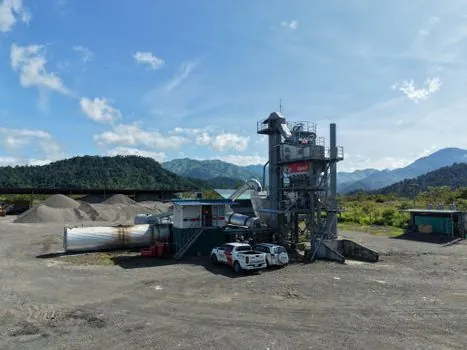
A 90 m³/h plant should be evaluated against a written performance schedule covering 90 m³/h theoretical output, 1.5 m³ twin-shaft mixer capacity, aggregate weighing accuracy, cement conveying rate, and the stated 3 × 100-ton or 2 × 150-ton silo arrangement [S2]. The supplier’s own 90 m³/h configuration provides useful comparison points: 3,200 kg aggregate belt capacity, 2,000 kg load cells, 18 tons per hour cement conveying, and 25 mm wear plates [S5].
Commercial acceptance should require aggregate calibration across the working range, cement and water system checks, emergency-stop verification, recipe storage testing, dust-control inspection, and a witnessed trial at rated output. One documented 90 m³/h plant includes a 1-year guarantee [S5], but the contract should define covered components, response time, spare-parts availability, and exclusions.
The defensible 2026 decision is to budget $70,000–$115,000 FOB for an export-spec HZS90 machinery package [S2], then build the full budget from the same quote using the 55%–65% equipment share [S2]. On an equipment-only basis, the 2026 pricing guide lists used stationary dry batch plants at $150,000–$350,000 versus $250,000–$500,000 for new units, and used stationary wet batch plants at $200,000–$600,000 versus $400,000–$900,000 for new units.