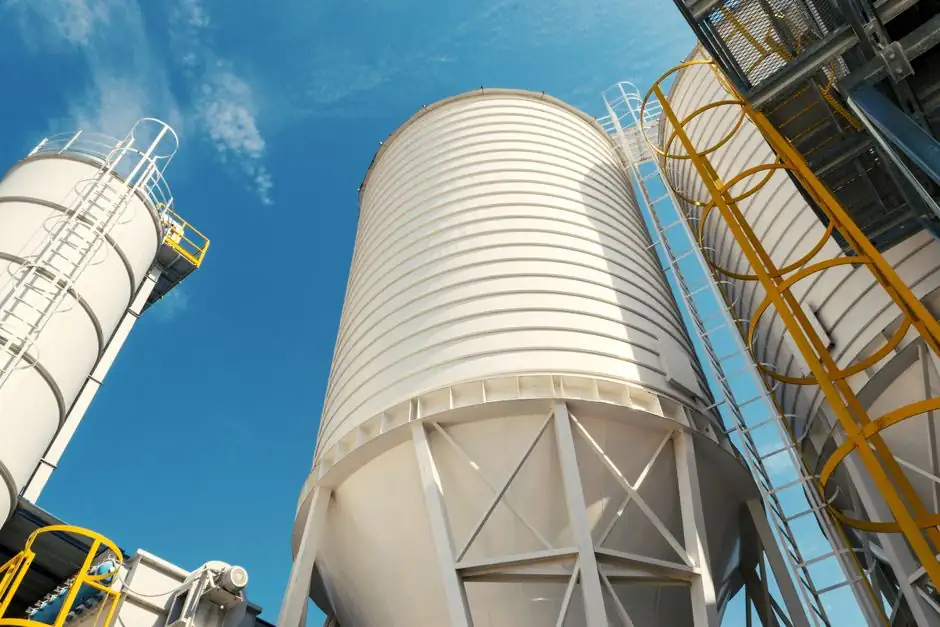
Fully automatic batching can execute feeding, weighing, unloading and stopping through one key start, while semi-automatic operation requires operator actions at several stages [S5].
The comparison covers control architecture, labour requirements, batch accuracy, process integration, equipment interlocks, operating constraints and the practical situations that favour each control level [S1][S2][S3].
Control Architecture and Operating Sequence
Fully automatic control uses programmed production logic to sequence material delivery from the cement silo through the screw conveyor, weighing hopper and mixer, with automatic unloading and stopping [S5]. The operator selects a formula, batch size and start command, after which the PLC-based system can also support manual operation from the interface [S3].
Semi-automatic control centralises plant functions in an electrical panel while leaving feeding, weighing or unloading under direct operator control [S2][S5]. The standard architecture consists of two functional parts: the electric control panel and the pneumatic driving line [S2]. In practical terms, the operator moves through the sequence by pressing function buttons or operating switches rather than initiating one unattended cycle [S5].
For a new concrete batching plant, this distinction is architectural rather than cosmetic. Automatic mode establishes a machine-managed sequence across silos, conveyors, weigh hoppers, gates and the mixer, while semi-automatic mode retains defined operator decision points. Neither label alone specifies the actual plant throughput, mixer configuration, scale arrangement or interlocks.
Decision Criteria: Cost, Labour, Accuracy and Control
Fully automatic batching offers the strongest case where repeat production, tight batch tolerances and limited staffing justify higher equipment cost [S5]. Semi-automatic batching is the cost-effective option when capital expenditure must be controlled and the production team can reliably execute the required manual steps [S5].
On labour, automatic control reduces the number of people required because the system completes the production sequence without continuous manual intervention [S5]. Semi-automatic operation needs more staff participation because feeding, weighing and unloading can each require button or switch action [S5].
On accuracy, automatic systems can calculate and correct aggregate moisture content, alarm on an excessive batch difference, and use three batching speeds described as fast, medium and slow [S5]. These functions support more consistent weighing than a panel operated mainly through manual commands. A key operational distinction remains: automatic equipment can preserve automatic formula execution while still providing a manual batching path through the touch screen [S3].
On integration, automatic control is the better fit for plants that need formula selection, electronic records, sensor feedback and coordinated equipment starts. Semi-automatic control has a smaller automation scope, so adding later requires a broader panel, sensor, communications and sequence-design project rather than a simple operating-mode change.
Manual Functions Still Present in Automatic Systems
An automatic control system does not eliminate every manual decision. A 7-inch colour touch screen is the standard human-machine interface in the documented Batchtron configuration, with displays up to 10.4 inches available [S3]. The operator selects a pre-programmed formula, chooses the batch size and presses the start control, while the system retains access to detailed plant information and manual batching functions [S3].
Safety sequencing remains concrete and measurable. A documented manual-panel configuration delays conveyor-belt startup by 0–30 seconds while a horn sounds, with the delay adjusted inside the panel [S3]. The same configuration prevents aggregate batcher gates from opening unless the conveyor is operating, reducing under-load starts [S3].
Material gates also require controlled movement. A documented system uses Bimba valves to restrict exhaust-air speed at cement batcher gates, allowing operators to control opening and closing speed [S3]. These details matter because automatic calculation does not compensate for poor gate actuation, a blocked conveyor or an unsafe start sequence.
Process Interlocks and Weighing Discipline
Automatic batching equipment requires suitable delivery interlocks, and the cited concrete manual specifically points to Specifications 1901 and 2301.3F [S4]. Charging and discharge gates on weighing hoppers must close tightly and operate through interlocks while concrete is produced [S4].
Independent weighing of cementitious materials from aggregates is achieved through separate scales or separate weighing compartments [S4]. The charging device must be able to stop material flow within the specified weighing tolerance while also controlling the feed rate, and vibration or other charging aids must not interfere with weighing accuracy [S4].
Mechanical limits remain equally firm. Weigh hoppers and bins must stand on firm foundations to limit settlement, batches must not exceed scale capacity, and adequate clearance must remain above the hopper for overload removal [S4]. These requirements apply to either control level: automatic software cannot compensate for settlement, an undersized scale or a hopper that lacks overload clearance.
Where Each Control Level Fits
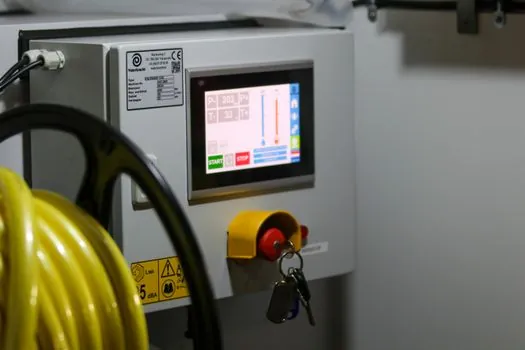
Automatic batching suits high-throughput, repeat-mix operations, lean production teams and plants where moisture correction, formula execution and reduced human intervention justify the higher cost [S3][S5]. The documented automatic platform uses PLC logic, a standard 7-inch colour screen and optional displays up to 10.4 inches, with online software upgrades available [S3].
Semi-automatic batching suits smaller crews, lower capital budgets and sites where the operator can maintain the required feeding, weighing and unloading discipline [S2][S5]. It is also a practical transition arrangement, although partial automation should not be mistaken for the process control, data capture and failure interlocks of a fully automatic installation.
Fully manual control serves plants that do not need printed tickets and place less emphasis on production speed and accuracy [S3]. A concrete mixer truck operation is not the same application as a stationary batch plant, so truck-bed controls should not be used to infer the plant-level control architecture.
Commissioning, Failure Modes and Acceptance Tests
Plant calibration is the responsibility of the producer or contractor and must be checked before concreting begins and after changes to the plant location or arrangement [S4]. A control-mode selection should therefore be accepted through functional tests, not by operating the touch screen once and signing off.
For automatic mode, test formula selection, batch-size entry, start commands, moisture correction, over-difference alarms, fast/medium/slow batching, automatic unloading and the manual fallback path [S3][S5]. For semi-automatic mode, test every operator step, gate control, water command and conveyor-start warning, including the adjustable 0–30 second horn delay [S2][S3].
Common failure modes include bypassed interlocks, gates that do not close tightly, aggregate overload, conveyor starts under load, inaccurate moisture correction, blocked transfer points and batches exceeding scale capacity [S3][S4]. SCADA can monitor and control a plant or a large complex machine by gathering and transferring plant information, but that supervisory role does not remove the need for local weighing, gate and delivery interlocks [S6].
The cleanest selection rule is straightforward: choose fully automatic control when one-key production, repeatability and lean staffing outweigh the added capital and integration work; choose semi-automatic control when lower upfront cost and retained operator discretion outweigh slower, more labor-intensive operation [S1][S5]. Track formula-repeatability results, moisture-correction accuracy, alarm records, gate closure performance and labor hours per batch as acceptance signals.