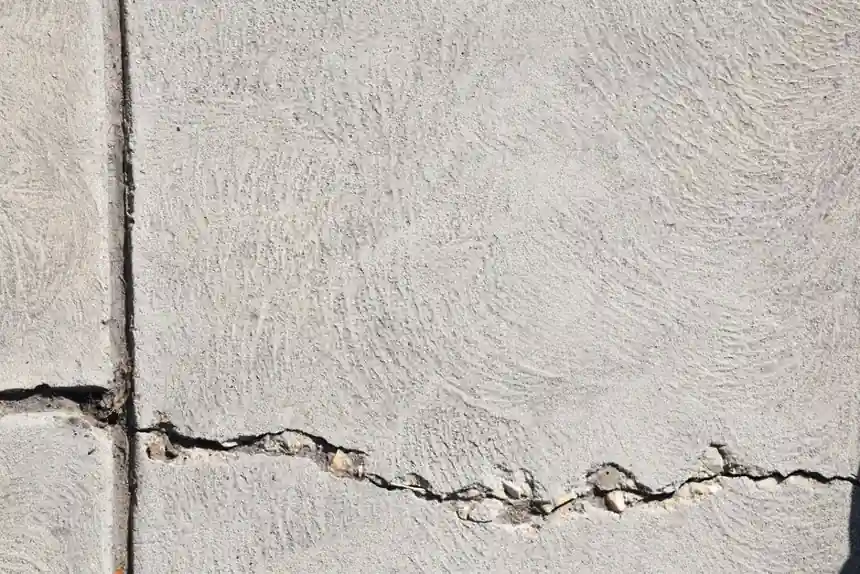
A 2-5% breakage rate is the industry-standard concession for autoclaved aerated concrete shipped by sea, with the 5% ceiling applied to long-haul routes and weaker edge profiles [S1]. Buyers who fail to write this allowance into the purchase order absorb every cracked corner themselves, since AAC's porous structure makes the material inherently brittle at the edges [S2].
The 2-5% window reflects a hard trade-off: AAC's 550-650 kg/m³ dry density and cellular pore structure deliver thermal insulation and dead-load savings of roughly one-third versus clay bricks [S3][S5], but those same air cells concentrate stress at corners and edges during container handling. Standard palletised loads on a 25-35 day ocean transit can be expected to land inside the 2% threshold if shrink-wrap, corner guards, and load-binder straps are correctly specified [S1].
Why AAC Breaks at the Edges During Delivery
AAC's cellular structure, created when aluminium powder reacts with lime to release hydrogen gas during the green-cake rising phase, leaves millions of micro-pores that concentrate stress at corners under impact [S3][S5]. The autoclave cure at 180-220°C and roughly 1.2-1.3 MPa converts the mix into a stable Tobermorite calcium silicate hydrate, but the cured block retains a Mohs-level softness (typically 3-4) that any forklift prong or strap tension can fracture [S3][S5].
Indian Standard IS 2185 (Part 3) governs AAC dimensional and strength tolerances in the Indian market, while CE-marked European shipments follow EN 771-4 specification rules for autoclaved aerated concrete masonry units [S3]. Both regimes accept that edge-chipping is intrinsic to the material: dry density of 550-650 kg/m³ pairs with characteristic compressive strengths of 3.5-7.5 MPa across the B4 to B7 grade band, and the lower-density grades (B4 at 400-500 kg/m³, ≥3.5 MPa) are more vulnerable to transit damage than denser structural grades [S1][S3].
What Drives the 2% Versus 5% Spread
Three variables push a shipment from the 2% floor to the 5% ceiling: transit distance, palletising method, and block grade. A 25-35 day Shanghai-to-Mumbai voyage with shrink-wrapped pallets and steel corner protectors typically lands near 2%, while a multi-modal transhipment with re-handling at intermediate ports drifts toward 5% [S1]. The same article flags proper palletising and heavy-duty shrink-wrapping as the two non-negotiable packaging requirements that suppress the upper end of the range [S1].
Block grade matters as much as packaging. A B4/A3.5 partition block (400-500 kg/m³, ≥3.5 MPa) has thinner face shells and longer edge spans per unit mass than a B6/A7.5 structural block (650-750 kg/m³, ≥7.5 MPa), so a mixed-grade container lands at a higher break rate even with identical handling [S1]. Buyers who order predominantly partition-grade material should negotiate the allowance at 4% rather than 2%, because the lower density is precisely the property that makes AAC block attractive for non-load-bearing walls and is also what makes it fragile in transit.
How to Write the Breakage Clause
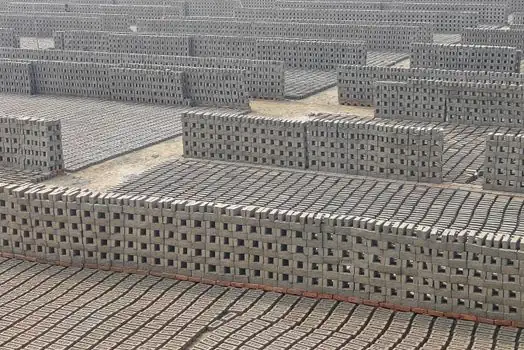
The defect clause in a B2B purchase order should specify four numbers, not one: (1) the allowance percentage (2% for short-haul palletised loads, 5% for long-haul mixed-grade loads), (2) the inspection window (typically 7 days from container open at the destination port), (3) the evidence requirement (photographs of damaged units in original pallet configuration with shrink-wrap intact), and (4) the remedy (replacement at FOB value, credit note, or pro-rata refund on quantity above the allowance) [S1].
A defensible contractual baseline for a 28-35 day ocean shipment of mixed grades is 3% allowance, replacement at FOB cost for breakage above that threshold, and 7-day claim window from container stripping. This sits in the middle of the published 2-5% range and gives both sides a clear number to argue from when the container is opened [S1]. For shorter coastal shipments under 10 days, a 2% allowance with the same 7-day window is the tighter standard the better-palletised suppliers routinely accept.
Comparing AAC to Clay-Brick Breakage on the Same Route
Clay-fired bricks tolerate container handling better than AAC, but arrive heavier and slower to build with, so the breakage comparison is not apples-to-apples. A fired clay brick typically lands with under 1% breakage on the same Shanghai-to-Mumbai transit because its higher density (1800-2000 kg/m³) and kiln-fired surface resist edge chipping, whereas fired brick loses the AAC advantage on dead load and labour productivity [S1][S3][S4].
The trade-off is best read as three columns on one sheet:
AAC blocks have a density of roughly 550-650 kg/m³, making them approximately three times lighter than red bricks, which reduces dead-load on the structure [S3]. Fired clay brick: under 1%, 1800-2000 kg/m³, higher transit durability but heavier structure and slower build cycle [S1][S4]. The cost line on the same project typically shows AAC reducing total spend through lower labour, thinner mortar joints, and faster completion even after the breakage allowance is netted out [S4].
Packaging and Handling Controls That Push Breakage Toward 2%

Four packaging controls separate a 2% shipment from a 5% shipment on the same route: full-pallet shrink-wrap with UV-stable film, steel or heavy-density-PP corner protectors on every pallet edge, cross-strapping with polyester band tensioned to roughly 400-500 N (not the 800+ N that cracks softer B4-grade corners), and dunnage between layers when 100 mm non-load-bearing blocks are stacked above 200 mm structural blocks [S1][S2].
Re-loading protocols matter as much as outbound packaging. Containers should be loaded bottom-up with the heaviest grade on the floor, fork-pockets facing the door, and no more than two pallet heights of mixed-size stack in a single 40-foot high-cube container, because mixed stacks magnify the dynamic load on the lower pallet's edge shells during the ocean roll [S1]. For projects that need 200 mm load-bearing exterior walls plus 100 mm internal partitions in the same shipment, the supplier should pre-sort by grade into separate pallets rather than co-mingling sizes, which is the single fastest way to push a shipment above 4% break-rate [S2].
Limits of the 2-5% Allowance and When to Renegotiate
The 2-5% allowance assumes normal container handling: a 40-foot high-cube, standard stowage, two-to-three port transhipments maximum, and no roll-on/roll-off segments. It does not cover damage from improper sling handling at the destination, double-stacking of pallets at the project laydown yard, or storage on uneven ground that racks the bottom pallet [S1][S2]. These are buyer-side handling failures, not transit breakage, and a well-written contract excludes them from the allowance [S1].
Two signal dates should trigger a contract renegotiation rather than a one-off claim: any AAC grade spec change from the original PO, and any route change that adds more than 7 days of total transit time or introduces a roll-on/roll-off barge segment. Both shift the breakage distribution outside the published 2-5% band and require a new allowance baseline before the next container sails. Suppliers that pre-ship IS 2185 (Part 3) or CE / EN 771-4 test certificates with the bill of lading give the buyer's claims team the documented evidence base they need to invoke the clause cleanly when the container is stripped [S1][S3].
For spec engineers cross-checking the moisture side of the same supply chain, the thermal-conductivity penalty a wet AAC block carries at site reception is documented separately in Moisture Effect on AAC Block Thermal Conductivity, which pairs with this breakage discussion because rain-soaked dunnage is one of the commonest field causes of damage that falls outside the standard allowance.