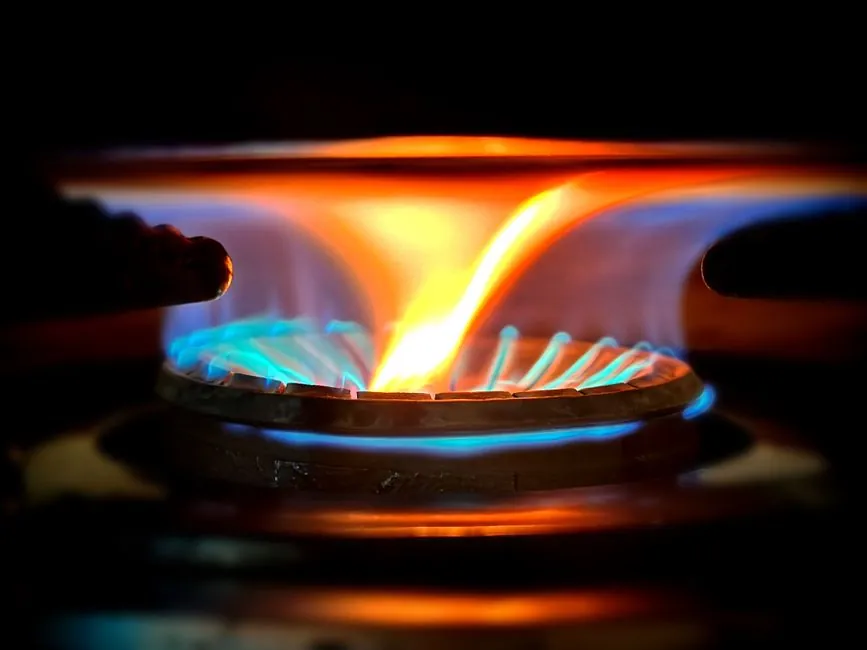
Acetylene reaches a flame temperature approaching 5,700 degF and lights easily due to a 22.7 ft/sec flame velocity with oxygen, while propane runs roughly 4.3 parts oxygen per 1 part fuel stoichiometrically and requires nearly twice the oxygen per delivered kBtu of acetylene [S1][S5][S6].
The trade is blunt: acetylene wins on thin plate, manual cuts, and frequent stop-start work; propane wins on thick plate, CNC tables, and any shop where the line item is fuel cost per foot of cut [S2][S3]. For a fabricator choosing between the two, the spec sheet numbers below let you match the fuel to the work without buying trial cylinders.
Flame Temperature and Preheat Behaviour
Acetylene's primary flame burns hottest among common fuel gases, near 5,700 degF, and its high flame velocity with oxygen (22.7 ft/sec) makes torches light cleanly even in cold conditions [S5]. Propane and propylene run cooler: propylene is documented at 5,312 degF, roughly 400 degF below acetylene [S5]. The practical consequence is preheat time, not peak temperature: acetylene brings a plate to kindling temperature roughly three times faster than propane, which is why short cuts and bolt-hole piercing favour acetylene [S2].
Once the steel reaches kindling temperature, the picture flips on thicker plate. Propylene cuts 25-30% faster than acetylene above 1/2 in. thickness because acetylene's limited secondary-flame BTU output leaves slag stuck to the kerf at higher travel speeds [S5]. Oxy-propane cutting speeds on heavy plate are described as "about the same as for acetylene" by TWI Global, with the speed penalty concentrated at start-up rather than steady-state travel [S6].
Oxygen Consumption and Tank Logistics
Propane's stoichiometric oxygen-to-fuel ratio sits at 4.3:1, versus roughly 1.2:1 for acetylene in the cutting oxygen stream, which is why an oxy-propane rig chews through oxygen bottles faster than an equivalent acetylene rig [S6]. Field data backs the order of magnitude: propane needs "nearly twice the oxygen per delivered kBtu" compared to acetylene, so any cost model has to include O2 cylinder consumption, not just fuel price [S1].
Tank handling differs sharply. Acetylene is limited to 15 psi line pressure, ships dissolved in acetone with a porous gypsum filler, and is unstable enough that drawing more than 1/7 of a cylinder's volume per hour pulls acetone into the regulator, a known flashback trigger [S4][S5]. Propane cylinders face no such draw-down limit, and a standard 20 lb BBQ tank can feed a large rosebud heating tip that an acetylene rig of comparable size cannot support [S4]. For shops running long continuous cuts on thick steel, that headroom translates directly into uptime.
Fuel Cost Per Foot of Cut
Per unit of fuel, propane is consistently cheaper than acetylene, with one OEM source citing propylene at "typically 50% cheaper than acetylene" for an equivalent delivered energy content [S5]. The catch is that acetylene's higher flame temperature means lower gas consumption per cut on thin work, so the line item "fuel cost" can mislead a buyer who only reads the per-cylinder price [S2].
A senior estimator should price three line items together: fuel gas, oxygen, and nozzle consumables. ESAB and industry data point out that in steel fabrication roughly 85% of cut cost is labour, 10% is oxygen, and only 5% is the fuel gas, so any change of fuel that lifts travel speed by 25-30% on thick plate often pays back even when oxygen use roughly doubles [S5]. Propane nozzles also last longer than acetylene nozzles because the lower flame temperature reduces tip erosion, a small but compounding consumable saving on CNC tables [S2].
Thickness Range and Material Suitability
Oxy-fuel cutting in general covers 3 mm to roughly 200 mm on low-carbon and low-alloy steels, with plasma taking over below 3 mm and on non-ferrous metals [S2]. Within that envelope, acetylene is the spec choice from 3 mm up to about 12 mm (1/2 in.) because preheat speed dominates total cycle time at those thicknesses [S2][S5]. Propane and propylene take over above 12 mm, where steady-state travel speed and slag-free cuts outweigh the slower start.
For rusty, painted, or multi-layer plate, propane behaves more forgivingly because the broader, lower-velocity preheat cone tolerates surface contamination better than acetylene's tight, high-velocity primary flame [S1][S4]. Shops cutting reclaim plate, structural beams, or agricultural equipment routinely spec oxy-propane for exactly this reason, even when acetylene is kept on hand for brazing and thin-sheet work [S4].
Decision Matrix: Acetylene vs Propane vs Propylene
Three options, four decision criteria, no hedging: acetylene wins on flame temperature (5,700 degF vs 5,312 degF for propylene) and preheat speed (about 3x faster than propane), but loses on fuel cost (propylene is roughly 50% cheaper per equivalent energy), on stability (acetylene limited to 15 psi with flashback risk above that), and on thick-plate travel speed (propylene cuts 25-30% faster above 1/2 in.) [S2][S5]. Propane sits in the middle on temperature and cost but pulls ahead on oxygen availability, tank handling, and nozzle life for mechanized work [S4][S6].
Per use case: spec acetylene for manual cutting under 12 mm, for brazing and welding where a neutral CO2-shielding flame is required, and for any job with frequent stop-starts where reheat time dominates cycle time [S2][S4]. Spec propane or propylene for CNC oxy-fuel tables running long continuous cuts on plate over 12 mm, for rusty or multi-layer steel, and for shops that need a 20 lb portable tank to feed a large heating tip without acetone-draw risk [S4][S5]. Hold both: most production shops keep an oxy-acetylene rig for thin plate and brazing and an oxy-propane rig for heavy plate and heating, a duplication that pays for itself in nozzle life and cycle time within months on two-shift work.
Safety and Standards Constraints
Acetylene's 15 psi line ceiling is a hard limit driven by its instability as a gas above that pressure, not a manufacturer recommendation; pushing acetylene above 15 psi risks decomposition and detonation, which is why regulators are pinned and why large heating work cannot be done from a single B-tank [S4][S5]. Propane and propylene have no equivalent pressure ceiling in normal torch service, which is why the same physical hose and regulator setup will run a much larger rosebud on propane than on acetylene [S4].
For process selection on low-carbon steel, TWI Global's published guidance and ESAB's fabrication handbook both treat the choice as application-driven, with no universal standard mandating one fuel over the other; the relevant standard is the oxy-fuel process itself rather than a fuel-specific rule [S3][S6]. For a riser-cutting machine on a foundry floor or a cutting machine on a fabrication table, the fuel choice follows from thickness and cut length, not from a code citation. Operators should still confirm local fire code and hot-work permitting, since oxy-fuel work in classified or confined spaces falls under hot-work permit rules regardless of fuel.
Embedded Comparison: Acetylene vs Propane on Four Criteria
Criteria, acetylene, propane (or propylene where the source cites propylene): flame temperature, ~5,700 degF, ~5,312 degF (propylene) [S5]; oxygen stoichiometric ratio, ~1.2:1 O2 to fuel, 4.3:1 O2 to fuel [S6]; fuel cost per equivalent energy, baseline, roughly 50% lower (propylene) [S5]; thick-plate (>12 mm) travel speed, baseline, 25-30% faster (propylene) [S5]. On thin plate (<3 mm) and manual piercing the table inverts: acetylene's faster preheat (3x propane) and tighter flame cone make it the better tool, and propane's higher oxygen demand becomes a liability on small portable rigs [S2][S6].
This is why no OEM publishes a single "best fuel" recommendation: the answer is thickness-banded. Below 3 mm, plasma beats both; from 3 to 12 mm, acetylene; above 12 mm, propane or propylene; for brazing and gas welding, acetylene remains the only practical option because a neutral propane flame introduces carbon impurities into the weld pool [S2][S4].
Trackable next nodes for a sourcing decision: (1) request a per-foot cost breakdown from your current oxy-fuel supplier covering fuel, oxygen, and nozzle wear on your top three plate thicknesses, since the 85/10/5 labour/oxygen/fuel split means labor dominates total cut cost, so any travel-speed gain on thick plate is worth more than fuel-price differences [S5]; (2) if the shop runs both fuels, standardize on grade T hose and matching regulators with the correct tips so a torch can switch between acetylene and propane with a tip change, the configuration field users report works as well as dedicated setups [S4]. For buyers mapping the broader welding and cutting toolchain, see the oxy-fuel cutter and welding and cutting tool reference pages for the equipment-side spec data that pairs with this fuel comparison.
This topic is covered further in Stretch Sleeve vs Shrink Sleeve Labeler for PET Bottles.