
Stretch sleeves are mechanically applied and stretched over the container without heat, while shrink sleeves require heat tunnels to conform the label to the bottle [S1]. The two formats deliver different total cost of ownership, throughput, and graphics results, so the choice hinges on container geometry, line speed, and end-of-life recyclability targets rather than label aesthetics alone.
For PET bottle plants, shrink sleeve labelers and heat tunnels (steam, hot-air, or infrared) remain the default for full-body 360-degree graphics, tamper-evident neck bands, and contour-hugging decorative work [S3]. Stretch sleeve labelers, by contrast, are specified for large bottles, jugs, and industrial containers where heat exposure, line footprint, or film recyclability are deal-breakers [S1].
How the Two Application Processes Differ
Stretch sleeve applicators like the Axon Styrotech ST-2650 run no heat and no adhesive; the pre-printed tube is mechanically stretched over the container and recovers elastically to grip the surface [S1]. Shrink sleeve systems feed a flat-printed, seamed film tube over the bottle, then pass the container through a heat tunnel (hot-air convective, infrared radiant, or low-pressure steam) where the film shrinks tightly to the body shape [S3].
Shrink sleeve technology was popularised decades ago when Tylenol adopted the format to combine eye-catching packaging with tamper-evident sealing, and the heat-shrink process is now the workhorse for full-body labels on single-serve beverages, personal care, and household chemical bottles [S5]. Stretch sleeves, with no thermal stage, suit cold-fill, dairy, and high-volume water lines where a shrink tunnel would add floor space, energy load, and PET-scrap risk.
Material, Film, and Equipment Footprint
Most shrink sleeves today use PETG film, with PVC and PLA as alternatives; the material choice affects recyclability, cost, and shrink behavior [S5]. PETG and OPS dominate when paired with PET bottle bodies to keep the densified recyclate stream relatively clean, while PVC persists in lower-cost consumer goods despite recycling-stream friction.
Stretch sleeve lines typically use LDPE or oriented polyolefin films that recover elastically without thermal input, which removes the heat tunnel from the line and cuts the electrical or steam service requirement [S1]. A shrink sleeve installation needs the applicator plus a matched heat tunnel (Axon offers the HE-500 steam, ThermoPoint steam, EZ-SRB convective, ThermoRay radiant, and ThermoFlow low-pressure steam options), so floor space and utilities scale with throughput and container shape complexity [S3]. For more on film substrate behavior and packaging-line integration, see the encyclopedia entry on stretch film.
Graphics Real Estate and Tamper Evidence
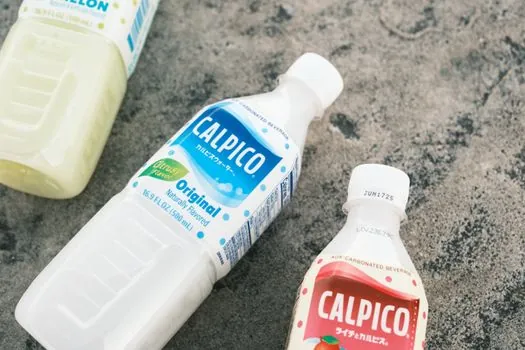
A shrink sleeve gives roughly 150% more design space than a standard pressure-sensitive label, because the printed area wraps the full 360 degrees of the container with no front-and-back panel waste [S5]. A perforated shrink cap variant also serves as the tamper-evident seal, the same mechanism Tylenol popularised and that is now standard on OTC oral solids and many liquid pharmaceutical packs [S5][S6].
Stretch sleeves also offer 360-degree decoration and no adhesive, but cannot deliver the same contour-hugging second-skin finish because recovery elasticity, not heat, sets the final shape [S7]. For products where tamper evidence is a regulatory or retailer requirement (OTC pharma, certain condiments, supplements), shrink sleeve with a perforated neck band is the safer specification, while stretch sleeves are commonly chosen for dairy, juice, and large water jugs where tamper evidence is provided by the closure and overcap rather than the label. For the related tamper-evident equipment class, the encyclopedia article on shrink-wrapping machine covers the heat-shrink equipment family in more detail.
Line Speed, Energy, and Total Cost of Ownership
Shrink sleeve labelers pair with applicators from low-speed 150SL units up to high-speed SLX platforms, with heat tunnels scaled to match container diameter and film gauge [S3]. Energy draw of a steam or hot-air shrink tunnel scales with tunnel length, set temperature, and line speed; converting to stretch sleeves removes that load entirely but caps label graphics to what mechanical stretching can hold without distortion.
Pressure-sensitive labels typically cost less per label than shrink sleeves, but shrink sleeves win on TCO when full-body decoration, contour fit, or tamper evidence are required [S8]. Conversely, when a large-format PET jug (2-5 L beverage, 10-25 L industrial container) needs a single-color or simple multi-color wrap and a heat tunnel would be over-specified, the stretch sleeve applicator delivers the lower TCO per container by eliminating tunnel capex, steam or electric utilities, and the heat-related scrap stream. For a deeper look at how this decision interacts with downstream packing equipment choice, see the strap band sizing guide for pallet loads.
Decision Matrix: When to Specify Each Format

Pick a stretch sleeve labeler when: the container is a large PET jug or industrial bottle; the line is cold-fill or ambient; tamper evidence is provided by the closure; utilities (steam, electric heat) are constrained; and recyclate stream purity is a priority. Pick a shrink sleeve labeler when: full-body 360-degree graphics with photographic quality are required; the bottle has curves, tapers, or unusual contours; tamper-evident neck bands are mandatory (OTC pharma, certain supplements); and a heat tunnel footprint can be justified at the planned line speed [S1][S3][S5].
Typical throughput regimes also differ. Stretch sleeve applicators like the ST-1550 and ST-2650 are aimed at steady-state, large-container lines with no thermal constraint, while shrink sleeve lines are classified by Pack Expo into low-speed (150SL, EZ-100), mid-speed (Aurora, ZPT, Aurora Wide), and high-speed (SLX) categories to match bottle-per-minute targets [S1][S3]. For pharmaceutical lines, neck banders (the EZ-100HSX, HydroTech) apply the tamper-evident band as a separate station rather than as part of the body label, and are specified when only neck-band evidence is required without full-body shrink decoration [S3].
Recyclability, PET Stream, and Regulatory Drag
Shrink sleeve material choice directly affects PET bottle recyclate quality: PETG sleeves are densified with the PET bottle and tolerated by most reclaim streams, while PVC sleeves are the persistent contaminant source that MRFs flag. PLA sleeves offer bio-based content but require industrial composting infrastructure that is not widely available at scale [S5].
Stretch sleeves in LDPE or oriented polyolefin are easier to separate from PET in float-sink washing because of density mismatch, which is one reason water and dairy co-packers prefer the format for large clear PET bottles. The trade-off is graphics fidelity: a stretch sleeve cannot replicate the second-skin, contour-hugging finish that a heat-shrunk PETG sleeve produces on a tapered or hourglass PET bottle, so brand owners chasing shelf-impact still specify shrink even when the sustainability team prefers stretch. Related line-integration trade-offs for downstream automation are covered in the PoE per-port power budget for industrial switches article, where similar capex-vs-flexibility thinking applies.
For PET bottle plants evaluating a line retrofit, the actionable next step is to run a side-by-side TCO model on the SKUs in scope: bucket 1 (large-format jugs, simple graphics) almost always favours a stretch sleeve applicator, while bucket 2 (small-format contour bottles, full-body graphics) favours a shrink sleeve line with a matched heat tunnel. Validate the film-substrate decision (PETG vs OPS vs LDPE) against the reclaim stream your MRF accepts, and confirm tamper-evident requirements with the regulatory team before locking the applicator specification [S5][S8].
For the relevant spec sheets and selection criteria, see shot sleeve.