
Honeycomb core to skin peel strength in bonded sandwich panels is dominated by the size and shape of the adhesive fillet at each cell edge, and not by the total mass of adhesive applied, with EPFL data showing up to 50% of film adhesive missing the meniscus entirely in conventional skin-side lay-up [S5].
Quantitatively, a slit-perforated film method that concentrates adhesive at the cell edge delivers a 3 to 5 fold increase in peel strength using only half the adhesive mass of conventional embedding, while keeping flexural strength comparable and creep resistance at elevated temperature adequate for cladding duty [S3].
What Actually Controls Peel Strength at the Core-to-Skin Interface
Three parameters govern the measured climbing-drum and roller-peel values: core density, adhesive toughness, and surface preparation of the skin [S7]. In a controlled study on composite-skinned honeycomb, panels built under the optimum combination of processing parameters reached a mean peel strength more than twice that of the worst-case panels built under the same adhesive system [S2].
For aluminium honeycomb, the dominant failure mode under shear loading is interfacial debond at the skin/core interface rather than core cell-wall buckling, and this is amplified when adhesive sits inside the cell rather than at the edge [S8]. Pontacol's analysis of conventional embedding shows that more than 90% of the adhesive ends up in the wrong place, namely inside the cell, raising flammable mass without contributing to load transfer [S3].
Adhesive Families and Fillet Geometry
Two adhesive families dominate the bonded honeycomb market: modified epoxy films for aerospace-grade aluminium and Nomex cores, and polyurethane reactive hot-melt or two-part systems for architectural aluminium cladding and paper-core panels [S6]. Epoxy films allow precise areal weight control in the 8 to 80 g/m² range, and at that range the meniscus contact angle, not the bondline thickness, drives the peel load [S5].
For PUGLUE-type polyurethane systems, the right grade is selected by core material (aluminium or paper/aramid), skin type, and end-use environment, with the cured adhesive formulated to remain ductile enough to absorb peel energy rather than fail in a brittle mode at the cell corner [S6]. The slit-film approach used for high-strength aluminium honeycomb relies on three conditions simultaneously: the film rests freely on the core, the polymer chains are biaxially oriented, and the slit pattern is in register with the cell geometry so the adhesive migrates to edges on heating [S3].
Comparison: Adhesive Options for Honeycomb Sandwich Peel Performance
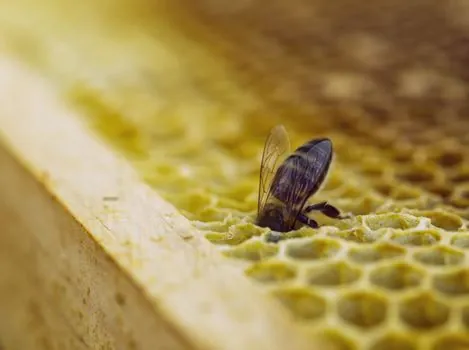
The four practical adhesive routes line up against four selection criteria as follows, drawn from the available technical literature:
1) Epoxy film, skin-side lay-up (conventional): 80 to 200 g/m² typical, up to 50% of adhesive misses the meniscus, moderate peel strength, lowest process complexity [S5].
2) Epoxy film, slit-perforated, core-side lay-up: 8 to 80 g/m² controlled, 100% adhesive forms menisci, 3 to 5 fold peel strength gain, requires process tuning to register slits with cells [S3][S5].
3) Two-part polyurethane paste (PUGLUE-type): areal weight set by roller or bead, flexible cured modulus, good for cladding and paper-core panels, peel strength sensitive to surface prep [S6].
4) Polyurethane reactive hot-melt: applied molten, rapid green strength, ductile cured film, used where impact and vibration loads dominate peel response [S7].
For architectural aluminium cladding where fire, weather, and creep resistance all matter, the slit-film epoxy route is the only option that simultaneously raises peel strength, lowers adhesive mass, and limits flammable content inside the cells [S3].
Test Methods for Measuring Core-to-Skin Peel Strength
The two ASTM methods engineers actually use are ASTM C 393 for the sandwich flexure / climbing-drum peel configuration and ASTM D 4541 for portable adhesion pull-off stubs bonded to the outer skin with a 1 inch diameter dolly [S1][S4]. The NASA technical report by Nettles compares two peel-toughness methods directly on Nomex-honeycomb sandwich with composite skins, and concludes that the climbing-drum peel gives a steady-state propagation value while the roller-peel gives a peak-and-valley trace dominated by individual cell failures [S1].
Portable pull-off adhesion (ASTM D 4541) is used in MRO environments where sandwich coupons cannot be cut, and correlates reasonably with lab peel strength when the failure surface is inspected for cohesive versus adhesive mode, since cohesive failure within the core or adhesive is the desired outcome [S4].
Failure Modes and What They Tell You About Bond Quality
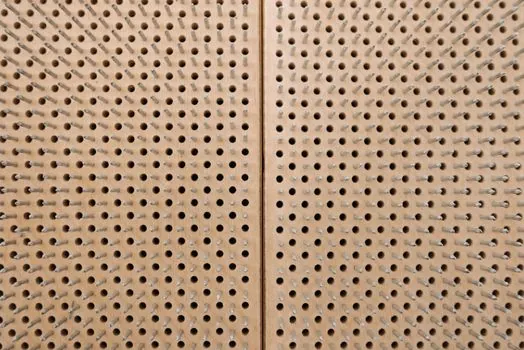
A peel-tested honeycomb coupon produces one of three failure signatures: skin-adhesive interfacial failure (bad bond prep), cohesive failure within the adhesive fillet (good bond, possibly under-strength adhesive), or core cell-wall failure (excellent bond, core is the weak link) [S8]. Interfacial debond under shear is the documented dominant failure mode for adhesively bonded aluminium honeycomb, and any process change that shifts the failure mode from interfacial to cohesive within the fillet is a direct peel-strength win [S8].
For outdoor service the peel-strength number on the datasheet is a starting point only; UV, moisture, and thermal cycling degrade both the adhesive and the skin/core interface, and the only way to verify field durability is conditioned peel testing after the relevant ageing cycle, as detailed in the broader discussion of outdoor adhesive bond durability and its UV and moisture failure modes [S7].
Process Variables That Move the Number
On a fixed adhesive system, four process levers change measured peel strength more than the adhesive grade itself: skin surface preparation (solvent wipe, grit blast, anodise, or sol-gel for aerospace aluminium), adhesive areal weight, cure ramp (heat-up rate and hold temperature), and cure pressure on the bondline [S7]. The Rion/Leterrier/Månson EPFL study showed that the size of the adhesive meniscus is driven by the surface energy of the skin and the core, so changing the skin surface treatment without re-tuning adhesive rheology shifts the contact angle and reduces effective fillet area [S5].
For process engineers selecting industrial adhesive systems for new honeycomb production, the actionable rule from the data is straightforward: choose the adhesive and deposition method together, hold adhesive areal weight in the 8 to 80 g/m² window for film systems, and verify the coupon failure mode before trusting the peel number on a supplier datasheet [S3][S5][S7].
Selection Crib for Process and Quality Engineers
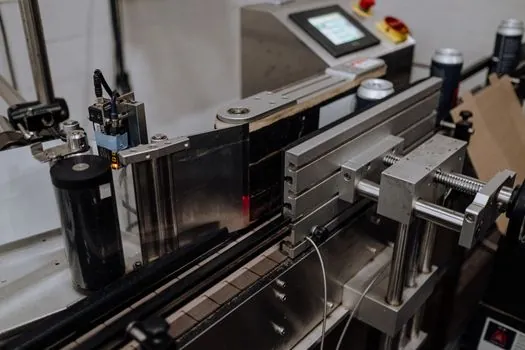
Specifying peel strength for a bonded honeycomb panel starts with three numbers: minimum acceptable peel strength in N·m/m (or lb·in/in for US projects), the acceptable failure mode (interfacial, cohesive, or core), and the post-conditioning test matrix (dry, hot/wet, salt fog, UV) [S1][S4][S7]. For aerospace primary structure the climbing-drum peel per ASTM C 393 on a representative cured panel is the standard reference, while for architectural cladding the portable D 4541 pull-off is acceptable if the failure surface is mapped [S1][S4].
Adhesive chemistry selection then follows: epoxy film for high-strength aluminium or aramid cores where fire, creep, and strength all matter, polyurethane two-part for cost-driven cladding and paper-core panels, and reactive hot-melt where impact and vibration dominate [S3][S6][S7]. Where the bonded sandwich will see outdoor exposure, the ageing-conditioned peel protocol described in the outdoor adhesive bond durability reference should be specified alongside the dry-as-cured value, since both UV-driven adhesive embrittlement and moisture-driven interfacial attack can cut measured peel strength by half or more in field service [S7].
Next trackable signals to watch in the bonded-honeycomb literature: published round-robin data comparing climbing-drum peel and roller-peel on the same Nomex sandwich (currently a single-laboratory dataset in the NASA Nettles report), and quantitative peel-strength retention curves after UV-plus-humidity cycling for slit-perforated film epoxy systems, which are still largely supplier-side data [S1][S3].
Detailed specification references: core machine, and shell core machine.