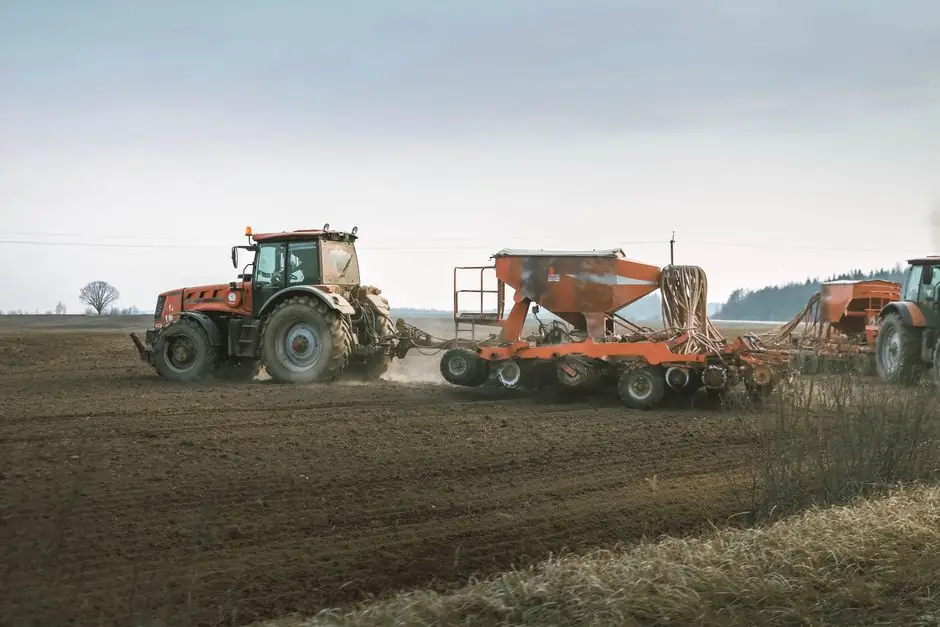
Pillow block bearings for farm equipment are almost always UCP or UELP series insert ball bearing units, paired with cast iron or pressed steel housings and factory-greased triple-lip seals to handle dust, chaff, and wash-down water across 1,000-2,000 rpm shaft speeds [S1][S7].
Selection is governed by four hard parameters: shaft bore (typically 20-50 mm on harvesters and implements), radial load (often 15-40 kN for conveyor idlers), misalignment tolerance (2-5 deg via self-aligning outer race), and ingress protection, since over 50% of agricultural bearing failures trace back to contamination ingress, not fatigue [S1][S2].
Agricultural duty profile and the UCP/PAF housing choice
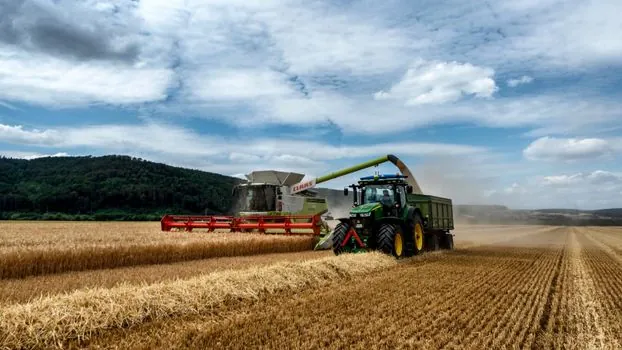
Agricultural applications span conveyors, grain augers, cotton pickers, balers, mowers, tillage equipment, and PTO-driven implements, with both pillow block and flange bearing formats used depending on machine frame geometry [S5][S6]. Pillow block bearing units are preferred where the shaft runs parallel to a flat frame rail, and UCP (cast iron, 2-bolt base) remains the most specified configuration in field-replaceable farm machinery, while UELP variants (with an extended inner ring for through-shaft locking) suit applications requiring higher axial holding [S1][S7].
For shaft bores under 40 mm, the UCP 200 series is the default; for 40-60 mm bores, UCP 300 series; above 60 mm, equipment builders usually step to a plummer block SN/SNL or SAF series with a spherical roller bearing inside, because insert ball bearings in that bore range offer limited dynamic load rating relative to the same envelope [S1][S4]. Housing materials follow the duty: cast iron for general tractor and combine use, pressed steel (SBPP/SAPP) for lightweight implements where weight and cost dominate, and stainless only when chemical fertiliser or manure exposure is chronic [S3][S5].
Housing materials, insert types and sealing for field conditions
Standard UCP housings are cast iron; pressed steel, stainless steel, thermoplastics, and ductile iron are listed alternatives for specific environments, while the bearing insert is most commonly a UC-series insert ball bearing with set-screw or eccentric collar locking [S1][S3]. Sealing is the dominant failure-mode variable on farm equipment: over 50% of all bearing failures originate from contamination, and dust, chaff, moisture and crop residue are constant on combines, balers, and outdoor conveyors, so triple-lip nitrile seals (often labelled 2RS or 2F) plus a flinger are the practical minimum, with optional grease zerks for periodic re-lubrication [S1][S2][S5].
For high-moisture environments such as rice harvest, manure spreaders, or irrigated implements, stainless or thermoplastic housings outlast cast iron; for dry, abrasive dust such as grain elevators and tillage, the heavier cast iron housing with double-lip seals plus a flinger cover is the more durable route [S3][S5]. Spherical roller and tapered roller inserts inside a pillow block housing are reserved for high-load nodes (for example, the primary driveline of a round baler or the rotor support of a larger forage harvester) where dynamic loads exceed what a UC insert ball bearing can carry at the required L10 life [S1][S4].
Plummer block vs pillow block: when agriculture actually needs the heavier series
Plummer block bearings (SN, SNL, SAF, SD series) use heavier housings and are designed for larger shafts and harsher operating conditions, while pillow block bearings (UCP, UELP) cover small to medium shafts and general-purpose loads [S1][S7]. Plummer block housings are typically split (two-piece) for easier insert replacement without pulling the shaft; pillow blocks are one-piece, lower cost, and faster to swap in the field, which is why most tractor and combine OEMs keep plummer blocks for gearbox input/output shafts and pillow blocks for conveyor idlers, auger shafts, and fan drives [S1][S4].
The decision criterion is concrete: if dynamic radial load exceeds roughly 35-40 kN, or the shaft is larger than 60 mm, the cost-effective answer for a new agricultural machine design is a plummer block with a spherical roller insert rather than a UCP, because the larger pillow block envelope in that range costs more and weighs more for the same life. Conversely, for low-to-medium loads at 25-50 mm bores, the UCP 200/300 series is the lower-cost, lower-weight, and easier-to-source choice across the global farm-equipment aftermarket [S1][S4][S7].
Comparison table: housing/insert options for farm equipment
Four material/insert combinations dominate agricultural specification, and the table below lines them up against the criteria that actually drive a procurement decision on a farm implement [S3][S5]. Cast iron + UC insert is the default for general farm use, pressed steel + UC insert is the lowest-cost option for OEM implements where replacement cost matters more than life, stainless + UC insert is the choice for wet/chemical exposure, and cast iron + spherical roller insert is reserved for heavy-load nodes. Each row is a real option builders can source, not a generic category.
Locking methods, re-lubrication and field replacement
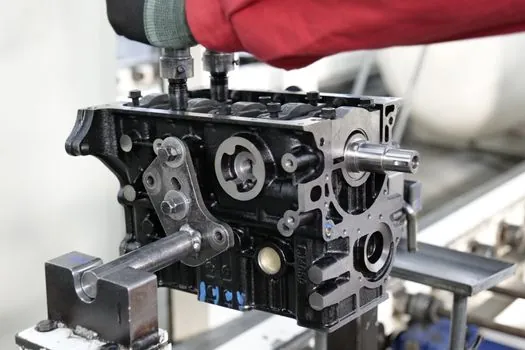
Three locking methods dominate insert mounting: set screw (most common on UC inserts, cheapest, but can damage the shaft under vibration), eccentric collar (faster installation, common on UEL/UEP inserts), and adapter sleeve (preferred for higher speeds, higher loads, and where repeated removal is expected) [S1][S5]. For agricultural equipment that sees heavy seasonal vibration, eccentric collar or adapter sleeve locking is the more reliable route, since set screws can score the shaft and loosen in dusty, high-vibration service; this is one of the under-specified failure modes in field returns [S1][S2].
Re-lubrication strategy also differs: many UCP units are sealed-for-life (no zerk) for low-maintenance implements where end-of-season replacement is cheaper than mid-season greasing, while plummer block and high-load pillow blocks on combines and large balers are typically fitted with grease zerks and re-greased every 200-400 operating hours per OEM service intervals [S1][S2]. For related mounted-bearing trade-offs on harsher sites, a parallel spec guide covers mining pillow block selection where dust and shock loads are even higher, see mining pillow block selection for the housing/seal/insert logic carried into a more aggressive duty cycle.
Failure modes, limits and what to verify before order
Three failure modes account for most agricultural pillow block losses: contamination ingress past the seals (over 50% of all bearing failures, per the bearing-industry figure cited by [S1]), misalignment-induced edge loading when frame rails are not flat to within the self-aligning range (typically 2-5 deg is tolerated, beyond that, expect premature race wear), and lubrication breakdown from heat, water wash-out, or simply running past the re-grease interval [S1][S2]. In each case, the right specification is more important than the brand.
For a full selection workflow, treat the pillow block bearing reference as the starting point for bore series, dynamic load rating, and limiting speed, then validate four numbers on the data sheet: dynamic load rating C (kN) for the actual shaft speed and expected L10 life in hours, seal type and material (NBR vs Viton for chemical/heat exposure), bore tolerance and locking method matched to the shaft, and the mounting foot bolt pattern against the implement frame. If the dynamic load required exceeds roughly 35 kN at 1,500 rpm, step up to a plummer block series; if the environment is wet or chemical, step up the housing material rather than over-sizing the insert.
The next spec to lock in for 2026 builds is the seal compound (NBR for general use, Viton/FKM for fertiliser and high-temperature zones), and the next trackable signal is OEM release of sealed-for-life UCP units with IP65-rated triple-lip seals as standard, which is gradually displacing the older single-lip, zerk-fitted housings on new tractor and combine platforms through 2026 [S1][S2][S3].
For the relevant spec sheets and selection criteria, see aac block, and block brick.