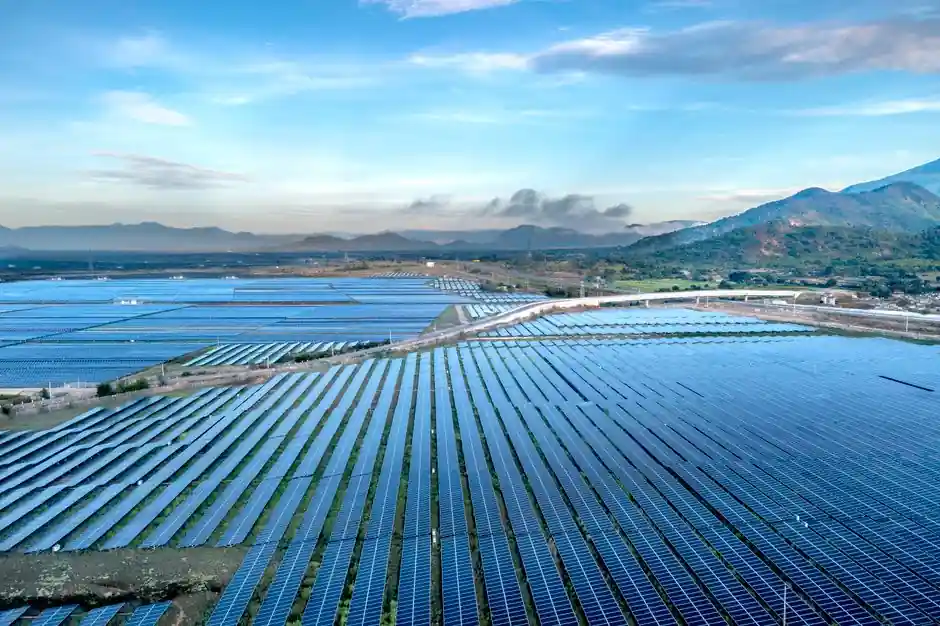
U.S. agrivoltaics reached nearly 700 installations covering 85,000 acres and generating about 14 GW by 2026, moving well beyond university pilots and small demonstration farms [S3].
Installed Scale Confirms Commercial Maturity
The documented market consists of nearly 700 installations, including small university projects and utility-scale plants [S3].
New Jersey operated a 2025 agrivoltaics pilot, while California’s 5 MW Project Nexus placed solar generation over a canal, demonstrating additional land-use configurations [S1]. The canal project is not an agricultural installation in the strict crop-production sense, but it illustrates the broader commercial direction of dual-use solar infrastructure [S1].
Commercial and Utility-Scale Project Types
Three deployment models distinguish agrivoltaics projects. Research installations test crop responses and system performance, farm-scale systems serve individual holdings or small communities, and utility-scale plants combine power generation with agriculture over hundreds or thousands of acres [S2][S3].
Comparison by scale shows that agrivoltaics photovoltaic arrays range from several dozen to thousands of panels and can power a single home or even a small town, depending on the scale.
Agrivoltaics is suited to owners who need to preserve working farmland while developing solar, and to communities that consider a mixed land use more acceptable than a conventional open-space solar plant [S3]. It is less suitable for sites with no viable agricultural use, incompatible shading requirements, unresolved lease terms or local restrictions that do not permit solar development in agricultural areas [S2].
Land Productivity and Operating Economics
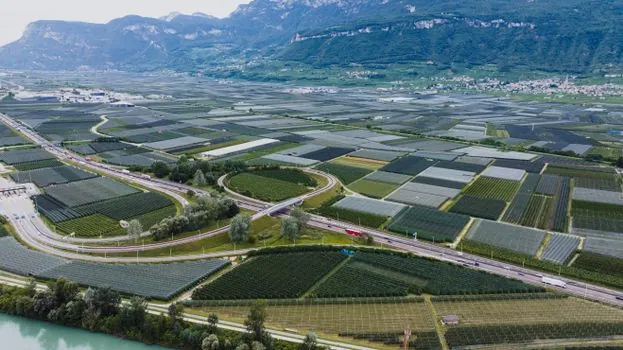
Solar arrays can be arranged above crops and between rows, while perimeter areas can support sun-loving crops, partial-shade plants, native grasses or grazing livestock [S3]. This flexibility allows the agricultural plan to determine the array layout rather than treating every installation as an identical panel-and-field design [S3].
One industry survey found that farmers had been offered annual solar lease payments of $1,000 or more per acre [S2]. That payment is economically material for land that remains available for production, but it does not by itself establish project profitability because lease rates, crop revenue, installation cost and power value vary by site [S2].
Cooler panel temperatures can improve photovoltaic efficiency, and grazing animals can reduce vegetation-management costs [S3]. Agrivoltaics may also reduce irrigation costs and erosion, while partial shade has benefited crops such as spinach; these outcomes remain site-specific because crop species, panel spacing, climate and management determine performance [S2].
Public Acceptance Helps, but Does Not Eliminate Risk
A Michigan Technological University Department of Social Sciences survey found that more than 80 percent of respondents would be more open to solar development if it were combined with traditional farming [S2]. A 2025 Land Use Policy study also found less public opposition to large-scale agrivoltaics than to large-scale solar projects in open spaces [S3].
Local resistance remains a material development risk. A Columbia University Sabin Center for Climate Change Law estimate placed solar and wind cancellations linked to local opposition at roughly one third of projects, including some agrivoltaics, while a 2023 report counted more than 200 towns that had banned or severely restricted solar in agricultural areas [S2]. These figures describe the permitting environment, not a guaranteed rejection rate for every agrivoltaics proposal [S2].
Utility-scale solar tax incentives under the Inflation Reduction Act are expected to expire in 2027, creating a potential incentive change for projects not completed before then [S2]. Developers must therefore evaluate agrivoltaics against project economics without assuming that the current policy environment will remain unchanged [S2].
Agricultural Compatibility Drives Project Design
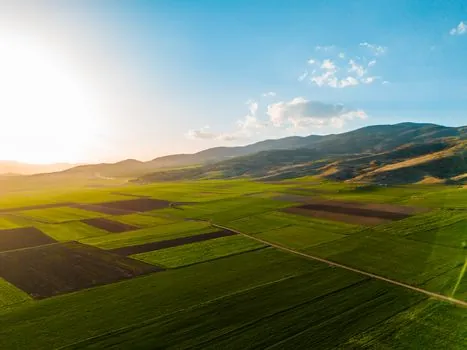
Crop selection is the first engineering constraint because agriculture determines usable panel height, row spacing, shading tolerance and maintenance access [S3]. Crops requiring heavy sunlight can occupy spaces between rows or around array perimeters, whereas shade-tolerant or cooler-condition plants can sit beneath modules [S3].
Livestock systems provide a second use path because sheep can graze vegetation around and beneath arrays, lowering vegetation-control requirements while generating wool or meat income [S3]. One study found that sheep grazing on an agrivoltaics plot produced higher-quality wool than sheep grazing in a nearby traditional pasture, but that result does not establish identical outcomes across breeds, forage, rainfall or grazing schedules [S2].
Native plants can also support habitat and pollinator objectives, extending the project beyond electricity production [S3]. A developer must preserve a credible agricultural plan through compatible species, defined grazing or cultivation practices, monitoring obligations and lease terms that prevent the site from becoming nominal farmland with no production [S3].
What Confirms the Shift Beyond Pilot Stage
The clearest commercial evidence is the combination of nearly 700 U.S. installations, 85,000 acres and about 14 GW of capacity [S3]. Utility-scale examples at 138 MW, 209 MW and more than 750 MW also demonstrate that agrivoltaics can operate beyond research plots and individual-farm projects [S3].
Further commercial expansion can be tracked through project capacity added annually, the share of new utility-scale solar with documented agricultural operations, and the number of states retaining or restricting agricultural solar [S2][S3]. The 2025 New Jersey pilot and California’s 5 MW Project Nexus show continued diversification, while opposition incidents and the expected 2027 tax-incentive change provide the principal counterweights [S1][S2].