Sodium-ion is a real technical challenger to LFP, not yet a bankable, system-wide replacement: LFP retained the lead in cost, efficiency, cycle life, and commercial maturity in the second quarter of 2026 [S7].
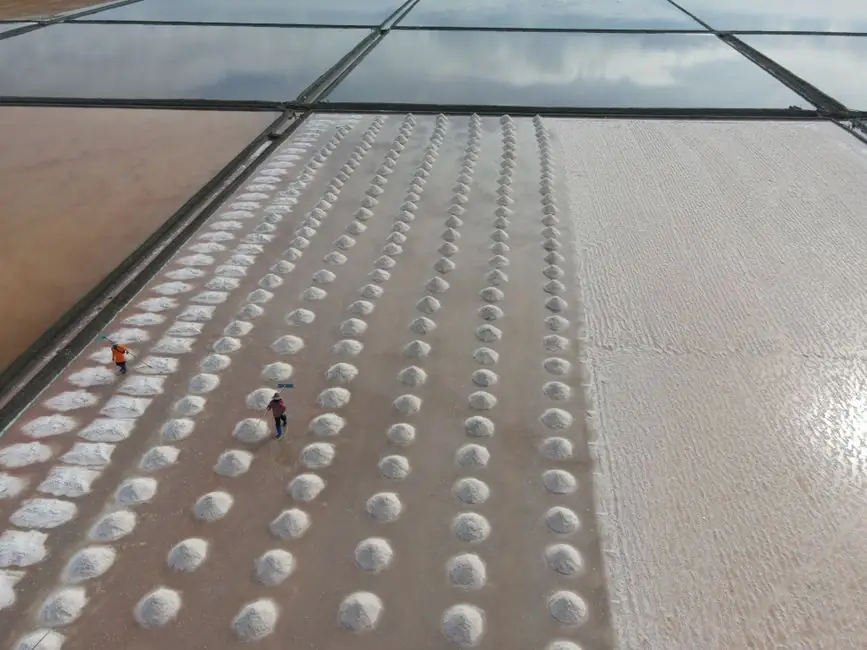
The comparison covers utility-scale and commercial and industrial storage, where sodium-ion offers abundant materials, aluminum current collectors, low-temperature operation, and deeper usable discharge than LFP [S2][S3].
Why Sodium-Ion Can Challenge LFP
That raw-material spread does not automatically become a finished-battery price advantage, but it reduces exposure to lithium-price shocks and can simplify procurement. Sodium-ion cells can also use aluminum current collectors at both electrodes, removing the copper required for the anode in lithium-ion systems [S2].
LFP Still Leads the Procurement Decision
In a direct 2026 utility and C&I procurement comparison, LFP remained ahead on installed cost, round-trip efficiency, cycle life, supplier depth, and warranty evidence [S7].
Stationary Storage Is the Strongest Sodium-Ion Market
Stationary storage is sodium-ion's clearest opening because a BESS does not need the same gravimetric or volumetric energy density as a passenger vehicle.
One market estimate places sodium-ion at 20% of stationary storage in 2030, but that is a projection rather than an observed 2026 share [S6]. A more defensible near-term view is complementarity: sodium-ion can take projects where temperature, depth of discharge, supply-chain risk, or permitting outweigh incumbent efficiency and lifecycle-cost advantages [S1][S6].
Safety and Supply Chain Are Real Advantages
That supports a lower fire-risk proposition, although a supplier claim about eliminating thermal-runaway pathways still requires cell-, module-, and system-level validation [S3].
Supply-chain concentration is another material advantage for sodium-ion. S2 reports that 99% of LFP cathode components, 92% of anode components, 100% of LFP battery cells, and 77% of BESS system supply is [S2].
Permitting pressure can accelerate adoption. More than 100 local authorities in New York had enacted moratoria or bans covering about 8% of the state, often over fire safety and inconsistent permitting standards [S2].
Commercialization Still Has a Bankability Gap
The United States residential market demonstrates how chemistry readiness can remain ahead of product readiness. As of June 2026, sodium-ion could not be bought there as a UL 9540-listed residential battery with a warranty comparable to the 10-year to 15-year standard cited for LFP [S4].
Commercial scale also remains unsettled. A battery startup cancelled a $1.4 billion factory on September 3, 2025, reducing confidence in near-term sodium-ion manufacturing capacity [S4].
For stationary-storage buyers, the correct diligence is not a promise of future cost parity. It is a request for warranted cell throughput, measured round-trip efficiency, usable energy at the specified temperature, thermal-propagation test results, warranty terms, and factory delivery commitments.
Procurement Triggers for a Chemistry Switch
LFP remains the stronger default where the bid is judged on total cost of ownership, round-trip efficiency, proven cycle life, mature financing, and residential warranty evidence [S4][S7]. It is also the rational choice for buyers that cannot tolerate supplier or deployment risk during the 2026 commercialization window.
Track three procurement signals before switching the default: qualified stationary-system awards with disclosed warranties, repeatable factory output backed by operating data, and third-party system tests showing that thermal stability and usable capacity translate into lower lifetime cost. These are measurable triggers, not technology promises.
How Stationary Storage Procurement Changes
Sodium-ion changes stationary-storage engineering because it turns chemistry selection into a site-specific comparison of usable energy, temperature, safety exposure, cycle life, and supply risk. Its cited material advantages include abundant sodium resources and aluminum current collectors, while the available excerpts do not substantiate the stated soda-ash price or usable-capacity range [S2][S3].
It does not displace LFP across the market in 2026. LFP retains the stronger procurement case for cost, efficiency, cycle life, and commercial evidence, while sodium-ion is a targeted alternative for cold, safety-sensitive, deep-discharge, and supply-constrained projects [S4][S7].
No single battery chemistry defines a complete BESS architecture. Controls, grid-forming inverters, enclosure design, thermal management, and commissioning determine how much advantage reaches the project owner.