
AI-driven parameter optimization in injection molding replaces static setup sheets with closed-loop models that target the 3–8% scrap rates and 85–93% first-pass yields typical of plants without real-time optimization, with typical pilot-to-rollout timelines of 8–12 weeks per plant [S5].
Active patent filings on AI-controlled injection molding exceed 50 documents across six jurisdictions (CN, JP, KR, US, EP, BR), of which roughly 25 are active or pending and directly target scrap rate reduction through process parameter control [S4].
Why Static Setup Sheets Fail on a Production Molding Line
An injection molding setup sheet is a snapshot of melt temperature, injection speed, hold pressure profile, cooling time, and clamping force frozen at mold qualification, and it starts aging the moment the first shot lands. Resin lots from the same supplier carry measurable MFI variation shipment to shipment, mold surface temperature climbs 2-4°C across the first 50-100 shots before stabilizing, and ambient humidity swings shift moisture content enough to alter viscosity [S5][S3]. On a typical 15-second cycle, a 0.3-second drift compounds into roughly 700 lost or gained parts per press per 24-hour day, which is the financial margin the AI loop is built to recover [S5].
Manual tuning stops once an operator reaches a workable set, because exhaustive fine-tuning is not economically defensible when one technician supervises multiple presses; this is the structural gap that closed-loop process control and AI parameter recommenders are designed to fill [S1][S3].
The Four Technical Clusters in 2026 Patent Filings
Analysis of 50+ patent documents groups AI injection-molding optimization into four technical clusters: (1) simulation-coupled closed-loop optimization, (2) reinforcement learning with iterative model training, (3) real-time melt and cavity pressure feedback control, and (4) multi-objective metaheuristic optimization using particle swarm and genetic algorithms [S4]. BASF SE leads with four cross-jurisdictional filings covering JP, CN, BR, and KR, focused on simulation-coupled AI; IMFLUX Inc. and LS Mtron each hold three filings on real-time pressure control and AI condition generation respectively [S4].
Chinese assignees (Kaos IoT Technology under Haier, Zhejiang University, and Beijing Baidu) form a separate cluster built around data-driven, cloud-connected control, which is a different architectural pattern from the machine-level focus of Western filings [S4]. Cross-jurisdictional filing activity in AI-assisted manufacturing control has accelerated since 2020, with most analyzed documents concentrated in the 2021–2025 window [S4].
Core Process Variables the AI Loop Actually Controls
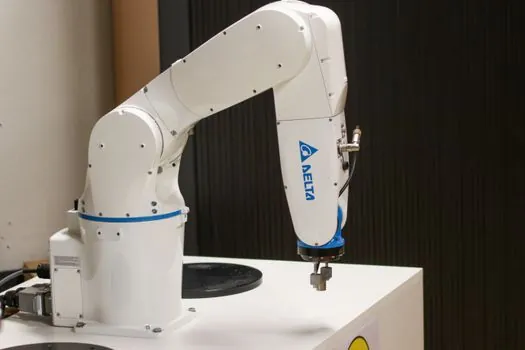
The parameters that drive both quality and throughput are a small, well-defined set: cycle time, shot weight, hold pressure profile, melt temperature, and clamping force [S5]. A 0.1 g shot-weight repeatability loss is enough to push tight-tolerance parts out of dimensional spec, so most plants monitor shot weight at a granularity that exposes drift before it becomes scrap [S5]. Hold pressure optimization is treated as a multi-zone profile rather than a single number, because the gate freezes progressively and packing force requirements change as the cavity fills [S5].
Barrel zone temperature drift of 2-4°C during long overnight runs alters viscosity and fill patterns, and a typical press runs 5-15% over the necessary clamping force, which wastes energy and accelerates mold wear; AI calculates the minimum required clamping force from actual cavity pressure rather than a conservative fixed setpoint [S5][S3]. In the underlying research literature, the principal control axes are explicitly identified as injection pressure, melt temperature, mold temperature, holding pressure, and cooling time, with warpage, sink marks, and short-shot as the dominant defect modes [S1].
From DOE and ANN to Real-Time Recommender Systems
Classical parameter tuning relied on Design of Experiments (DOE), response surface methodology (RSM), and Artificial Neural Networks (ANNs) to build static predictive models off-line [S1]. Recent peer-reviewed work in 2026 demonstrates a real-time parameter recommendation system that achieves effective optimization with a limited dataset, an important practical constraint for any new mold where no historical machine-mold fingerprint exists [S1]. A 2025 arXiv study extends Park et al.'s real-time AI control architecture, originally published in 2019 and cited over 60 times, into an industrial production setting with continuous correction [S2][S7].
Multi-objective evolutionary algorithms (genetic algorithms, PSO) are now applied because the optimization is nonlinear, high-dimensional, and contains conflicting objectives (quality vs cycle time vs energy), which single-objective DOE cannot resolve [S1]. The 2026 patent landscape shows the same migration: the earliest closed-loop viscosity-compensation patent in this lineage dates to 1974, and the field has since moved toward multi-parameter, multi-objective AI frameworks that simultaneously hold quality, cycle time, and energy within tolerance [S4].
Where the Closed Loop Sits on the Plant Floor

Real-time monitoring in injection molding uses a sensor network of pressure transducers, melt and cavity probes, temperature sensors, and vibration monitors streaming shot-by-shot data into an analytics platform, which is the data layer that any multifunction process calibrator attached to the cell also has to validate against [S3]. Predictive process control layers historical and live data to forecast out-of-spec conditions minutes to hours ahead, shifting quality from reactive to proactive and reducing emergency stoppages during changeovers [S3].
Autonomous injection molding extends this further: the press self-adjusts within the validated process window without operator intervention, with documented benefits of fewer emergency stops, smoother shift handovers, and lower variability between operators of differing skill levels [S3]. The whole stack feeds the molding line and is increasingly coupled to adaptive digital twins, which are physics-based simulation models continuously recalibrated by real shot data, eliminating setup scrap at its source rather than correcting it after the part is molded [S4][S3].
What the AI Loop Cannot Fix
AI parameter optimization is a control-layer technology and inherits the limits of the underlying process: it does not compensate for worn screws, degraded heater bands, leaking hydraulic packs, or molds with vented but unchecked flash, and those root-cause defects must be resolved mechanically first [S3][S5]. Effective deployment also requires that the press exposes real-time, shot-level sensor data, which not every machine in a mixed fleet provides, and plants running older hydraulic presses may need a process calibration retrofit before the AI loop has trustworthy inputs [S1].
Limited-dataset regimes, especially during a new-mold ramp where no machine-mold fingerprint exists, require recommenders specifically designed for cold-start conditions; off-the-shelf DOE-trained models trained on other molds tend to underperform until 200-500 shots of fingerprint data accumulate [S1]. For larger-tonnage presses, large-part molding deployments have shown measurable scrap-rate reductions and improved process stability, but the AI adjustment recommender is documented as one agent in a broader v-process line of decisions including material handling and downstream inspection [S10].
Decision Framework: Which AI Architecture Fits Which Plant
For a plant evaluating AI parameter optimization, the choice is between four practical options that map directly onto the patent clusters: (1) a simulation-coupled digital twin for high-mix, low-volume job shops where setup scrap is the dominant cost; (2) reinforcement learning on historical press data for high-volume single-mold production where stable rewards exist; (3) real-time cavity pressure feedback for tight-tolerance parts where dimensional yield is the bottleneck; and (4) metaheuristic multi-objective optimization when cycle time, energy, and quality must be balanced explicitly [S4][S1].
Selection criteria line up against the dominant defect mode: warpage and sink marks point toward hold-pressure profile optimization and mold-temperature control; short-shots and flash point toward injection speed and clamping-force recalculation; cycle-time bottlenecks point toward cooling-time and barrel-zone temperature retuning [S1][S5]. A 0.3-second cycle reduction across a 10-press, three-shift plant translates to thousands of additional salable parts weekly without added machine time or labor, which is the order-of-magnitude payback window most vendors are targeting with their 8-12 week pilot-to-rollout timelines [S5]. The 2026 patent distribution also implies geographic specialization: machine-level, simulation-coupled architectures dominate Western filings, while data-driven, cloud-connected control dominates Chinese filings, a structural difference buyers should weigh when matching architecture to in-house IT and data-governance posture [S4].
Trackable Signals for the Next Planning Cycle
Two verifiable signals are worth monitoring through 2026 and into 2027: first, the publication trajectory of the 2026 MDPI limited-dataset real-time parameter recommender, currently cited 3 times and likely to draw follow-on work in cold-start mold qualification [S1]; second, the next round of cross-jurisdictional patent filings, where the current 50-document dataset shows a clear 2021-2025 concentration and a likely 2026-2027 expansion as Chinese cloud-platform assignees file PCT applications [S4]. For a plant sizing its own deployment, the 8-12 week pilot-to-rollout window reported in production case studies and the documented 3-8% scrap-rate baseline are the two numbers to anchor a business case against [S5].
This topic is covered further in Manual vs Semi-Automatic Gravity Die Casting Machine Cost.