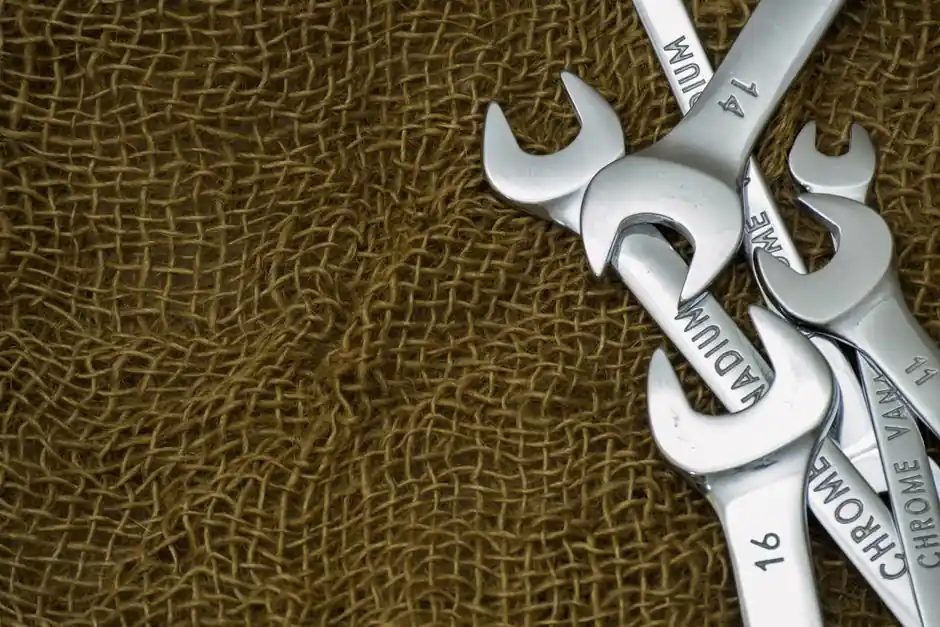
For rusted passenger-vehicle fasteners, an air impact wrench rated at 1,200 Nm (886 ft-lbs) of breakaway torque covers every common automotive bolt, including seized axle nuts and crankshaft pulley bolts [S3]. Rust inflates the break-loose requirement dramatically: a fastener that took 100 ft-lbs to install can demand 300 to 500 ft-lbs to free after years of oxidation and thread galling [S1][S3].
For heavy industrial and agricultural work (truck hubs, excavator pins, frozen plow-mount bolts), published guidance pushes the minimum to 1,000+ ft-lbs, with pneumatic platforms delivering 1,500+ Nm (1,107+ ft-lbs) where cordless tools typically top out [S2][S3]. The air impact wrench family splits cleanly into three breakaway bands by power source, and the rust severity, not the rated torque on the nameplate, decides which band you need.
Breakaway Torque Bands by Application
OEM guidance groups automotive breakaway torque into four discrete bands: under 250 ft-lbs for trim and small-engine work, 250 to 650 ft-lbs for general car repair and lug nuts, 650 to 1,000 ft-lbs for stubborn suspension and axle nuts, and 1,000+ ft-lbs for industrial/agricultural machinery [S1]. A wrench advertising 450 ft-lbs of nut-busting torque already clears a properly tightened lug nut, but that same wrench stalls on a 15-year-old caliper bolt in the Rust Belt [S1].
Heavy-duty suspension work on corroded undercarriages typically requires 650 to 1,000 ft-lbs of breakaway output, and 1,200 ft-lbs (1,627 Nm) is the cited threshold above which a standard passenger-vehicle bolt will not stand in the way [S1]. Cordless 1/2-inch drive tools in the 1,200 to 1,500 Nm range are now marketed as sufficient to remove the most rusted or stuck bolts, reflecting the migration of high-torque capability from pneumatic to battery platforms [S3].
Pneumatic vs Cordless vs Corded Torque Output
Pneumatic (air) impact wrenches deliver the highest peak torque, with published ranges of 300 to 1,500+ Nm and consistent output unaffected by battery state-of-charge [S3]. A typical air impact runs 900 to 1,400 blows per minute (BPM), each strike lasting only a few milliseconds but transferring enough kinetic energy to shear corrosion bonds on seized threads [S5].
Cordless 18V/20V brushless models now reach 1,200 to 1,500 Nm, trading some peak output for portability on job sites and mobile repair trucks [S3]. Corded electric tools sit between the two at 200 to 1,000+ Nm, limited by motor size but free of compressor and battery constraints [S3]. For shop-fixed heavy tire and assembly work, corded remains a cost-effective middle ground; for field calls on agricultural or construction iron, pneumatic still wins on sustained peak output. Practical field reports confirm that a 650 ft-lbs cordless 1/2-inch impact handles nearly all lug and suspension work, but operators consistently fall back to an air impact for genuinely seized bolts [S4].
Why the Rated Torque Number Misleads
Manufacturer torque ratings describe breakaway (loosening) capability, not fastening torque: a tool labeled 300 Nm will typically tighten bolts to only 50 to 70 percent of that figure, or 150 to 210 Nm [S3]. This is a deliberate marketing convention: breakaway torque is the maximum single-burst output the hammer mechanism can produce for a fraction of a second, while fastening torque is the sustained clamping load the same tool actually delivers during a tightening cycle [S3].
Impact torque and static torque are not interchangeable, even when both are stated in ft-lbs [S5]. A fastener tightened to 100 ft-lbs by a calibrated torque wrench and a fastener tightened to 100 ft-lbs by an impact wrench end up with different clamp loads, because the percussive delivery of the impact introduces uncontrolled transient overshoots [S5]. Torque-limiting extensions (so-called torque sticks) have a published tolerance of plus or minus 10 to 15 percent, which is too wide for safety-critical joints such as lug nuts, wheel bearings, or structural bolts [S5]. This is the operational reason every professional shop finishes assembly with a calibrated torque wrench tester or beam-type wrench: the impact is for removal, the static wrench is for installation.
Rust Multiplier: How Corrosion Changes the Torque Budget
Rust is the single largest uncontrolled variable in any fastener break-loose calculation. Industry guidance treats oxidation as a torque multiplier rather than a constant: a bolt that installed at 80 ft-lbs may require 300 to 500 ft-lbs to free after a decade of road-salt exposure [S1]. The multiplier scales with fastener age, environment (coastal salt spray, winter de-icing, agricultural chemicals), and thread fit class.
For Rust Belt passenger vehicles 10 years and older, OEM guidance recommends staying in the heavy-duty band (650+ ft-lbs) for any suspension or undercarriage bolt, even when the same fastener on a new vehicle would release in the 250 to 650 ft-lbs band [S1]. The practical decision rule from the field: if the equipment is older than 10 years, lives in a corrosive environment, or has not been disassembled since manufacture, size the impact wrench to the next breakaway band above the calculated static torque, not the same band. A 1,200 Nm (886 ft-lbs) cordless or pneumatic tool is the cited crossover point where operators report zero failures on rusted automotive fasteners [S3].
Drive Size, Socket Steel, and Mechanical Limits
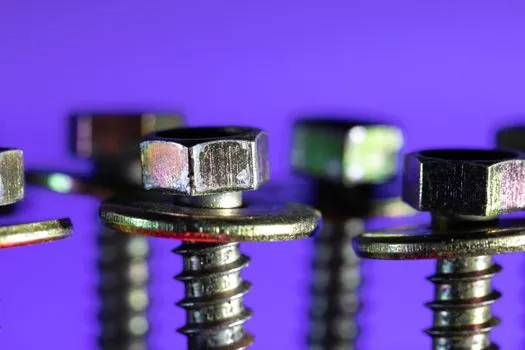
Drive size dictates the upper torque ceiling of the hammer mechanism. A 3/8-inch drive is limited to roughly 250 ft-lbs and suits small-engine and underhood work; a 1/2-inch drive spans the full 250 to 1,000+ ft-lbs range and is the default for automotive and light industrial use; a 3/4-inch drive starts at 1,000+ ft-lbs and is reserved for heavy truck, agricultural, and construction equipment [S1].
Socket material is the second mechanical limit. Impact-rated sockets must be forged from chrome-molybdenum steel (Cr-Mo) to survive the percussive blow profile; standard chrome-vanadium (Cr-V) sockets can crack or shatter under impact loading and become a fragmentation hazard [S5]. For recessed wheel applications, extended-anvil pneumatic wrenches solve a different access problem and are covered in a separate spec walk-through on extended-anvil air impact wrenches for recessed lug nuts.
Selection Criteria: Matching Tool to Job
Spec the air impact wrench by the single toughest fastener you realistically anticipate, not by average work. The decision matrix below compares the three power platforms against four decision criteria drawn from the research: [S5]
Decision criteria: peak breakaway torque, sustained output (no battery/compressor sag), portability, and unit cost. Pneumatic tools win on peak (1,500+ Nm) and sustained output but lose on portability and require a compressor package. Cordless 1/2-inch high-torque models reach 1,200 to 1,500 Nm peak, win on portability, and now match pneumatic for the vast majority of rusted automotive fasteners [S3]. Corded electric sits in the middle on torque (200 to 1,000+ Nm) and loses on portability relative to cordless but gains on run time. For rusted fasteners specifically, the threshold question is whether you need more than 1,000 ft-lbs on a regular basis; if yes, pneumatic; if no, modern cordless 1,200 Nm class is sufficient [S2][S3]. Pricing follows the same torque and drive-size curve, as detailed in the breakdown of air impact wrench price: drive size and torque class dominate the cost stack.
Final selection rule: pair the drive size to the bolt, pair the breakaway rating to the rust severity, and always verify final install torque with a calibrated torque sensor or beam wrench. Tools that exceed the fastener's yield strength will snap the bolt before the corrosion releases, so headroom matters more than absolute peak.