
An air impact wrench is sold first by its drive size and torque window, and that pairing accounts for the largest share of price variance across the 1/4 in to 1 in range used in general industry [S1][S4].
Pneumatic 1/2 in models typically deliver 600-900 ft-lb of working torque, 3/4 in jump to 1,200-1,600 ft-lb, and 1 in tools reach 1,475-2,145 ft-lb, with each step adding mass, hammer-mechanism complexity, and air consumption that show up directly on the invoice [S1][S7].
Drive size as the primary cost axis
Drive size sets the anvil, hammer mass, and gearbox footprint, so list price climbs stepwise with each socket drive increment rather than smoothly with torque [S4]. A 1/4 in drive is the cheapest tier and is used for small assembly and disassembly work where high torque is not required; a 1/2 in drive covers most automotive and light-industrial bolting including 80-120 ft-lb passenger-car lug nuts; 3/4 in and 1 in drives move into heavy equipment, structural, and truck work; 1-1/2 in and 3-1/2 in units exist for major construction and pipeline tie-ins [S4][S5].
Within each drive size, the published working torque window is narrow enough that buyers should match the size to the fastener, not the headline number to the job [S1][S5]. A 1/2 in tool that publishes 813.5 Nm (600 ft-lb) of maximum torque at 2.6 kg (5.8 lb) of tool weight is a different value proposition than a 1 in tool in the same product family, even before comparing hammer mechanism or air consumption [S2].
Torque class, hammer mechanism, and what each tier actually delivers
Pneumatic models in the 1/2 in class commonly deliver 600-900 ft-lb of usable torque, and 3/4 in and 1 in classes are quoted at 1,200-1,600 ft-lb and 1,475-2,145 ft-lb respectively; air supply is rated at 90-120 PSI across the pneumatic family, with CFM consumption scaling with drive size and duty cycle [S1][S7]. A 1/2 in Ingersoll Rand 231 Series pneumatic wrench is published at 813.5 Nm (600 ft-lb) max torque against a 2.6 kg (5.8 lb) bare tool weight, a useful baseline for cost-per-torque comparisons against equivalent 3/4 in or 1 in units [S2].
Cordless 1/2 in tools in the same physical size class now reach 850 ft-lb or more in instrumented testing: a Makita high-torque 1/2 in model published 858 ft-lb peak fastening and 884 ft-lb peak loosening torque, while a Porter-Cable mid-torque unit published 338 ft-lb fastening and 366 ft-lb loosening on the same test bench, with weights ranging from 5.4 lb to 8.0 lb across the four-cordless comparison [S3]. Those numbers are useful as a cross-reference, not as substitutes for pneumatic ratings: pneumatic and cordless peak torque figures are measured under different protocols and are not directly comparable.
Material, hammer mechanism, and certification cost drivers
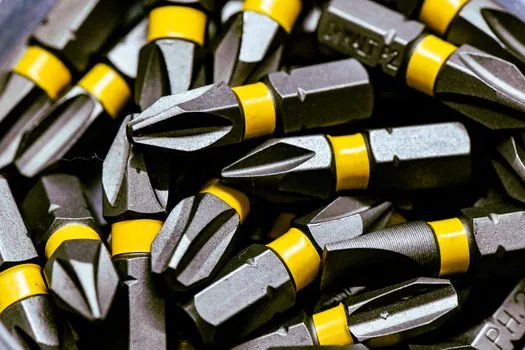
Beyond drive size, three engineering choices move the price of a given size class: housing material (aluminum, magnesium, or glass-filled composite), hammer mechanism (pin clutch, ball-and-cam, or dual-rocker), and whether the tool carries ATEX or IECEx certification for use in flammable or explosive atmospheres [S4][S1]. A composite-housing pneumatic 1/2 in unit typically lists below a magnesium-body equivalent in the same torque class because magnesium machining and finishing drive cost up; a 1 in steel-housing tool for heavy-equipment service lists well above both because of the larger anvil, heavier hammer, and reinforced air motor [S4].
For a more granular look at the housing trade-off, see composite vs metal housing on air impact wrenches, which maps durability and cost across aluminum, magnesium, and composite shells; the underlying alloy choice in the hammer and anvil is covered in Cr-Mo content in alloy steel, and the broader procurement math around alloy surcharges is in alloy steel cost drivers.
Selection criteria, comparison table, and who each size is for
Specifying a pneumatic impact wrench is a four-axis decision: drive size, working torque window, mass under 5 kg or over 5 kg, and air consumption in CFM at rated load [S1][S5][S7]. A 7.5 A electric 1/2 in corded unit publishing 450 ft-lb is the entry tier for automotive DIY and small-shop use; a 1/2 in pneumatic at 600-900 ft-lb is the workhorse for production tire and assembly bays; 3/4 in pneumatic at 1,200-1,600 ft-lb is the truck, bus, and structural-bolt class; 1 in at 1,475-2,145 ft-lb is the heavy-equipment, rail, and mining class [S1][S6][S7].
Comparison of the four main size classes against decision criteria:
Drive 1/4 in: typical max torque below 100 ft-lb, mass under 2 kg, intended use small assembly, disassembly, and instrument work. Drive 1/2 in: 600-900 ft-lb, 2-4 kg, automotive and light industrial including 80-120 ft-lb lug nuts. Drive 3/4 in: 1,200-1,600 ft-lb, 4-7 kg, truck, bus, structural, and agricultural equipment. Drive 1 in: 1,475-2,145 ft-lb, 7-12 kg, heavy equipment, rail, mining, and large-diameter pipeline [S1][S4][S5][S7].
An impact wrench is not the right tool for fine torque control on critical joints: the hammer mechanism delivers impulsive torque that can overshoot a target, and on threaded joints where a specific clamp load is required, a torque wrench tester or a torque sensor plus a calibrated torque wrench is the correct instrument, not a pneumatic impact gun [S4]. Pulse tools, which use oil to transfer momentum and can shut off at a target torque, are a separate category and are not referred to as impact wrenches even though they share the same anvil form factor [S4].
Total cost of ownership, air supply, and where buyers underestimate the bill
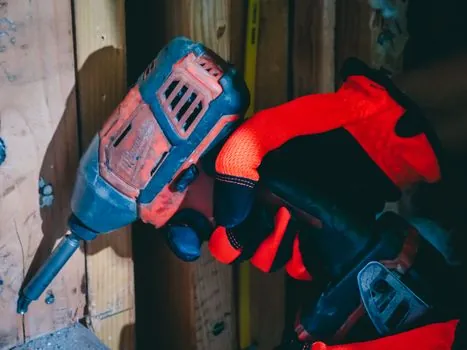
Purchase price is the smallest line on a pneumatic impact wrench's life-cycle cost. Continuous-duty 1/2 in models need a compressor sized to the published CFM at 90-120 PSI, with a receiver tank large enough to avoid pressure sag on repeated cycles; under-sizing the compressor is the most common cause of poor tool performance and premature wear [S1][S7]. For tank sizing math and duty-cycle budgeting, see air compressor tank sizing for continuous impact wrench use.
The cost stack for a given size class, in descending order of price impact, is: drive size and torque class, hammer mechanism (pin clutch vs ball-and-cam vs dual-rocker), housing material (composite vs magnesium vs aluminum), ATEX/IECEx certification for hazardous-area use, air-motor design (vane vs governed), and finish or color [S1][S4][S7]. Buyers who specify by torque number alone tend to over-pay on size class; buyers who specify by drive size and fastener type land closer to the cost-efficient point on the curve [S1][S5].
Trackable signals for the next planning window: pneumatic 1/2 in published torque in the 600-900 ft-lb band at 2-4 kg tool weight remains the volume sweet spot for industrial buyers [S1][S2][S7], and the 3/4 in and 1 in classes are the segments where material and certification premiums move the most per unit. Watch for revised CFM ratings on governed 1 in models, and for any update to the 1/4 in duty cycle envelopes used in production-assembly pulse-tool lines, both of which would shift the cost-per-fastener math on continuous-duty lines.