
Alloy steel pricing splits into three building blocks: a negotiated base price, a monthly alloy surcharge keyed to LME-quoted nickel, chromium, molybdenum, manganese, and iron averages, and a separate scrap/energy surcharge that mirrors recycled-content input costs [S1][S3]. The alloy surcharge is product-specific because reference periods and grade recipes differ between mills, and it is the dominant swing factor in any 304, 316, duplex, or engineering alloy steel quote [S1][S4].
For a process engineer ordering bar, plate, or tube, the line item that can move 20–40% between two adjacent months is not the base price (which mills prefer to keep stable) but the alloy and scrap line items layered on top [S1][S9]. Procurement that tracks only base price misses the real exposure.
What the alloy surcharge actually pays for
The surcharge is a variable price adder, computed monthly from the average market price of the alloying elements present in the specific grade, and it is published separately from the base price so volatile metal cost risk stays visible to both sides [S1][S4]. Chromium, nickel, and molybdenum additions have the most significant cost impact on stainless and high-alloy steels, while manganese and iron are tracked but contribute less per tonne [S1][S8]. The reference period is typically the LME average over a defined window before publication, and the resulting per-tonne number is then weighted by the alloy's nominal composition and adjusted for the mill's expected production yield [S4][S5].
Five elements drive the headline surcharge on stainless and high-alloy steels: nickel, chrome, molybdenum, manganese, and iron, each with its own LME or market reference price that mills re-quote every month [S8]. Most mills compute the surcharge as: surcharge per tonne equals (current elemental cost minus a published reference or trigger cost) multiplied by the element's share in the grade, divided by the anticipated production yield for that alloy/form/size combination [S5]. That is why a thin plate of 316L carries a higher per-tonne surcharge than a thick bar of the same grade, even at identical nickel price.
Why scrap surcharge sits next to alloy surcharge
Scrap and alloy surcharges are an established way to adjust steel prices for national and international variations in scrap and alloying element costs, and they are usually published as one combined "S&A" line by mills serving bearing, engineering, and stainless markets [S3]. The scrap component specifically covers the recycled feedstock (typically stainless or alloy scrap returned to the electric arc furnace) whose market price does not move in lockstep with virgin nickel or chrome [S2][S9].
Electric arc furnace stainless output now runs at very high recycled content: Outokumpu's 2022 annual report stated 89.8% recycled steel content (pre- and post-consumer scrap) in its stainless steel output, which means the true marginal input cost of a tonne of 304 is closer to the scrap index than to the LME nickel price [S2]. This is why European mills have moved much of their distribution-channel business away from the classic "base plus alloy surcharge" model toward a single all-inclusive effective price fixed at order, since the published surcharge no longer mirrors actual input cost when scrap is the dominant feedstock [S2].
Cost driver ranking: what moves the bill of materials

Roughly in descending order of leverage on total cost, the main drivers are: (1) alloying element market price, principally nickel and molybdenum, (2) recycled scrap input cost, (3) alloy content of the specified grade, (4) product form and size (thin plate vs. thick bar), and (5) base price plus extras for surface finish, special tolerances, and packaging [S1][S5][S9]. For low-alloy engineering steels such as 4140 or 4340, the alloy surcharge line is much smaller than for 316L or duplex 2205, and the scrap surcharge tends to dominate the variable portion instead [S3][S5].
Yield losses widen the gap between the published surcharge and the mill's true cost. Easy-to-produce alloys and product forms run yield losses below 15% of starting weight, while difficult alloys and size combinations can hit 50% or more, and the mill folds that yield into both the base price and the surcharge calculation [S5]. Procurement teams running total-cost-of-ownership comparisons on alloy steel grades should therefore compare surcharges on a normalised per-kg-of-finished-part basis, not on the per-tonne-billet quote that appears on the mill's monthly sheet.
Comparison: how the major surcharge approaches differ
Three models sit on a spectrum from most transparent to most convenient. The traditional "base + monthly alloy surcharge" model (still common for automotive and white-goods contracts) is the most transparent because every cost component is on its own line, but it shifts all alloy-price risk to the buyer [S1][S2]. The "effective" all-in price fixed at order is now the preferred model for European distribution, since it removes the buyer's exposure to monthly nickel and scrap swings at the cost of a less negotiable breakdown [S2]. The third model, the S&A (scrap and alloy) plus energy surcharge published by mills like Ovako for engineering and bearing steels, separates raw-material volatility from energy volatility and is typical for long-mill bearing and special-bar contracts [S3].
A criterion-based comparison: on transparency, the base-plus-surcharge model wins; on administrative simplicity, the effective-price model wins; on raw-material vs. energy risk separation, the S&A-plus-energy model wins [S1][S2][S3]. On suitability for high-nickel grades (austenitic 300-series, duplex 2205, super-duplex 2507, alloy 625, alloy 825), the surcharge line is so large that fixing at order is usually the better play for buyers who cannot hedge nickel [S2][S5]. For low-nickel martensitic grades (410, 420, 17-4PH), the surcharge is small enough that the transparency of a base-plus model is often preferred, particularly for long-running automotive programmes [S1].
Where this hits real industrial procurement
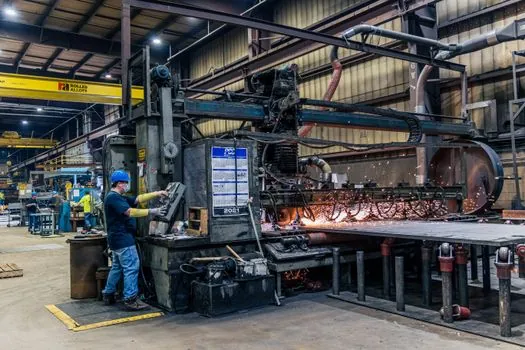
Buyers of construction machinery and equipment subcomponents specifying 4140 pins, 4340 shafts, or 17-4PH hydraulic fittings are most exposed on the alloy surcharge line when the part is small and the alloy content is high relative to the billet weight [S1][S5]. Buyers of fasteners and lifting hardware in 316 or duplex should expect the alloy surcharge to swing with nickel and molybdenum, and to run a meaningful multiple of the base price during nickel spikes, as seen across 2022-2023 European market reports [S1][S2].
For reference, the grade-comparison logic is similar to fastener selection where nickel price swings change the relative cost of 316L versus duplex 2205: as nickel cost rises, the surcharge gap between these two grades also rises, which directly affects the total design lifecycle cost of equipment designed for corrosive service [S5]. Procurement teams that lock nickel exposure through fixed-price or capped-surcharge contracts for the duration of a project typically save the 5-15% budget variance that would otherwise hit on a public-works infrastructure or rail-stock build.
Limitations, common failures, and what to watch
The published alloy surcharge is no longer a reliable proxy for the mill's true input cost, because EAF stainless production is now predominantly scrap-based and the published formulas lag real scrap economics [S2]. Nominal base prices, calculated by subtracting the alloy surcharge from a fixed transaction price, can even be negative during high-surcharge months; these figures are theoretical and do not represent actual negotiated base prices [S2]. Buyers should also watch for mill-specific formula changes: European stainless producers have frequently amended their surcharge calculations, reducing transparency, so the same grade from two different EU mills can carry materially different effective surcharges in the same month [S2].
Short-term, the two-tier system (base-plus-surcharge for end-user contracts, effective all-in for distribution) is expected to persist because mill-to-distributor contracts have already migrated while mill-to-OEM contracts (automotive, white goods) are sticky [S2]. A second trackable signal is whether mills move to publish scrap-weighted input indices alongside the LME-based surcharge, which would narrow the gap between published and actual cost; that shift has not happened as of 2026 and is the leading indicator to watch for next.
Detailed specification references: pile driver.
See also our earlier report, Thermal Conductive Adhesive Grades for Heat Sink Bonding: 2026 Spec Field Notes.