
Alloy steel plate specified for structural fabrication covers a thickness band from about 3 mm to 200 mm in stockholder supply, with mill-quenched grades such as ASTM A514 reaching 8 in (203 mm) in standard catalog form [S5][S8]. Width is typically 1.2 m to 3.5 m, and length runs 2.4 m to 18.0 m for general structural and bridge-plate orders [S8].
The structural vs sheet boundary sits at 3.0 mm: anything thinner is classified as sheet (cold-rolled down to 0.2 mm for deep-drawing grades such as DC06), while 3.0 mm and above is plate [S2]. For rolled plate ordered to thickness, ASTM requires width over 200 mm with thickness above 6 mm, or width over 1200 mm with thickness above 4.5 mm [S3].
Thickness Bands by Process and Grade
Cold-rolled low-carbon plate is restricted to 0.3 mm to 3.5 mm under GB nomenclature, extendable to 0.2 mm for DC06 deep-drawing stock, with surface roughness Ra ≤ 3.2 μm and dimensional tolerance ±0.05 mm to ±0.30 mm [S2]. Hot-rolled structural plate spans 1.2 mm to 60 mm under GB/T 709 equivalent rules, sub-divided into thin (1.2 to 3 mm for roof trusses), medium (3 to 25 mm for machinery bases, bridge supports, ship bulkheads) and thick (>25 mm for mining equipment, pressure vessels, heavy structures) [S2].
For alloy and high-strength structural plate, ASTM A514 quenched-and-tempered stock is stocked from 3/16 in (4.76 mm) up to 8 in (203 mm) [S5]. Tensile strength for A36 baseline plate is 58,000 to 80,000 psi with a 36,000 psi minimum yield (32,000 psi over 8 in thickness), and A36 is the dominant general-purpose structural grade in U.S. distribution [S1]. Alloy plate to ASTM A829, structural quality, sits in the same family but with controlled chemistry for through-thickness hardenability, and is commonly referenced alongside A514 for higher-strength welded structures [S3].
Dimensional Standards: A6, A480 and A829
ASTM A6 is the general-requirements specification that covers dimensional tolerance, marking, and delivery condition for rolled structural steel plates, shapes, sheet piling and bars across more than 25 ASTM material specifications including A36, A131, A242, A514, A572, A588, A633, A709 and A829 [S3]. Where plate is ordered by thickness rather than by weight per square foot, A6 invokes the width-versus-thickness rules: 200 mm width minimum for plate over 6 mm thick, 1200 mm width minimum for plate over 4.5 mm thick [S3].
Plate thickness tolerance in flat-rolled stainless and high-alloy plate is controlled by ASTM A480 Table A2.17, which sets a 0.010 in minus tolerance for all thicknesses at all points, with plus tolerances applied only to the longitudinal edges measured 3/8 in to 3/4 in from the edge [S1][S4]. For a 96 in wide, 1/4 in plate, the edge plus tolerance is 0.050 in, while the plate center can run as thick as 0.350 in once A480's revised upper-limit clause (twice the table value beyond 3 in from the edge) is applied [S4]. When verifying plate thickness on incoming stock, shops that machine blocks from plate center should expect heavier-than-nominal readings, because coil-rolled plate retains less crown than discrete mill plate [S4].
Plate Sizes Used in Real Fabrication Shops

The most common stocked sizes for general structural fabrication are 1/4 in × 48 in × 96 in, 3/8 in × 48 in × 96 in, and 1/2 in × 48 in × 96 in, all in 4 ft × 8 ft sheet footprints compatible with standard cutting, coping and welding workholding [S7]. For bridge and heavy-civil work, the standard plate envelope widens to 5 mm to 200 mm thick, widths up to 3.5 m, and lengths up to 18.0 m, with stockholder supply more suited to small-batch structural fabrication than mill-direct plate [S8].
Weight at nominal 10 mm thickness on a 1 m × 1 m footprint is 78.5 kg using the 7,850 kg/m³ carbon-steel density rule; the same plate in imperial at 1/4 in × 48 in × 96 in weighs 10.21 lb/ft² according to A36 catalog data [S1][S2]. For non-symmetric or oversized weldments, designers are increasingly shifting toward high-strength low-alloy (HSLA) grades like A572 and A588 to drop plate thickness while keeping the same section modulus, a move that reduces welding deposition and crane picks. Lead times on those higher-alloy grades have stretched materially in the current cycle, as documented in nickel and chromium surcharge-driven alloy steel lead times.
Selection: Mild, HSLA, or Quenched-and-Tempered?
For general building and bridge secondary members, A36 (58,000 to 80,000 psi tensile, 36,000 psi yield) is the default, with a thickness ceiling around 8 in before yield drops to 32,000 psi [S1]. For columns, gusset plates and high-stress welded nodes where weight saving matters, A572 Grade 50 (65,000 psi minimum tensile, 50,000 psi yield) and A588 (50,000 psi minimum yield up to 4 in thick) are the go-to HSLA picks, both covered by the A6 general-requirements umbrella [S3].
For impact-loaded or weight-critical structures (mobile crane booms, mining equipment, military bridges) A514 quenched-and-tempered plate delivers 100,000+ psi yield at the cost of more demanding preheat, hydrogen control and interpass discipline during welding [S3][S5]. Plate condition also drives machinability: normalized plate cuts more predictably than as-rolled for tight-tolerance machining of pins and bushings, a trade-off explored in detail in normalized vs annealed alloy steel machining behaviour. Plate vs bar selection for shaft-style components follows a different logic, summarised in forged vs rolled alloy steel bar selection.
Common Plate-Thickness Pitfalls in Fabrication
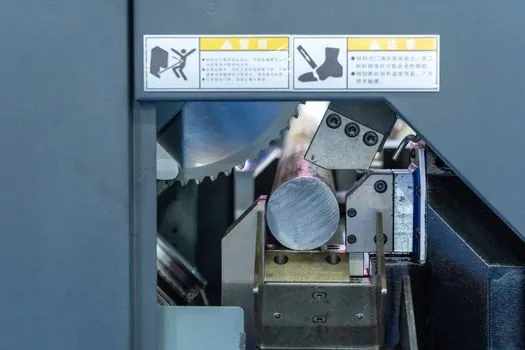
Plate ordered to nominal metric thickness is not guaranteed to measure exactly that: a 10 mm plate may measure between 9.8 mm and 10.2 mm depending on width and grade, with ISO 9445 and ASTM A6 both setting the rolling-tolerance envelope [S2]. When fit-up is tight (e.g., slip-critical splice plates, flange cover plates, stiffener-to-web fit), designers should add a minimum cleanup allowance of 0.5 mm to 1.0 mm per mating face to absorb the A480 crown profile [S4].
Another routine problem: coil-rolled plate that has less crown than discrete mill plate, leaving machinists who cut blocks from plate center with extra material to remove; a 3/8 in nominal plate can machine as a 1/2 in block [S4]. Welding distortion stacks on top of that: thick-plate (>25 mm) fabrications need stronger fixturing and interpass temperature control, especially on A514 where the carbon equivalent pushes preheat into the 150 °C to 200 °C band for thicker sections. Verifying actual plate thickness with calibrated ultrasonic thickness gauges before cutting is cheap insurance against scrapped weldments. For painted or coated structural members, the applied coating thickness itself becomes a fabrication variable, measurable on site with a coating thickness gauge before sign-off.
Where to Source and What to Verify on the MTC
U.S. structural plate is typically sourced through service centers (NSSCO, Alro, Rolled Alloys) with mill test reports (MTRs) traceable to A6/A36, A572, A588 or A514/A829 as applicable [S1][S5]. For Chinese structural fabrication the comparable grades are Q235 and Q345 per GB/T 1591, both stocked in the 3 mm to 300 mm+ range through standard mill channels [S6]. Bridge plate typically follows EN 10025 grades S275 and S355, with normal plate sizes 5 mm to 200 mm thick and widths to 3.5 m, lengths to 18.0 m [S8].
On every MTC, verify four numbers before releasing plate to fabrication: (1) actual measured thickness at the measurement point defined by the spec, (2) heat chemistry confirming the grade (e.g., 0.20% Cu min for A36 when copper steel is specified), (3) tensile/yield results matching the class and thickness band, and (4) Charpy V-notch values when the drawing calls for impact testing at a stated sub-size and temperature [S1][S3]. For European bridge plate to EN 10025-4, also confirm the delivery condition (normalized, thermomechanically rolled, or quenched-and-tempered), since the same nominal grade behaves differently in bending and welding depending on the rolling route.
Trackable signals for the next quarter: whether ASTM A480 Table A2.17 issues a further revision on the beyond-3 in plus-tolerance clause, and whether the Q345 plate supply chain normalises after the 2026 nickel/chromium surcharge window closes, both of which directly affect the alloy steel plate thickness range that structural fabricators can actually order to tight tolerance.