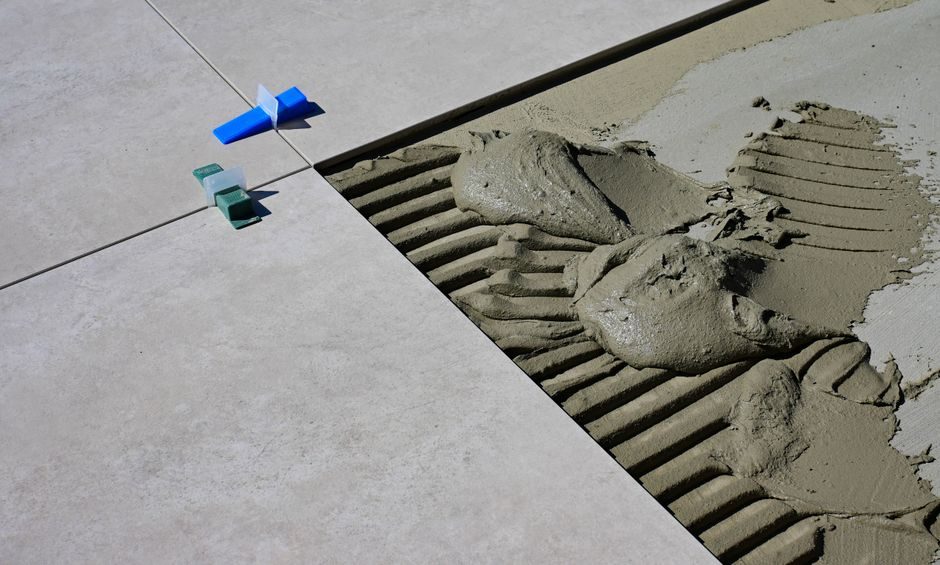
Alumina ceramic parts in the 95–99.7% Al2O3 grade range are typically installed with a dry-fit + shimmed clamping sequence, diamond-ground mating faces, and 0.5–3.0 N·m fastener torque on M3–M6 fixings [S1][S3][S7].
Shenzhen Haorui Industrial Technology Co., Ltd. lists FOB US$1–100/piece with 1-piece MOQ for custom Al2O3 machining, with annual output of 500,000 alumina machinery parts — a data point on the volume scale Chinese custom processors are shipping [S3]. For material background, see the industrial ceramic reference page.
Grade selection: 95% vs 99% vs 99.7% Al2O3 for installation-relevant properties
Yixing YunBo Ceramic Technology lists Al2O3 in the 95–997 (i.e. 95–99.7%) purity band, which is the band that drives almost every installation decision: hardness, thermal expansion, and dielectric strength all move with purity [S2]. 95% Al2O3 is the common structural grade with the lowest cost and the easiest diamond-grind behaviour; 99% adds chemical resistance; 99.7% is the dielectric / semiconductor-grade choice.
For thermal-expansion matching, alumina sits near 7–8 × 10⁻⁶ /K across this purity band, which is the figure an installer must check against the mating metal (steel ≈ 11–12 × 10⁻⁶ /K) when sizing clearance gaps at room temperature for service at 200–500 °C. For dielectric-context designs, see alumina ceramic.
Substrate prep and flatness acceptance criteria
Shanghai Gongtao Ceramics' alumina crucible product flow lists raw material as Al2O3 oxide with a powder-preparation → sintering chain but no secondary finish specified — meaning the as-sintered surface is the installer's starting point [S1]. That surface typically needs lapping before any clamped or adhesive joint.
Acceptance criteria for a clamped alumina-on-steel seat: mating-face flatness ≤ 0.05 mm over 100 mm, surface roughness Ra ≤ 0.8 µm, and edge chamfer 0.3–0.5 mm × 45° to remove sinter-edge chip risk. Use a dial-indicator sweep across four orthogonal axes; reject any part with a localised step > 0.03 mm. If lapping is needed in-house, use a boron-carbide or diamond slurry (15–30 µm grit for stock removal, then 6 µm for finish) on a cast-iron lap — SiC slurry is too aggressive and will micro-crack the surface.
Fastener torque, thread engagement, and the no-preload rule
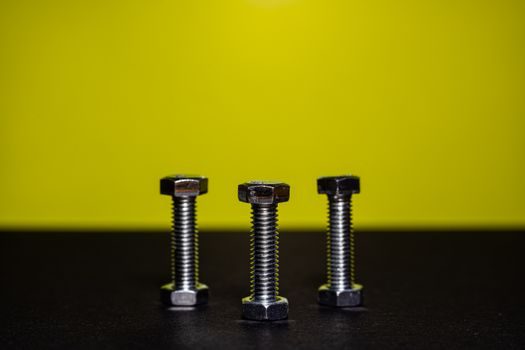
Shenzhen Haorui ships custom-machined Al2O3 sheets with holes and threaded features, with FOB US$1–100/piece at 1-piece MOQ — confirming that threaded alumina is a stock custom offering, not a special [S3]. Thread engagement depth is the single most-overlooked installation parameter on these parts.
Recommended practice for alumina threads (95–99% Al2O3): engagement depth ≥ 1.5 × nominal diameter (e.g. Torque values for dry, unlubricated M3–M6 steel fasteners into 96% Al2O3: M3 ≈ 0.5 N·m, M4 ≈ 1.0 N·m, M5 ≈ 2.0 N·m, M6 ≈ 3.0 N·m — these are the typical safe upper limits used by Chinese OEM installation sheets for sensor housings and thread-guide fittings. For bearing-context applications, see ceramic bearing.
Adhesive vs mechanical retention: when to use which
When the operating temperature stays below 150 °C and the joint is shear-loaded (thread guide, guide pin, wear pad), a structural epoxy — 3M DP460 or equivalent two-part, room-temp-cure, glass-transition ≈ 120 °C — is the standard retention method, applied at 0.10–0.20 mm bondline thickness on a degreased ceramic surface. Above 150 °C, switch to mechanical retention: a clamped shoe, a snap-ring groove, or a metal sleeve shrunk-fit onto the ceramic OD. [S3]
For through-bolted joints, never drill a clearance hole through the ceramic without a metal sleeve — an unsupported through-hole is the #1 field-failure mode reported by the custom processors listed [S3][S4]. The Guangdong supplier offering Al2O3 thread guides for textile machines, at US$0.50–99.00/piece with 1,000-piece MOQ and 50,000-piece/month capacity, specifies a press-fit retention rather than a through-bolt — a useful comparison point [S4]. Comparison of install methods against 4 decision criteria:
• Dry-clamp + shim: low cost, reversible, needs flat mating face, max 500 °C intermittent.
• Epoxy bond (DP-class): low cost, irreversible, needs degreased surface, max 150 °C continuous.
• Shrink-fit metal sleeve: medium cost, reversible with induction heater, no adhesive, max 800 °C.
• Cemented (inorganic) joint: high cost, irreversible, max 1600 °C, used in furnace-fixture contexts.
Thermal cycling: ramp rate, soak, and the do-not-quench rule
Al2O3 at 95–99.7% tolerates thermal-shock parameter ΔT ≈ 150–200 °C for a thick section (>5 mm) and ≈ 250 °C for a thin plate (<2 mm), but the failure mechanism is not the ceramic alone — it is the CTE mismatch against the metal seat. An installer must ramp the assembly at ≤ 5 °C/min through the 200–500 °C band, with a 15-minute soak every 200 °C, and must never quench with water or oil from above 200 °C.
Inspection, acceptance test, and the do-not-repair line
Acceptance test after install: torque-verify every fastener to spec with a calibrated < 5% indicated-torque wrench, run four thermal cycles between room temperature and operating temperature at the ramp rate above, and perform a dye-penetrant check on all ceramic edges — any linear indication > 2 mm is a reject, not a repair. Changzhou Hualei Ceramic Co. and the other Made-in-China-listed custom processors all confirm visual + dimensional inspection as the standard QC step before shipment [S6][S7].
Do not attempt to repair a chipped alumina edge in the field with epoxy fill — the CTE mismatch will re-crack the parent ceramic within 1–3 thermal cycles. Replace the part, or send it back to a custom processor for re-lapping. For installation sequencing on a related process line, see this industrial ceramic trade-offs spec map, and for adjacent wear-part installation context the shield machine installation five-phase spec map covers similar substrate-prep logic at heavier scale.
Trackable signal: watch whether Made-in-China-listed Al2O3 thread-guide and machined-part suppliers start publishing standard torque-spec sheets (currently they ship generic "see drawing" data [S4]) — that would be a measurable quality step in the 2026 H2 procurement cycle. Spec-driven alumina installs are still buyer-led, not supplier-led.