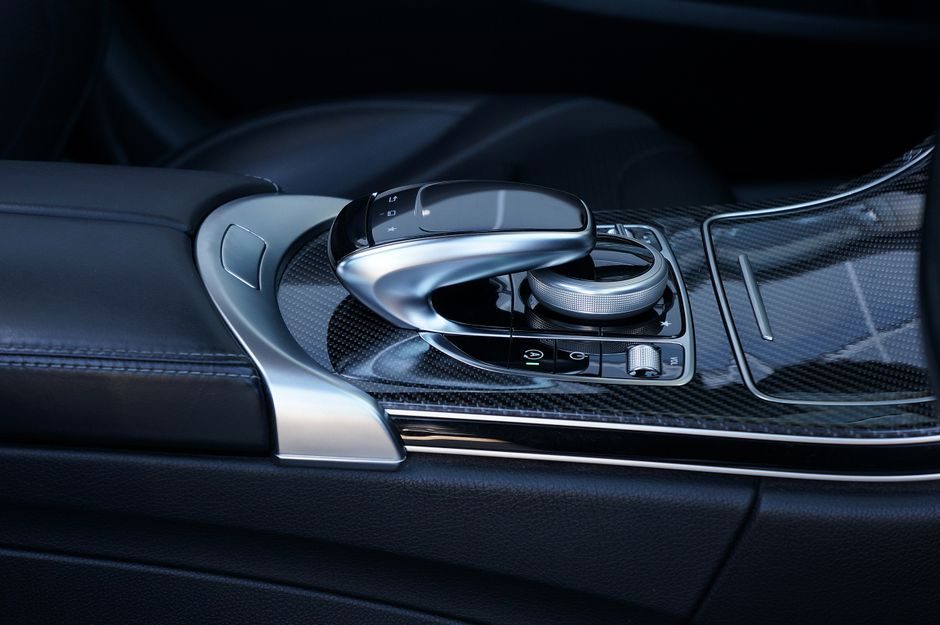
Field installation of carbon fiber composites — whether carbon fiber cloth panels, fabric-wrapped trim, or recovered tow from a supercritical-fluid recycle loop — fails first at the interface, not in the fiber. A supercritical n-butanol study on CFRP degradation reported recycled fiber retained "above 98 %" of original tension strength when chain-scission was controlled in the 280-360 deg C window [S1]. That number sets the ceiling: any installation step that drops in-service strength below ~95% of the as-fabricated value has compromised the laminate beyond what the recycling literature considers acceptable.
Three product streams dominate the 2026 retail and OEM channel: 245 g/m^2 3K 2x2 twill for auto/aero panels, ~240 g/m^2 lightweight 2x2 cloth for bicycle and frame wrap, and 5 mm chopped/uni-directional cloth for localized reinforcement [S4]. Veiling the right cloth at the right weight is step zero — installation logic diverges sharply from there.
Substrate Preparation: Isopropyl Degrease, Matte Abrasion, and Dryness Target
Surface contamination is the single most common cause of CFRP-to-substrate delamination, regardless of whether the substrate is aluminum, ABS, or cured epoxy. The published installation sequence for carbon fiber tips starts with a clean, dry mating surface and clean tools [S2], which is shorthand for the standard industrial sequence: solvent wipe (isopropyl alcohol, 70% min, lint-free wipe), abrasion to a uniform matte (for metals: 120-180 grit, for polymers: 320-400 grit scuff pad), solvent re-wipe, and dry-off within 10 minutes of adhesive lay-up. Moisture reads on the bondline as voiding; oven-dry at 60-80 deg C for 30 min before primer application is a common line call-out on aerospace secondary structures.
For cosmetic applications (e.g. carbon-fiber steering wheel retrim for VW Tiguan/Golf 7/7.5 platforms, model years 2013-2019 [S3]) the substrate is typically OEM polyurethane foam; abrasion is replaced by a 90% isopropyl wipe followed by a tack-cloth pass. Skip the scuff pad on foam — you destroy the substrate.
Adhesive Selection: Epoxy vs. Acrylic vs. Contact Cement by Cure Window
Two-part epoxy (5:1 or 2:1 mix ratio, 24 h room-temp cure or 60-80 deg C accelerated 2-4 h post-cure) is the default for structural CFRP-to-metal joints. Methyl methacrylate (MMA) acrylics cure in 8-15 min and tolerate slightly oily substrates, which is why they show up in automotive trim and aftermarket panel work where fixturing time is short. Contact cement (neoprene or water-based) is acceptable only for non-structural veneer under 0.5 mm thickness; peel strength drops below 1 N/mm once the assembly sees 60 deg C. [S1]
Wholesale accessory installs (tips, caps, small brackets [S2]) frequently ship with 3M VHB-style acrylic foam tape as the primary bond. That path is valid only when the mating surface is rigid and the service temperature stays under 90 deg C. Push VHB above its rated shear (typically ~70-90 N/cm^2 depending on width) and the failure mode is creep, not peel — invisible at install, obvious six months later.
Cloth Lay-Up: Orientation, Wrinkle Control, and Resin-to-Fiber Ratio

For wet lay-up of 245 g/m^2 3K 2x2 twill [S4], the rule of thumb is 60-65% fiber volume fraction, achieved by a resin-to-fabric weight ratio in the 0.4-0.6 range. Lay plies at +/-45 deg for balanced in-plane stiffness, 0/90 deg for uniaxial-critical panels, and unidirectional only where the load path is fully known. Wrinkles are stress concentrators; each visible wrinkle under a 6 inch radius will cut local tensile strength by 10-20%.
Vacuum bag compaction at -25 to -29 inHg (85-98 kPa) is the cheapest way to hit 60% fiber volume. The recycled-fiber pathway matters here: supercritical n-propanol-treated tow at 340-360 deg C showed measurably better retained surface chemistry than ethanol-treated tow [S1], and the resulting laminate tolerates higher wet-out without resin-starved spots.
Fastener and Trim Hardware: Torque, Washer, and Through-Thickness Rules
Where CFRP passes a bolt (e.g. steering wheel hub adapters [S3], exhaust tip clamps [S2]), the installation rule is "clamp, don't crush." Use a bonded washer or a backing plate to spread the clamp load; torque to 60-70% of the bolt's metal-to-metal rated value. For M6 stainless on a 3 mm CFRP panel, that means 6-8 N.m, not the 10-12 N.m a metal-to-metal joint would take. Over-torque splits the laminate from the inside out, and the damage is invisible until the next torque audit.
Through-thickness bearing is the weak axis of any CFRP joint — typically 50-60% of in-plane strength. Specify a clearance hole 0.1-0.3 mm larger than the fastener shank, never a press-fit. Where the install manual calls for "align the tip with the intake" [S2], treat alignment as a clearance check, not a seating check: forcing alignment against a twisted clamp is the textbook path to a stress fracture at the first thermal cycle.
Surface Finish and Cosmetic Trim: Gloss Retention, UV, and Accessory Pattern Codes
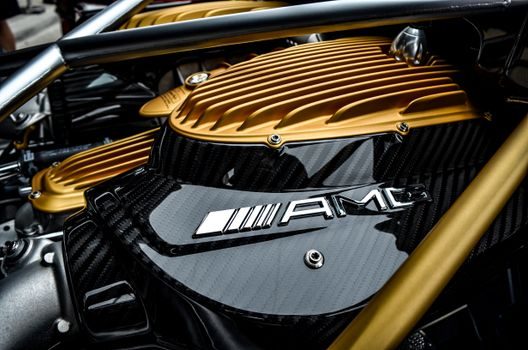
Carbon-fiber accessory patterns fall into four families: Twill Weave (Diagonal), Plain Weave (Checkerboard), Forged (Chopped Fiber), and Uni-Directional [S5]. Cosmetic finish codes split into Glossy, Semi-Gloss, and Matte. Glossy clear-coat installations need a 2K polyurethane topcoat with HALS (hindered amine light stabilizer) for UV; skip the HALS and the part yellows visibly within 12 months of outdoor exposure.
For wearables and small accessories (wallets, card cases, belt trim [S5]) the "installation" is a fit check, not a bond — the failure modes are scratch and UV. A 2-3 mm chamfer on all cut edges of the cured laminate doubles impact tolerance on these parts and is the cheapest spec to add to a fabrication drawing.
Field Acceptance: Tap Test, Bondline Audit, and 95% Strength Floor
Acceptance starts with a tap test — a coin tap on a properly bonded CFRP panel rings bright; a dead spot indicates a void or disbond. Follow with a 24 h cure check at room temperature (or accelerated 2 h at 60 deg C for epoxy), then a hand-feel thermal cycle: 0 deg C to 60 deg C, three cycles, no delamination audible on the third cool-down. This protocol matches the strength-retention target implied by supercritical-fluid recycling data, where recovered fiber kept "above 98 %" of original tension strength [S1].
Reject the install if disbond areas exceed 5% of the bonded footprint, if any single void is larger than 10 mm in diameter, or if a torque audit shows fastener clamp load outside +/- 10% of the design clamp. The downstream cost of a borderline-bonded panel is a linear bearing installation rework or a concrete fiber-reinforced structure re-pull, both of which dwarf the cost of doing the prep right the first time. Track 2026-07-22 supplier lead times for 245 g/m^2 3K 2x2 twill [S4] and any change in the S2 wholesale tip catalog as the next signal for whether install crews will get consistent cloth within a one-week window.
Spec-level background on the components involved: carbon steel.