Alumina (Al2O3) ceramic is graded commercially by weight-percent alumina content, and the three tiers that dominate industrial procurement are 95%, 99%, and 99.5%–99.7%, with a high-purity 99.9% class used in semiconductor and laboratory ware [S1][S2][S3].
Each step up the purity ladder raises hardness, dielectric strength, chemical inertness, and maximum service temperature, while pushing up raw-material cost and sintering temperature — so the grade is selected against the actual operating envelope, not bought on nameplate alone [S1][S3].
95% Alumina — The Workhorse Grade
95% Al2O3 is the most widely specified industrial alumina grade, and it is the default material for wear liners, textile ceramic guides, pump plungers, and flexible-pad-heater substrates, where mechanical toughness and cost matter more than peak electrical or thermal performance [S2]. Alumina ceramic crucibles appear as stock catalog items at the Chinese advanced-ceramic manufacturer Zhengzhou Mission Ceramic Product Co., Ltd. [S3]. The grade is typically a mixed oxide system — the balance is mainly SiO2, CaO, MgO, and minor glassy phases — which holds the grain structure together and keeps the sintering temperature in the 1500–1600°C range, lower than higher-purity bodies [S3].
For most mechanical applications, 95% alumina delivers Vickers hardness in the 1200–1500 kg/mm² range and a recommended continuous service ceiling of around 1500°C in oxidising atmospheres [S1][S3]. Engineers should avoid specifying 95% grade in strong alkali or hydrofluoric acid, where the silicate secondary phases dissolve preferentially.
99% Alumina — Electrical and High-Temperature Tier
99% Al2O3 is the standard electrical-insulation grade and the most common material for insulating rods, threaded ceramic standoffs, spark ignition electrodes, and high-voltage bushings [S1][S2]. Manufacturer catalogs list 99% alumina flanges, rods, pistons, and porous igniter bodies as in-stock custom-machined items, which is a useful indicator of where the tier sits in the market — one notch above commodity, one notch below semiconductor [S1]. Compared with 95% grade, the 99% body drops the silicate content, raises volume resistivity above 10^14 Ω·cm at room temperature, and pushes continuous service temperature up to roughly 1600–1700°C [S1][S3].
For inverter busbar insulation posts and high-temperature insulator geometries, 99% alumina is the default choice in current Chinese factory catalogs, and it competes directly with steatite and porcelain in those applications [S1]. The trade-off is that 99% bodies need higher sintering temperatures (often above 1650°C) and tighter process control, so lead times on thick-walled custom parts are longer than for 95% equivalents [S1][S3].
99.5%–99.7% Alumina — Refractory and Labware Tier
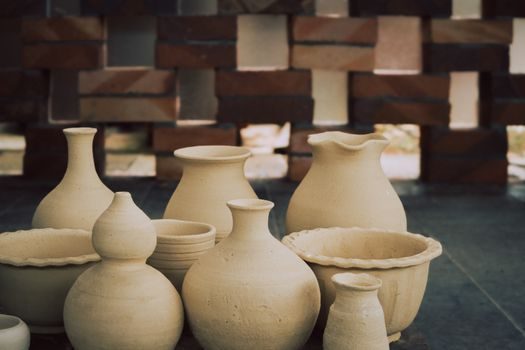
99.5% and 99.7% Al2O3 are the refractory and laboratory-ware tiers, and they are the grades most often specified for alumina ceramic crucibles, thermocouple protection tubes, and high-purity furnaceware exposed to molten metals or reactive slags [S3]. 99.7% alumina crucibles are listed as a hot-stock product at Zhengzhou Mission Ceramic Products, and the same purity band covers the R/S/B-type platinum-rhodium thermocouple protection tubes the same manufacturer advertises [S3]. At 99.7% the silicate secondary phase is reduced to trace levels, so acid resistance — particularly against hot mineral acids — improves markedly over 95% and 99% grades [S1][S3].
Maximum continuous service temperature reaches 1700–1800°C in oxidising atmospheres, and the dielectric loss tangent falls below 0.001 at 1 MHz, which is why this tier also feeds into RF window and high-frequency insulator applications [S1]. The cost step from 99% to 99.5%–99.7% is larger than the step from 95% to 99%, because the Bayer-process alumina feed has to be calcined harder and the sintering cycle runs at 1700°C or above [S3].
99.9% and Higher — Electronic and Optical Tier
99.9% (3N) and above alumina is the electronic, semiconductor, and transparent-ceramic tier, used for substrates, spark plugs, sodium-vapour lamp tubes, and the feed stock for sapphire-grade optics. 99% Al2O3 porous igniter bodies are an intermediate product in the same family — the porosity is process-controlled rather than a purity deficit [S2]. For most process engineers, 3N alumina is a buy-not-make material, and lead time rather than unit price tends to be the procurement constraint.
Specifications for 99.9% alumina typically include total impurity content below 1000 ppm and alpha-phase Al2O3 content above 99.5%, with surface finish down to optical polish on demand. The general principle that alumina ceramic purity drives temperature capability and electrical performance is covered in the broader reference entry.
Material Comparison — Grades Against Decision Criteria
The four grades line up against the criteria a process engineer actually selects on as follows: 95% alumina wins on cost and on toughness, with a service ceiling near 1500°C; 99% alumina is the balanced electrical-insulation choice at 1600–1700°C; 99.5%–99.7% alumina maximises acid and slag resistance for refractory and labware; 99.9% alumina is reserved for semiconductor, optical, and ultra-low-loss RF duty where the impurity budget is the spec. A useful sanity check: if the application is mechanical wear at room temperature, 95% is almost always sufficient; if the application is above 1600°C or in contact with molten metal, jump straight to 99.5% or above. [S1]
For pump and valve trim, zirconia ceramic is the higher-toughness alternative to high-purity alumina and is specified where impact and thermal-shock resistance dominate over absolute hardness. The broader industrial ceramic family comparison puts alumina, zirconia, silicon carbide, and boron nitride against each other on a single spec map. In plain bearings and rolling-element bearing cages, ceramic bearing grades ride on this same purity-tiered alumina and zirconia feedstock.
Form Factors and How They Map to the Grade
Alumina ceramic shapes split into three form families in current factory catalogs: tubes/rods (Al2O3 insulating rods, ceramic shafts, alumina tubes), plates/washers (alumina ceramic plates, grooved plates, washer blanks), and custom machined parts (flanges with mounting holes, pistons, plungers, crucibles, boats) [S1][S3]. The grade is independent of the shape — a 99% rod and a 99% flange come from the same powder specification — but minimum wall thickness and achievable aspect ratio tighten as purity rises, because the body becomes more refractory and harder to densify [S1][S3].
Tolerances on as-fired parts typically sit in the ±1% range, and on diamond-ground parts at ±0.01 mm or better depending on geometry [S1]. Threads on alumina insulating rods and tapped flanges are produced by post-sintering grinding rather than moulding, which is a useful sourcing flag when the drawing calls out a thread on a 99% or higher-purity body [S1][S2].
Standards, Sourcing, and What to Verify at Quote

No single ISO or ASTM standard numbers the four purity tiers used in commerce; instead, the 95% / 99% / 99.5% / 99.7% labels are industry-conventional and are typically written into the purchase specification as Al2O3 content ± the test method (XRF or wet-chemical assay). At RFQ stage, engineers should pin four items in writing: the Al2O3 weight percent, the fired density (typically 3.6–3.9 g/cm³ for 95% and 3.85–3.95 g/cm³ for 99% and above), the surface finish (as-fired vs ground vs polished), and the dimensional tolerance class [S1][S3].
Current Chinese manufacturer catalogs from Hunan Yuanhong New Materials (Loudi, Hunan) and Zhengzhou Mission Ceramic Products (Zhengzhou, Henan) list 95%, 99%, 99.5%, 99.7%, and 99.9% Al2O3 bodies as in-stock or short-lead-time custom items across tubes, rods, plates, crucibles, and machined flanges [S1][S3]. For engineers cross-referencing broader wear-material selection, the industrial ceramic trade-off map lines alumina against zirconia and silicon carbide on the same spec axes.
Trackable signals over the next procurement cycle: tightening of the maximum impurity budget on 99.5% feedstock (currently 0.5% total), and gradual substitution of 99% alumina for porcelain in higher-voltage insulator posts, both visible in catalog refreshes at the two manufacturers cited above [S1][S3].