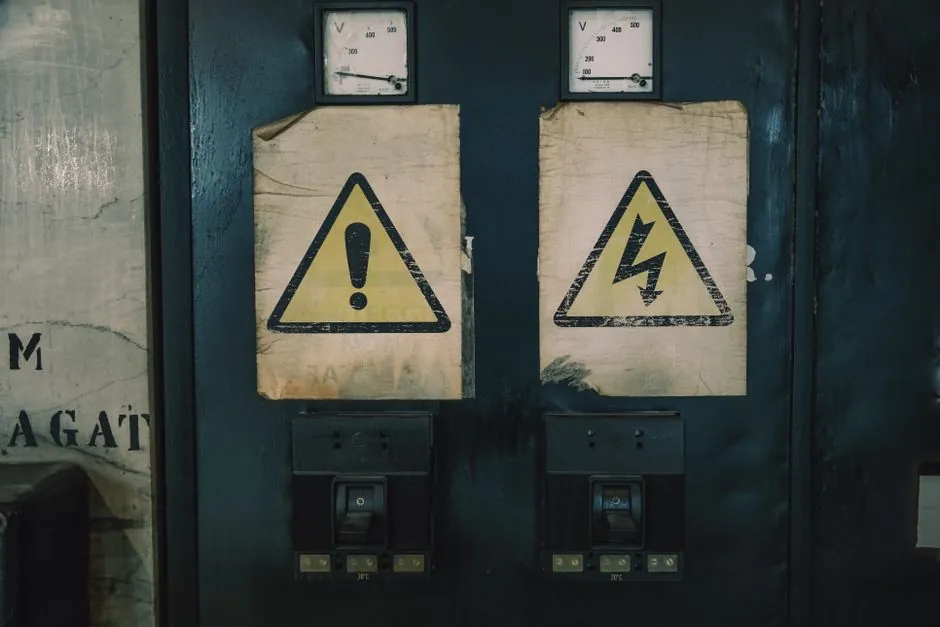
Two alumina parts that look identical in a catalog photo can require different machining routes, and that is the practical reason an electrical-enclosure RFQ has to be written as an engineering document, not a procurement form [S5].
Insulation, creepage, vacuum feedthroughs, semiconductor-adjacent tooling, and power-module fixtures all share the same base material but place different loads on geometry, finish, and inspection evidence, so a generic "alumina ceramic part" line will almost always come back with a quote exception and a request for a drawing [S5].
Purity, Grade, and What Each Number Actually Buys You
Alumina purity in commercial electrical work runs from 95% Al2O3 (industrial starting point) through 99% (cleaner process and higher insulation demand) to 99.5% and 99.9% (semiconductor- and plasma-grade, with metallic impurity below 100 ppm) [S1][S2]. Higher purity moves dielectric strength from roughly 10 kV/mm on 95% stock to at least 15 kV/mm at 99.5% and at least 17 kV/mm at 99.9%, while flexural strength climbs from around 300 MPa to ≥350 MPa and ≥380 MPa respectively [S1].
For an enclosure build that only needs standoff duty, bus-bar isolation, or sensor housing, 95% to 99% is the cost-controlled choice; for plasma-tool, vacuum feedthrough, or any wetted semiconductor-side interface, 99.5% minimum is the working line and 99.9% is justified where trace contamination translates directly into yield loss [S1][S2]. The RFQ should state the Al2O3 percentage as a minimum, not as a target, because vendors otherwise default to 95% stock and price you into a 99.5% requote when test data fails.
Electrical and Thermal Properties You Must Put on the Drawing
Volume resistivity on sintered alumina at 99.5% and 99.9% sits above 10^14 Ω·cm at 25 °C, dielectric strength is at least 15 to 17 kV/mm, and thermal conductivity is 25 to 30 W/m·K depending on grade [S1]. Maximum continuous service temperature is 1,500 °C for 99.5% stock and 1,600 °C for 99.9% stock, with linear thermal expansion in the 7.2 to 7.9 ×10^-6/K band, which is the figure that has to be matched against the metal hardware it insulates [S1].
For an electrical enclosure the practical numbers that drive acceptance are dielectric strength at the planned wall thickness, creepage distance along the insulator surface, and thermal conductivity only where the part doubles as a heat spreader. When the insulator is also a fixture for a power module, the RFQ line should call out dielectric withstanding voltage (e.g. 4 kV AC for 1 minute), insulation resistance target (typically >10^9 Ω at 500 V DC), and any plating or metallization route for the contact face, because the metallization scheme determines whether the part is a true insulator with a brazed pad or a ceramic-metal assembly that needs its own brazing audit [S3][S7].
Geometry, Datums, and Where Tolerances Actually Cost Money
Fired alumina is hard and brittle, behaves differently from ductile metal under tensile load, and is sensitive to sharp internal corners, thin ligaments, and abrupt section changes, so geometry decisions on the drawing are functional decisions, not aesthetic ones [S4]. Standard commercial tolerance is ±0.05 mm on 99.5% structural parts, ±0.02 mm on 99.9% process-chamber parts, and ±0.01 mm on 99.99% ultra-high-purity parts on select geometries achievable after CNC grinding and lapping [S1].
The RFQ should call out only the dimensions that affect assembly, sealing, alignment, or electrical performance as tight tolerances, and leave everything else at the practical manufacturing tolerance, because over-tolerancing the whole drawing is the fastest way to push a quote from near-net-shape pressing into full post-sinter diamond grinding, which can multiply piece cost three to ten times [S2][S4]. Internal corners need a specified minimum radius (sharp corners concentrate tensile stress and are expensive to grind), external edges need a defined chamfer or edge break (unprotected edges chip during handling and assembly), and any press-fit interface should be flagged as a design review item because direct metal-style interference fits do not work on ceramic [S4].
Surface Finish, Edge Condition, and Creepage Geometry
Standard surface finish bands on alumina are as-sintered Ra 1.6 to 3.2 μm for structural use, ground Ra 0.4 to 0.8 μm for general tooling, lapped Ra 0.1 to 0.4 μm for sealing and precision mating, and polished below 0.1 μm where vacuum integrity or low outgassing is required [S1]. For an electrical enclosure, the surfaces that contact a conductor, sit on a sealing face, or define a creepage path are functional surfaces and should be called out by Ra value individually rather than as a blanket finish call.
Edge condition is a separate line item: a part specified as "as-cut" will arrive with micro-chips that can flake off into a vacuum chamber, into a high-voltage creepage gap, or onto a printed circuit board, and that is a real failure mode in power electronics and analytical instruments [S5]. The RFQ should specify chamfer or radius on every external edge that is reachable during assembly, and should state bore chip and cleaning requirements for any tube, sleeve, or feedthrough support, since ceramic chips are abrasive and electrically conductive enough to bridge clearances designed in millimeters [S5].
How to Compare the Main Alumina Options on Real Decision Criteria
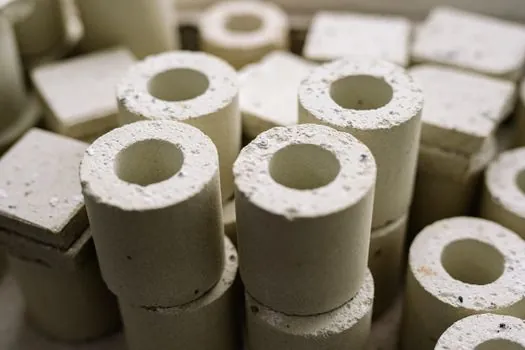
On a typical enclosure RFQ the three practical options are 95% Al2O3 (lowest cost, lower dielectric), 99.5% Al2O3 (workhorse for industrial electrical insulation), and 99.9% Al2O3 (plasma, vacuum, semiconductor-adjacent), with ultra-high-purity 99.99% reserved for FEOL wetted surfaces. The table below lines the relevant decision criteria up so the choice is auditable, not a vendor recommendation: [S2]
Option / Dielectric strength / Dimensional tolerance / Surface finish capability / Typical electrical-enclosure use: 95% Al2O3, around 10 kV/mm, ±0.1% or ±0.1 mm (general commercial), as-sintered or ground, general standoff and bus-bar isolation where cost dominates. 99.5% Al2O3, at least 15 kV/mm [S1], ±0.05 mm standard [S1], ground to lapped Ra 0.4 to 0.8 μm [S1], power-electronics standoffs, sensor housings, and most LV enclosure insulation where the part is not a creepage surface and not a vacuum interface. 99.9% Al2O3, at least 17 kV/mm, ±0.02 mm on standard geometries [S1], lapped Ra 0.1 to 0.4 μm, vacuum feedthroughs, RF fixtures, and any explosion-proof or hazardous-area insulator where contamination control matters.
If the part is going into a zone that needs ATEX or IECEx marking, the RFQ should state that requirement explicitly, because the ceramic manufacturer needs to know whether the insulator will be assembled into a certified enclosure or supplied as a standalone component, and the documentation pack (material traceability, dielectric test report, batch traceability) is different in each case.
Inspection, Test Evidence, and What Disqualifies a Quote
Useful evidence to require with the quote is a material certification showing actual Al2O3 percentage, a dimensional inspection report on functional features, a surface finish reading on the called-out faces, and a dielectric test report where the part is a primary insulator [S4][S5]. For vacuum or plasma service the additional evidence is porosity data (<0.1% in fully densified 99.5% and above) and grain size where the spec calls for it (1 to 3 μm mean grain size for 99.9% versus 3 to 8 μm for pressed-and-sintered 99.5%) [S1].
Two quote signals should disqualify a supplier on the first pass: a quote that does not name the actual Al2O3 grade and instead offers "alumina ceramic, per drawing," and a quote that returns with a single global tolerance like ±0.01 mm on every dimension, which usually means the supplier has not read the drawing and is padding for full post-sinter grinding [S3][S4]. A serious ceramic supplier will ask back for the dielectric withstanding voltage, the operating temperature, the surface finish on functional faces, and the metallization scheme, and the absence of those questions is a clear sign the supplier is treating the part as a generic shape [S2][S5].
Putting It on the RFQ: A Concrete Spec Template

A useful RFQ line item for an electrical-enclosure alumina insulator should read: "Alumina ceramic standoff, Al2O3 ≥99.5% (minimum, not target), dielectric strength ≥15 kV/mm, volume resistivity >10^14 Ω·cm at 25 °C, dimensions per drawing 123456 with functional tolerances ±0.02 mm on length and concentricity, ±0.05 mm on non-functional features, end faces flat within 0.02 mm, surface finish Ra ≤0.4 μm on end faces, all external edges chamfered 0.2 to 0.3 mm, no bore chips, cleaned to ISO 14644-1 Class 7 equivalent, supplied with material certificate and 100% dimensional inspection report" [S1][S4][S5].
Quantities should be stated as annual usage plus prototype lot, because ceramic suppliers price tooling, fixtures, and pressing dies against the production run, and a quote that only sees the prototype quantity will not reflect the production piece price. Lead time on a custom alumina part is typically 4 to 6 weeks for pressed-and-sintered shapes and 6 to 10 weeks once post-sinter grinding, lapping, or metallization is added, so the RFQ should ask the supplier to state lead time against the actual tolerance and finish class, not against a generic catalog number [S2][S4].
One trackable signal to watch over the next sourcing cycle is whether suppliers start asking for the metallization scheme (thick-film, thin-film, direct plated copper, or active brazing) on the first quote round, because that question is the practical test of whether the supplier is set up for ceramic-metal assemblies and not just for pressed-and-sintered stock [S3][S7]. A second signal is the appearance of 99.5% versus 99.9% pricing differentials below 20% on simple geometries, which would indicate that higher-purity stock is being run on the same press lines as commodity 95% parts and is a realistic cost-down path for automation-side enclosures that currently spec 99.5% as a precaution.
See also our earlier report, Fire Extinguisher Selection Criteria: Class, Agent, Rating, and Use Case.