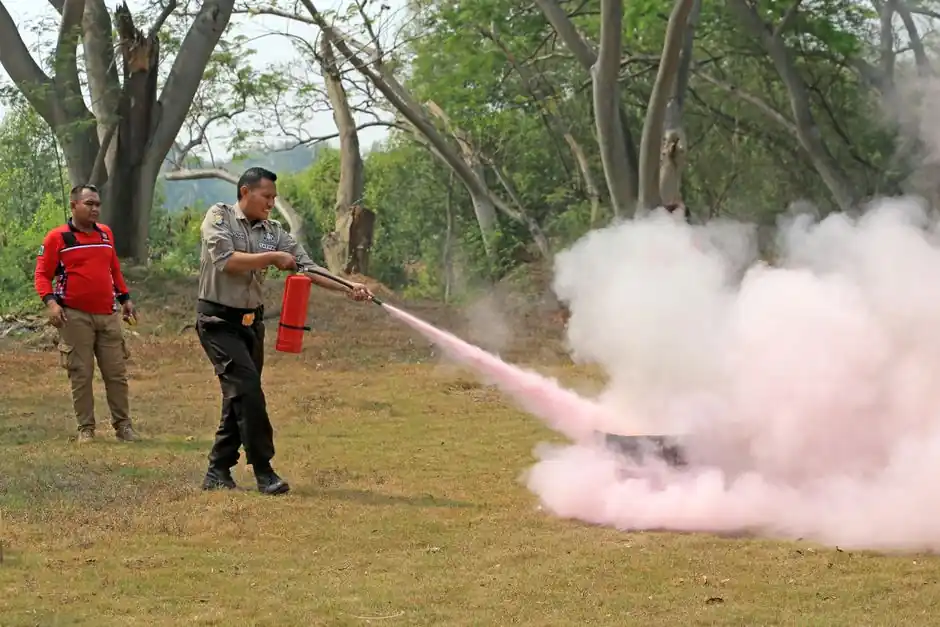
Fire extinguisher selection is driven by four hard inputs: the fire class present, the extinguishing agent chemistry, the numeric rating printed on the UL or ULC label, and the maximum size a single operator can safely control. Get any one wrong and the extinguisher is either useless or dangerous, which is why the fire safety reference framework ties every portable unit back to a specific fuel scenario.
The portable extinguisher market still breaks into five primary types in U.S. guidance: water, foam, dry chemical, carbon dioxide, and wet chemical, with clean-agent and Class D dry powder added for specialty rooms and combustible-metal hazards [S1][S3]. Picking the right one is a fuel-first decision, not a price decision, and the rest of the criteria fall out of that.
Fire Classes and the Agent That Extinguishes Each
Class A covers ordinary combustibles (wood, cloth, paper, rubber, many plastics); water, foam, ABC dry chemical, and wet chemical all work here, but water is the cheapest per-litre and is the wrong choice anywhere a live electrical risk exists [S2][S5].
Class B is flammable and combustible liquids (gasoline, oil, solvents, alcohols, flammable gases), and the agent must either smother the vapor (foam, CO2) or interrupt the chain reaction (dry chemical); water is rejected because it spreads the fuel [S2][S4].
Class C is the U.S. designation for energized electrical equipment, with the U.K. using the same letter C for flammable gases and an electric-spark symbol for electrical risk; the unifying rule is that the agent must be non-conductive, which is why CO2, dry chemical, and clean agents dominate this slot and water is excluded [S2][S4][S5].
Class D covers combustible metals (magnesium, titanium, zirconium, sodium, lithium, potassium); only specialized dry powder agents matched to the specific metal will work, and applying water or standard ABC powder can violently react [S2][S3].
Class K (U.S.) / Class F (U.K. / BS EN3) is cooking-oil and animal-fat fires in commercial kitchens; only wet chemical extinguishers are listed for these deep, high-heat pools, because they both saponify the oil and hold a cooling blanket [S2][S3][S4].
Extinguishing Agents Compared on Four Decision Criteria
The main agent families, lined up against the four criteria that actually drive a spec sheet, are water, foam, ABC dry chemical, CO2, wet chemical, clean agent, and Class D dry powder. On Class A coverage, water and ABC score; on Class B coverage, foam, ABC, and CO2 score; on Class C / electrical, only non-conductive agents (ABC, CO2, clean agent) qualify; and on residue / clean-up burden, water is dirty, foam is dirtier, ABC powder is the worst (corrodes electronics), CO2 is clean, and clean agent is cleanest. [S1]
Range is a hidden cost: CO2 discharges as a gas/snow cloud with a short throw of 3 ft to 8 ft (1 m to 2.4 m), so it loses badly outdoors or in drafty indoor spaces, while dry chemical can reach further but blankets the room in powder [S2]. UK pricing for portable units runs from around £25 for a 3 L or 6 L water unit, £35 for a 9 L water, and £50 for a freeze-protected water unit, with foam, dry powder, and CO2 priced higher per unit of rating, and wet-chemical and clean-agent units the most expensive at the small end [S4].
A 1A:10B:C multipurpose dry-chemical extinguisher is the workhorse for most general-purpose sites because it is UL Listed for three classes in a single pressurized unit, costs the least per unit of rating, and is the easiest to train non-specialists on [S1][S3].
Reading the UL Rating: What 1A:10B:C Actually Means
The number before the "A" is a multiple of 1.25 gallons of water equivalent: a 1A rating equals 1.25 gal of water applied to a Class A fire, 2A equals 2.5 gal, 4A equals 5 gal, and so on; the number before the "B" is the square footage of a deep Class B liquid fire the unit will extinguish, and the "C" is a non-numeric electrical-safety suffix confirming a non-conductive agent [S1].
Specifiers should pick the largest extinguisher an operator can safely and comfortably handle, because a higher numeric rating gives more discharge time and more agent on the fire; the trade-off is weight, with 9 L water units at roughly 14 kg fully charged and 5 lb CO2 units at about 9 kg fully charged [S1][S4].
A buyer who skips the rating and only looks at fire class ends up with a 1A:10B:C unit that is undersized for a warehouse rack of cardboard; the correct spec for that zone is normally a 3A or 4A rated ABC at minimum, with travel distance to the nearest unit held under 75 ft for Class A and under 50 ft for Class B per common NFPA 10 placement logic, which is the standard facility-side practitioners reference for portable extinguisher siting.
Who Should NOT Pick a Multipurpose ABC Unit
Commercial kitchens with deep fryers need a Class K wet-chemical extinguisher, not an ABC, because a deep-fryer oil fire sits above the auto-ignition of most cooking oils and will re-flash through an ABC powder blanket [S2][S3][S5].
Server rooms, control panels, and any site with energized electronic equipment that cannot tolerate powder residue need either CO2 or a clean-agent (halogenated) extinguisher; ABC powder will work on the fire but can destroy the equipment it was meant to protect, and CO2 leaves no residue, which is why it is the default for laboratories, printing areas, and food-prep zones [S2][S3].
Machining shops handling magnesium, titanium, aluminum, or lithium swarf and powder need a Class D dry-powder extinguisher matched to the specific metal; standard ABC powder is not listed for Class D and water is positively dangerous on burning magnesium or sodium [S2][S3].
Outdoor or windy indoor sites should not rely on CO2 as primary protection because the gas cloud dissipates in 3 ft to 8 ft of effective range and the agent can be carried away before extinguishment is achieved [S2].
Homeowners and small offices with no Class D or commercial-cooking risk, no large flammable-liquid storage, and no sensitive electronics are exactly the population for whom the U.S. Fire Administration recommends a multipurpose ABC extinguisher, sized for an adult to handle and certified by a nationally recognized testing laboratory [S1][S8].
Siting, Servicing, and Operator Readiness
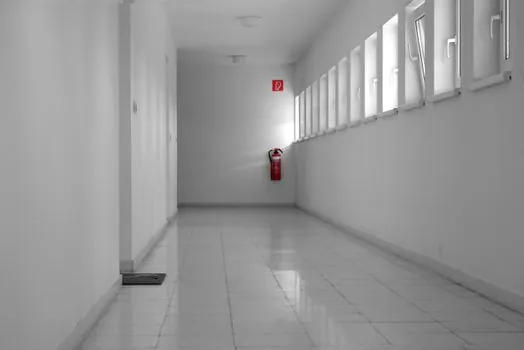
Extinguishers must be visible, unobstructed, and mounted on brackets; siting should be near exits so the operator fights the fire with an escape route at their back, and travel distance should be tight for higher-hazard Class B and Class C areas [S5][S6].
Selection should be reviewed against five inputs every time: type of likely fire, size of likely fire, hazards in the area, presence of energized electrical equipment, and ambient temperature (which rules out plain-water units in unheated spaces below freezing) [S6].
Operator-side criteria are non-negotiable: the unit must be large enough to be effective but not so heavy that the user cannot lift, aim, and squeeze it for the full discharge time; the recommended mental model is the PASS sequence (Pull, Aim, Squeeze, Sweep), which only works if the operator can hold the extinguisher upright and steady [S1].
For coordinated facility safety planning, the fire extinguisher topic pairs with the fire hydrant siting for hose-line coverage, and the fire door and fire-rated door framing for compartmentation that buys time before any extinguisher is discharged.
Shortlist Logic: From Hazard Inventory to Unit on the Wall
Start with a hazard inventory that lists every fuel class present (A, B, C, D, K/F) and every room where live electrical equipment cannot tolerate powder residue; that single list eliminates most of the catalog and leaves two to four candidate units [S3][S6].
Match each candidate to the dominant fire class, confirm the UL or ULC listing label, then pick the highest numeric rating that a trained operator in that zone can safely handle; repeat the exercise for each zone because a one-size-fits-all spec almost always under-protects the highest-hazard room and over-pays for the lowest-hazard one [S1][S3].
For projects where the spec is part of a broader PPE and safety-equipment rollout, the respirator selection guide and the safety glasses selection guide follow the same fuel-then-fit logic, and the safety relay selection and emergency stop selection articles cover the machine-side SIL / PL targets that should sit alongside the extinguisher spec in a 2026 build package.
Trackable signals after selection: confirm UL or ULC label is present on every shipped unit, verify the discharge time and weight on the data plate against the operator-handling study, and schedule the annual maintenance inspection that is the practical difference between a spec and a working extinguisher.