
Specifying explosion-proof electrical equipment in 2026 is fundamentally an exercise in matching four independent axes, hazardous-area classification, gas/dust group, surface temperature class, and protection concept, against the actual ignition risk of the plant [S1][S5].
The two dominant regulatory frameworks, IEC 60079 (with ATEX Directive 2014/34/EU for equipment and 1999/92/EC for worker protection in the EU) and the U.S. National Electrical Code (NEC) Class/Division system, are not interchangeable on paper, but most modern plants document both to keep EPC, operations, and AHJ paperwork aligned [S1][S2][S6]. For a primer on the protection families themselves, see the explosion-proof overview and the broader explosion-proof electrical reference.
Hazardous-Area Classification: Zone vs Division
Under IECEx and ATEX, gas atmospheres are split into Zone 0 (continuous or long-period presence), Zone 1 (likely during normal operation), and Zone 2 (brief or abnormal only), with parallel Zone 20/21/22 designations for combustible dusts [S1][S5]. The North American Division system collapses this into Division 1 (hazard present under normal conditions, roughly Zones 0+1) and Division 2 (hazard only during faults, roughly Zone 2) [S5][S6].
Group coding is the second axis. IEC 60079 groups surface gases as IIA (propane), IIB (ethylene), and IIC (hydrogen, acetylene, the most easily ignited), and dusts as IIIA (flyings), IIIB (non-conductive), and IIIC (conductive), while the NEC groups gases as A/B/C/D in decreasing hazard severity [S1][S5][S6]. Group I is reserved for mining (methane/coal dust) under both schemes [S1].
Temperature class caps surface temperature below the auto-ignition point of the surrounding gas: T1 (450 °C) through T6 (85 °C) under IEC 60079, with the NEC using the same T-codes against ambient ranges specified in NFPA 70 [S5][S6]. A T4 (130 °C) rating, for example, is the common ceiling for hydrogen-rich compressor skids where most common hydrocarbons are present.
Protection Concepts: Ex d, Ex e, Ex p, Ex i
Explosion-proof (Ex d, flameproof) enclosures contain any internal ignition and cool escaping gases below the auto-ignition temperature of the surrounding atmosphere; they are the workhorse for motors, junction boxes, and lighting in Zones 1/2 and Division 1 [S1][S5]. Increased safety (Ex e) adds no arc/spark capability and tighter temperature limits, and is typically used for terminal boxes, luminaires, and cage motors where no switching occurs [S1].
Pressurization (Ex p, with variants px, py, pz) holds a positive protective-gas pressure inside the enclosure so the hazardous atmosphere cannot ingress, and is the standard solution for analyzer houses, control cabinets, and MCC rooms in Zone 1 [S1]. Intrinsic safety (Ex ia/ib/ic) limits electrical energy below ignition thresholds even under fault conditions, and is mandatory for Zone 0 instrumentation loops and for most portable gas detectors, where cabling energy cannot be contained [S1][S5].
Material choice scales with the environment: stainless steel AISI 316L dominates offshore and chemical service, AISI 304 is the cost-default for indoor refineries, aluminum alloys are used for lightweight pendant stations, and borosilicate glass appears on observation windows and explosion-proof light fixtures [S1][S3].
Selection Criteria: Enclosure Ratings, IP Code, and Build

Selection criteria for explosion-proof enclosures include flame-path certification, third-party listing (UL, FM, ATEX, IECEx), ingress protection rating, and corrosion resistance [S3][S7]. For oil & gas, petrochemical, offshore, and chemical plants, NEMA 4X or IP66 stainless construction is the baseline; NEMA 7/8 (hazardous-location rated) is layered on top to define the internal ignition containment [S3].
Ingress protection is specified separately from explosion protection. IP66 (dust-tight, powerful jet protection) and IP67 (temporary immersion to 1 m for 30 min) are the common pairings on offshore junction boxes, while IP65 suffices for indoor skids [S3][S7]. A spec mistake here, picking IP54 where IP66 is needed, is one of the most common audit findings even when the Ex rating itself is correct.
For field-device enclosures like explosion-proof distribution panels and explosion-proof button stations, the flame-path gap, thread engagement (typically ≥ 5 threads for Ex d), and surface finish (Ra ≤ 6.3 µm on flange faces) are mechanical details that third-party certifiers verify; buyers should request the IECEx Certificate of Conformity (CoC) number, not just an ATEX self-declaration, for Zone 1 hardware [S1][S3][S7].
Standards Map: IEC 60079, ATEX, NEC, and IECEx
IEC 60079 is the umbrella series covering Ex d in Part 1, Ex e in Part 7, Ex p in Parts 2/13, Ex i in Parts 11/25/27, and the dust standards in Parts 31/32/33; ATEX 2014/34/EU references these for EU equipment placement, while 1999/92/EC governs worker protection and zone classification on the user side [S1].
In North America, NEC Article 500/501 (Class I Divisions), Article 502 (Class II dust), and Article 503 (Class III fibers/flyings) define the parallel Division system, with Article 505/506 providing an optional Zone scheme for harmonization with IEC [S2][S6]. The UL 1203 standard covers explosion-proof and dust-ignition-proof enclosures in the U.S., and FM 3615 covers the equivalent Factory Mutual approval [S3].
For global projects, dual-marked equipment (e.g., "Ex db IIC T4 Gb" plus "Class I Div 1 Groups B/C/D T4") avoids the cost of stocking two SKUs and is now standard from major OEMs supplying LNG, petrochemical, and pharma-grade projects [S1][S2].
Who It Is For, and When to Walk Away
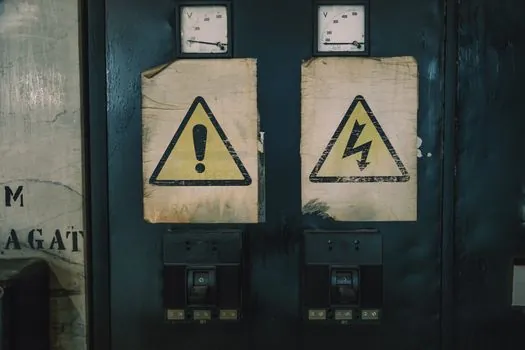
Explosion-proof and explosion-protected electrical hardware is required for oil & gas upstream/midstream/downstream, petrochemical, chemical, pharmaceutical solvent, grain-handling, paint manufacture, wastewater biogas, and any classified laboratory handling flammable atmospheres [S3][S4]. It is mandatory in Zone 0/1/2 gas areas and Zone 20/21/22 dust areas, plus Division 1/2 equivalents, where the equipment is not declared intrinsically safe by energy budget [S1][S5][S6].
Where it does not fit: non-classified general-purpose areas where ordinary industrial enclosures (NEMA 4/IP55) are adequate, and Zone 0 where only Ex ia or Ex da certified equipment is acceptable; using Ex d only in Zone 0 violates both IEC 60079-26 and the equipment's certificate scope [S1]. Buyers specifying into Zone 0 should also confirm the cell is fitted with a separating element per IEC 60079-26 or accept a purged Ex p solution, not a generic Ex d box.
A second red flag: any vendor offering "explosion-proof" without a third-party certificate number (IECEx CoC, ATEX EU-Type, UL Listing, or FM Approval) should be cut from the bid list; the term is legally defined in most jurisdictions and self-declared EP hardware is non-compliant in EU and North American plants [S1][S3].
Comparison: Which Protection Concept for Which Duty
Four common protection concepts line up against typical duty and Zone as follows. Ex d (flameproof): Zone 1 and 2, Division 1, for motors, JB, lighting, high-power; allows live maintenance with proper permit. Ex e (increased safety): Zone 1 and 2, Division 2, for terminal boxes, luminaires, cage motors; no switching, lower cost than Ex d [S1][S5].
Ex p (pressurization): Zone 1 and 2, Division 1, for analyzer houses, MCC rooms, control cabinets with non-Ex components inside; needs protective-gas supply and purge controller. Ex i (intrinsic safety, ia/ib/ic): Zone 0/1/2 all Divisions, for instrumentation, gas detectors, explosion-proof button signaling, low-power only; energy-limited, so incompatible with mains-voltage loads [S1][S3].
Decision rule of thumb: pick Ex i for signal-level instrumentation in any zone, Ex e for terminal enclosures with no switching, Ex d for power devices in Zone 1/Division 1, and Ex p only when the cabinet must house non-Ex I/O or drives. Per 2026 OEM guidance, the cost gap between Ex d and Ex e has narrowed, so engineering effort, not price, usually drives the choice [S1][S3].
Trackable Signals for the Next Quarter
Two signals are worth watching through Q4 2026: the rollout of GB/T 3836-aligned Chinese Ex certification on LNG carrier newbuilds (impacting suppliers bidding CNPC/Sinopec frames) and any ATEX Notified Body guidance update on Ex db eb mixed-concept assemblies, which have grown common in modular skid designs [S1]. Buyers locking in specs for 2027 projects should pin the IECEx CoC and the ATEX EU-Type Examination certificate numbers at PO, not at delivery, to avoid a redesign loop if the cert has been amended since the data sheet was issued.
This topic is covered further in Hospital Flooring Selection by Clinical Zone: A Spec-First Spec Map.