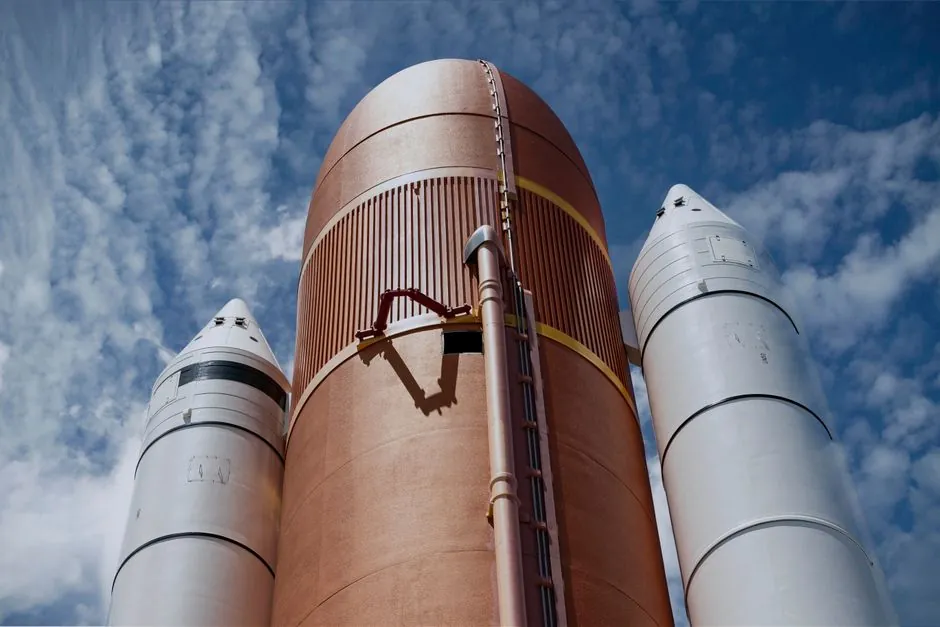
Alumina (Al₂O₃) remains the workhorse technical ceramic for aerospace, with high-purity grades formulated at ≥99.99% Al₂O₃ for the most demanding electrical and thermal service [S5].
The material's case in flight hardware rests on four numbers: density near 3.9 g/cm³, melting point above 2050°C, dielectric strength above 15 kV/mm, and a coefficient of thermal expansion around 7–8 × 10⁻⁶/°C, all of which make it competitive against metals when mass, insulation, and thermal cycling co-drive the design [S4].
Alumina vs ZTA vs Silicon Nitride vs Zirconia: Criteria Comparison
Selection among aerospace ceramics is a property trade-off, not a search for a universal winner: alumina leads on dielectric strength and cost, ZTA and zirconia lead on fracture toughness, and silicon nitride leads on thermal-shock resistance [S2][S3].
High-purity alumina is electrically insulating at high temperature and offers high hardness plus strong corrosion resistance, which is why it dominates insulators, sensor bodies, and metallized feedthroughs [S2]. Zirconia-toughened alumina (ZTA) pairs the alumina matrix with a zirconia phase to lift fracture toughness, and is positioned for custom aerospace components where alumina's brittleness is the limiting factor [S8]. Zirconia itself (Y-PSZ) is reserved for high-mechanical-stress parts, while silicon nitride (Si₃N₄) is the default for insulators, impellers, and high-temperature low-dielectric antennas thanks to high strength, high toughness, and strong thermal-shock resistance [S2]. For context on adjacent material decisions in industrial design, see the spec-anchored map in UHMWPE selection for automotive manufacturing.
Property Anchors: Hardness, CTE, Dielectric Strength, Density
Alumina ceramics can only be shaped by diamond grinding because of their very high hardness, a constraint that pushes manufacturers toward near-net-shape forming before the final grind step [S5].
Standard published data points for aerospace-grade alumina metallized ceramics cluster as follows: density approximately 3.9 g/cm³, CTE approximately 7–8 × 10⁻⁶/°C, dielectric strength above 15 kV/mm, and melting point above 2050°C [S4]. High-density, compact alumina seals can hold a stable -250°C to +400°C operating window with extremely low permeability, a range that covers cryogenic fuel systems, avionics bays, and re-entry-adjacent hot sides [S3]. For broader material-property context, the alumina ceramic reference and the industrial ceramic overview document the same property ranges against alternative oxide and non-oxide families.
Alumina Metallized Ceramics: Feedthroughs, Housings, and Hermetic Joins
Alumina metallized ceramics pair a high-purity Al₂O₃ substrate with a molybdenum-manganese or active-metal braze layer, producing a hermetic joint to Kovar or titanium alloy housings used in vacuum feedthroughs, windows, and sensor packages [S4].
The metallization route is the reason alumina is the default substrate for aerospace sensor packaging: the dense metallic layer enables a hermetic seal in high-vacuum service and lets engineers carry both insulation and a metal-pinned electrical interface inside one part [S4]. Such assemblies show up in high-voltage insulators, sensor packaging, and electronic control modules, where alumina's combination of dielectric strength above 15 kV/mm and high volume resistivity is leveraged to suppress arcing, leakage, and signal distortion in flight electronics [S4]. Comparable metallized-stack choices for high-temperature electronics are documented in PEEK grade selection for electronics.
Manufacturing Routes: Pressing, Molding, and Additive Ceramic Printing
High-purity alumina aerospace parts are shaped by isostatic pressing, injection molding, extrusion, and casting before diamond grinding, because post-sintering machining of full-density alumina is impractical [S5].
Additive manufacturing has opened a second front: lithography-based ceramic manufacturing (LCM) at vendors such as Lithoz can hold dimension control on features below 100 µm and print complex single-part geometries such as aerospike nozzles, thrusters, and high-temperature low-dielectric antennas, where a single printed ceramic part replaces a metal assembly and reduces mass [S2]. For investment-casting cores used to make superalloy turbine blades, silica-based ceramics doped with alumina and zircon hold thermal expansion stable up to 1,500°C with high porosity and good leachability, enabling blade designs that run at higher turbine inlet temperatures [S2]. Adjacent forming decisions, including molding and tolerance planning for structural brackets, are covered in engineering plastic selection for construction.
Alumina Tubes, Insulators, and Engine-Adjacent Hardware
Alumina ceramic tubes are specified in aerospace service for their thermal resistance, erosion resistance, and corrosion resistance, qualities that map directly to sensor sheaths, thermocouple protection, and insulating sleeves in propulsion lines [S7].
Alumina is also the dominant pick where superior electrical insulation and thermal conductivity are required at the same time, including ignition system insulators, high-frequency avionics substrates, and thermal-management plates near power electronics [S6]. In jet engines, ceramic nozzles, combustion liners, and exhaust components benefit from alumina-class temperature stability; in spacecraft, the same family covers heat-shield tiles, re-entry structures, and insulating standoffs that must survive atomic oxygen and propellant residues [S1][S4]. For rotating hardware where alumina is too brittle, zirconia ceramic and silicon nitride bearings and balls take over, and the general ceramic bearing reference documents the material swap.
Limits, Failure Modes, and What Alumina Is NOT For
Alumina is brittle by design: its fracture toughness is the reason ZTA, zirconia, and silicon nitride exist as upgrade paths when impact, vibration-driven crack growth, or severe thermal cycling dominate the load case [S2][S8].
Standard aerospace alumina also carries real cost and process penalties, including diamond-only machining, expensive raw stock for ≥99.99% grades, and metallization process control that directly governs hermetic seal yield [S4][S5]. Where the service case is high mechanical stress or severe thermal shock, alumina is the wrong starting point and ZTA, Y-PSZ zirconia, or silicon nitride should be shortlisted first [S2][S8]. A practical way to frame the boundary: if the limiting requirement is dielectric strength above 15 kV/mm combined with stable insulation above 500°C, alumina is the default; if the limiting requirement is fracture toughness or thermal-shock ΔT, step up to ZTA, zirconia, or silicon nitride [S2][S4][S8].
Sourcing and Standards Discipline

Aerospace alumina programs typically run under a manufacturer quality system such as ISO 9001:2015 at the ceramic supplier, with finished part certification tied to the airframer's own quality and traceability requirements rather than to a single public ceramic standard [S3].
For high-purity feedstock, 5N HPA at ≥99.999% purity with controlled particle size (typical 2–6 µm or 3–5 µm grades) is the cited benchmark for technical ceramic production, and these feedstocks are processed by isostatic pressing, injection molding, extrusion, or casting before sintering [S5]. Engineers comparing ceramic suppliers should weigh density tolerance, CTE published value, dielectric strength at operating temperature, and metallization scheme (Mo-Mn versus active brazing) as the four audited parameters, since each drives either mass, thermal expansion matching, electrical margin, or hermetic reliability in service [S3][S4]. Watch the next signal: as of May 2026 the alumina metallized ceramics supplier base is consolidating around a 10-benefit positioning around mass, hermeticity, and thermal management [S4], and any 2026–2027 shift toward ≥99.999% 5N HPA in serial aerospace part production would be the leading indicator of further displacement of metallized beryllia and partially stabilized zirconia in flight electronics.