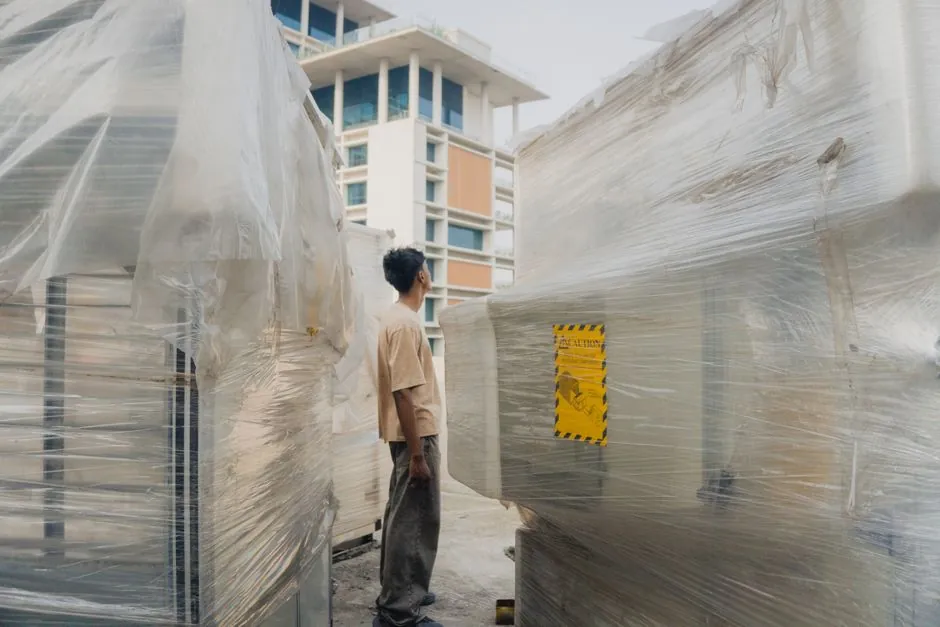
For structural and semi-structural building components, engineering plastics resolve to five workhorse resins, polycarbonate (PC), polyamide 6/66 (PA6, PA66), acetal (POM-C and POM-H), HDPE/UHMW-PE, and PEEK, each with a defined load, temperature, and chemical envelope [S1][S2][S4].
Selection starts with four working criteria: mechanical load and wear, continuous service temperature, chemical/UV exposure, and dimensional tolerance under moisture. Builders match the resin to the worst-case exposure, not the average, because construction parts are typically inaccessible after installation [S1][S6].
Core Resin Map and Service Envelopes
Polycarbonate (PC) is specified where transparency and impact resistance coincide, including skylights, safety glazing, machine guards, and wall protection panels, with continuous service typically in the -40 to 115°C range and impact strength roughly 10x that of standard acrylic [S1][S3][S5]. For structural fasteners, hinges, gears, and wear pads, polyamide (Nylon 6 cast and PA66) is the default, combining high tensile strength, low coefficient of friction, and resistance to oils and alkalis, with cast PA6 offering higher strength and dimensional stability than extruded grade [S4][S5].
Acetal (POM-C) covers precision machined parts (seals, gaskets, food-contact conveyors, filling machinery) thanks to low moisture absorption and a friction coefficient typically under 0.2 against steel, holding tolerance in humid or wet service where nylon would swell [S4][S7]. HDPE (PE300) handles chemical tank linings, wall protection, and cut surfaces with a density near 0.95 g/cm³, while UHMW-PE is the go-to for sliding strips, chute liners, and high-abrasion wear surfaces, with a coefficient of friction around 0.1 against steel [S4][S5]. PEEK sits at the top of the envelope, retaining mechanical properties above 250°C and resisting most construction chemicals, used only when the temperature or chemical demand rules out PA, POM, and PE [S4][S5].
Selection Criteria: Load, Temperature, Chemical, Dimensional
Selection begins with a maximum load and continuous service temperature pair. Below 100°C and moderate load, PC, POM-C, and PA6 cover roughly 80% of non-aesthetic construction parts; between 100 and 150°C the field narrows to PA66 (glass-filled), PPS, and PEEK; above 150°C only PEEK and PPS remain practical for sustained structural use [S1][S2][S4]. A second pass filters by chemical exposure: HDPE and PP are the first choice for acids, bases, and moisture; PA and POM resist oils and fuels but fail in strong acids and chlorine; PC resists dilute acids but is attacked by ketones and aromatic solvents [S3][S6].
UV and outdoor weathering are the third pass. Unmodified PC, PA, and POM degrade under prolonged UV unless a UV-stabilized or capped grade is specified; HDPE and PP are similarly vulnerable without carbon-black or stabilizer packages, while PVDF and acrylic are the common choices where long-term UV stability matters more than impact strength [S1][S3]. Dimensional stability under moisture is the fourth filter: POM-C and HDPE absorb under 0.5% water at saturation, PA6 absorbs 2 to 3%, so a wet-site gear housing that needs to hold a press-fit tolerance should default to POM-C, not nylon [S4][S6]. Readers building the broader decision tree can extend this with the engineering plastic reference set, which captures grades and families beyond the five workhorses.
Comparison of the Five Workhorse Resins
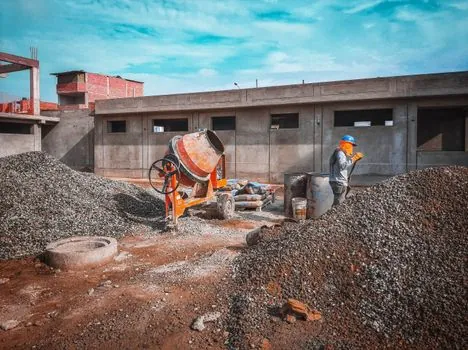
The following comparison lines the main construction options up against the criteria a spec engineer actually writes into a data sheet. Use it as the shortlist filter before opening a catalog. [S2]
PC vs PA6 vs POM-C vs HDPE vs PEEK, on cost (relative, lower is cheaper), continuous service temperature, chemical resistance, and typical construction use:
PC: cost low-to-mid, service up to ~115°C, chemical resistance fair (poor against ketones/aromatics), typical use glazing, machine guards, wall panels [S1][S3]. PA6 (cast): cost low, service up to ~120°C (dry), chemical resistance good against oils/alkalis, poor against strong acids, typical use gears, wear pads, hinges, fasteners [S1][S4][S5]. POM-C: cost low-to-mid, service up to ~100°C, chemical resistance good against fuels and solvents, fair against acids, typical use precision bushings, seals, valve seats, food-contact machined parts [S4][S7]. HDPE/UHMW-PE: cost low, service up to ~80°C (HDPE) / ~90°C (UHMW), chemical resistance excellent against acids and bases, typical use tank linings, chute liners, sliding strips, cut surfaces [S4][S5]. PEEK: cost high (typically 10x PA6), service up to ~250°C continuous, chemical resistance excellent across most construction chemicals, typical use high-temperature bearings, chemical plant internals, structural parts in harsh service [S4][S5].
Where Plastic Outperforms Metal, and Where It Does Not
Engineering plastics win where weight, corrosion, and insulation matter. A PA66 gear or UHMW-PE liner typically cuts component weight by 50 to 70% versus the cast iron or steel equivalent, eliminates corrosion in wet or chemical atmospheres, and removes the need for external lubrication on sliding surfaces [S1][S2][S5]. They are injection-mouldable into complex geometry in one piece, which is the main reason construction parts that historically were machined metal assemblies, such as fasteners, brackets, and pipe-clip stacks, are now specified in PC, PA, or POM [S1].
They lose where the requirement is high continuous load, very high temperature, open flame, or structural certification. Unfilled PA and POM are not specified for primary load-bearing structural members in buildings (beams, columns, main trusses); that role remains with steel, concrete, and engineered timber. For trades and on-site tooling rather than the building itself, the construction tools and construction machinery and equipment pages collect the metal-side references that pair with these plastic parts. Fire rating is a real ceiling: many commodity and engineering plastics will not meet the higher reaction-to-fire classes (EN 13501-1 B-s2,d0 and above) without a specifically formulated, flame-retardant, UL-listed grade, and that should be confirmed against the project's fire classification before sign-off [S3][S6].
Real Construction Use Cases and Failure Modes
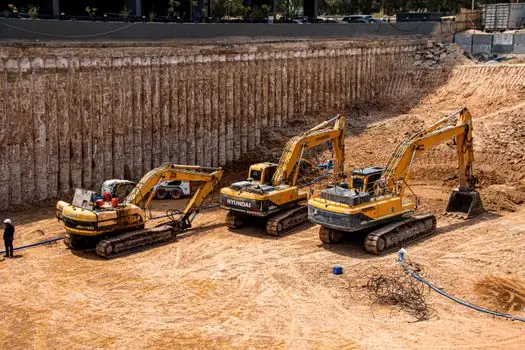
Skylights, canopies, and machine guards: PC multiwall or solid sheet, UV-stabilized grade, typically 10 to 25 mm thick, impact strength high enough to resist hail and dropped tools. Failure mode is usually surface abrasion and yellowing from UV, not structural fracture, so spec a UV-resistant cap layer rather than relying on the base resin [S3]. Wall protection and cladding in food, healthcare, and transit: HDPE sheet, 6 to 12 mm, with carbon-black or white FDA-grade formulation; resists impact, cleaning chemicals, and moisture over a 15 to 20 year service life [S3][S5].
Conveyor wear strips, chute liners, and dump-truck bed liners: UHMW-PE, 10 to 25 mm, self-lubricating, cuts noise and prevents buildup of wet concrete, aggregate, and demolition debris. Failure mode is usually wear at transfer points, not bulk erosion, so the standard mitigation is thicker sheet at the impact zone, not a resin change [S4][S5]. Mechanical internals in window/door hardware, hinges, locks, and gears in motorized shutters: POM-C for precision sliding parts, PA66 glass-filled for the structural hinge bodies, where PA66 holds the load and POM handles the wear interface [S4]. Readers working through the high-temperature tail of the family can follow with the PEEK grades and classifications reference, which covers PAEK selection for the 150 to 260°C band where PA and POM drop out.
Processing Route and Standards Watchpoints
Most construction plastics parts are injection-moulded, which delivers high precision, repeatability, and a smooth, defect-free surface ready for installation; tolerances on small moulded parts are typically ±0.05 to ±0.1 mm, which is tighter than most cast metal equivalents and one of the reasons plastic has displaced metal in small structural components [S1]. For large surface parts (cladding sheets, tank linings, slide rails) extrusion, compression moulding, and CNC machining of stock plate are the standard routes, with thermoforming used for skylight domes and similar curved glazing [S2][S3].
Standards to anchor the spec: reaction-to-fire classification under EN 13501-1, drinking-water contact certifications (NSF/ANSI 61, WRAS) for any plastic in contact with potable water, and food-contact compliance (FDA, EU 10/2011) for HDPE, POM, and PC used in food-processing or kitchen construction. For plastic piping, the plastic pipe reference covers the pressure-rated families (PVC, CPVC, PE, PP, PEX) that sit alongside the structural resins in a typical construction plastics catalog. For gaskets, seals, and elastomeric interfaces between plastic parts and frames, the plastic and rubber page covers the EPDM, NBR, and silicone pairings that actually make a plastic detail work on site.
Closing signal: a working spec for a new construction plastics part resolves to a resin family (PC, PA, POM, HDPE/UHMW, PEEK), a service temperature ceiling, a chemical-exposure list, a UV/fire classification, and a tolerance band. Track the next revision of EN 13501-1 reaction-to-fire classifications for the specific grade being specified, and confirm the chosen grade's UV and hydrolysis data sheet against the project's geographic exposure, not the lab test default. Two trackable signals: (1) the spread of glass-filled PA66 into structural hinges and brackets that were previously cast zinc, and (2) the replacement of machined bronze wear plates with UHMW-PE liners in aggregate and concrete handling, both of which are now standard in the construction OEM catalog rather than special-order.