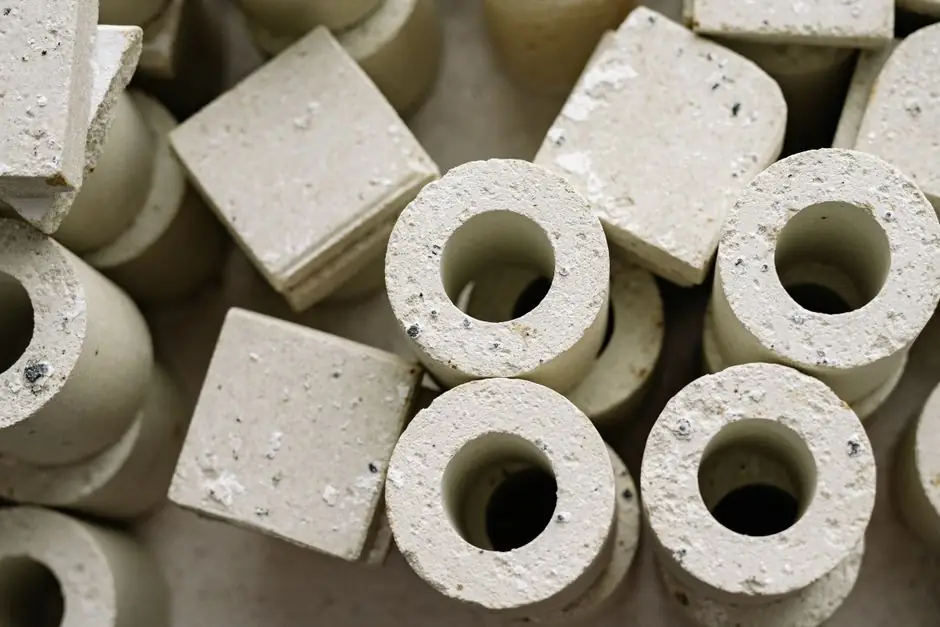
Industrial ceramic selection for general fabrication is a grade-first, application-first exercise, with alumina, silicon carbide, zirconia, silicon nitride, cordierite and fused silica covering the bulk of wear, thermal, electrical and chemical service [S3].
The most expensive mistake is still specifying a material name before defining the operating envelope, because a 94% alumina body, a 99.5% alumina body, and a porous alumina filter all carry the same chemistry but behave very differently in service [S3][S4]. The decision sequence that holds up: define function and limits, pick chemistry, lock grade, then choose forming route.
Alumina (Al2O3): the default workhorse and where its grade decides everything
Alumina is the most widely used industrial ceramic because it handles a broad mix of demands: hardness, wear resistance, electrical insulation, and chemical stability in many environments, with purity grades running from low-cost refractory bodies up to high-purity semiconductor-grade bodies [S3].
Common fabrication uses include wear liners, grinding media, seals, pump components, electrical insulators and thermocouple protection tubes, with lower-purity bodies going into wear and refractory service and higher-purity bodies going into electrical and tight-tolerance wear parts [S3]. For a deeper look at how alumina fits against other families, the industrial ceramic types and classifications reference maps the oxide, carbide and nitride groups side by side.
Silicon Carbide (SiC): hardness plus thermal conductivity, but the sub-type decides service
Silicon carbide is the choice when hardness, wear resistance and high-temperature capability all matter at once, and its relatively high thermal conductivity for a ceramic makes it useful in kiln furniture, heat-exchanger parts and burner components [S3].
The non-obvious part is that reaction-bonded, sintered and recrystallized SiC differ a lot in density, residual porosity, oxidation behaviour, thermal conductivity and strength, so the SiC sub-type is a first-class selection variable rather than a footnote when the part sees furnace, corrosive gas or severe abrasive service [S3]. In fabrication terms SiC tolerates high temperatures better than most oxide ceramics, but it is unforgiving on geometry, so near-net-shape forming and minimal post-grinding are the cost levers.
Zirconia (ZrO2) and Silicon Nitride (Si3N4): toughness-first ceramics
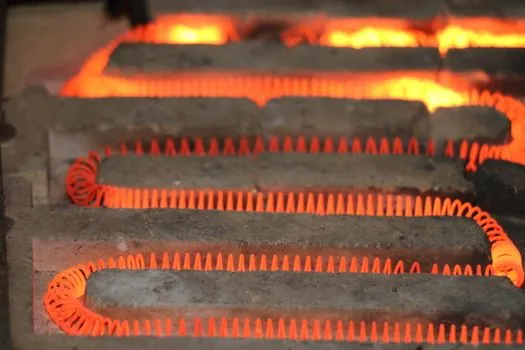
Stabilized zirconia is brought in when a part needs more fracture toughness than alumina or SiC can deliver, with common uses including valve seats, pump parts, wear components, grinding media and oxygen sensors [S3].
Most industrial zirconia is stabilized with yttria, magnesia, calcia or ceria, and that stabilizer system controls phase stability and toughness, so a part labelled simply as "zirconia" still leaves a lot of performance on the table that the datasheet has to fill in [S3]. Silicon nitride fills a similar toughness-first slot and shows up in blades, welding tools and jigs where the part has to absorb stress rather than just resist it [S5].
Fused Silica, Cordierite and Mullite: the thermal-shock and thermal-stability tier
Fused silica (amorphous SiO2) has very low thermal expansion and is the go-to when dimensional stability and thermal-shock resistance matter more than mechanical strength, so it shows up in thermal-processing fixtures, glass-contact parts, semiconductor tooling and precision components exposed to temperature cycling [S3].
Cordierite and mullite sit in the same thermal-management tier, with cordierite's low thermal expansion making it common in kiln furniture and burner nozzles, and mullite bridging alumina and firebrick behaviour for refractory structures. This tier is where ignoring thermal cycling in the spec sheet reliably causes cracking in service, a failure mode the Anderman guidance flags as a top selection mistake [S4].
Selection criteria and a four-axis comparison
A workable comparison lines the main families up against the four criteria that drive most fabrication decisions: wear/abrasion resistance, maximum service temperature, thermal-shock resistance, and electrical insulation, and the ordering changes with each axis [S3][S4].
On wear, SiC and alumina lead, with zirconia and Si3N4 close behind where toughness is also required; on maximum service temperature, SiC and Si3N4 lead, with alumina and mullite behind; on thermal-shock resistance, fused silica and cordierite lead, while dense SiC and alumina are weaker; on electrical insulation, alumina and fused silica lead, with SiC being a conductor in many grades, a non-trivial gotcha when someone assumes "ceramic" means insulating [S3]. The selection mistake to avoid is focusing only on temperature and ignoring the other three axes, which the engineering guidance calls out explicitly [S4].
Fabrication route: how quantity, tolerance and machinability set the real cost
Quantity drives the forming route, and the forming route drives cost: large volumes justify die pressing or injection moulding and pull unit price down, while small volumes are cheaper on near-net-shape parts and on machinable ceramics like Macor, Shapal and boron nitride that can be cut with carbide tools and skip post-firing [S5].
Tolerance is the second cost lever, because green machining is cheap but final diamond grinding is slow and a major share of total cost, and tighter tolerances always cost more [S5]. When converting a plastic or metal part to ceramic the geometry usually has to be simplified and tolerances relaxed, and compressive load paths should be favoured over tensile and shear paths because ceramics are stiff but sensitive to small flaws like pores, sharp edges and thin sections [S5]. Over-specifying material grade, ignoring manufacturing limits, and treating ceramic as a drop-in metal replacement round out the top selection mistakes that show up in real fabrication programmes [S4].
Standards, sourcing and decision guardrails
There is no single ceramic "ISO grade" that covers all of alumina, SiC, zirconia and Si3N4; sourcing is done against manufacturer datasheets plus application-specific standards, and the EU BREF for the ceramic manufacturing industry documents the kiln, raw-material and emissions envelope that fabricators operate inside [S9].
For high-purity alumina bodies used in electrical and semiconductor hardware, datasheet purity (94% vs 99.5% vs 99.9%) and density are the first cross-checks; for SiC, the sub-type (reaction-bonded vs sintered vs recrystallized) is the first cross-check; for zirconia, the stabilizer chemistry (yttria, magnesia, calcia, ceria) is the first cross-check [S3]. Confirm material availability and supply capability early, since lead time, not chemistry, is often the schedule risk in a fabrication programme [S4][S5]. Two trackable signals worth watching: datasheet-level grade expansions from major oxide and carbide suppliers, and any tightening of the EU ceramic manufacturing BREF that filters down into kiln and emissions specs for fabricators [S9].
For component-level specifications, see industrial ceramic, industrial adhesive, and industrial borescope.