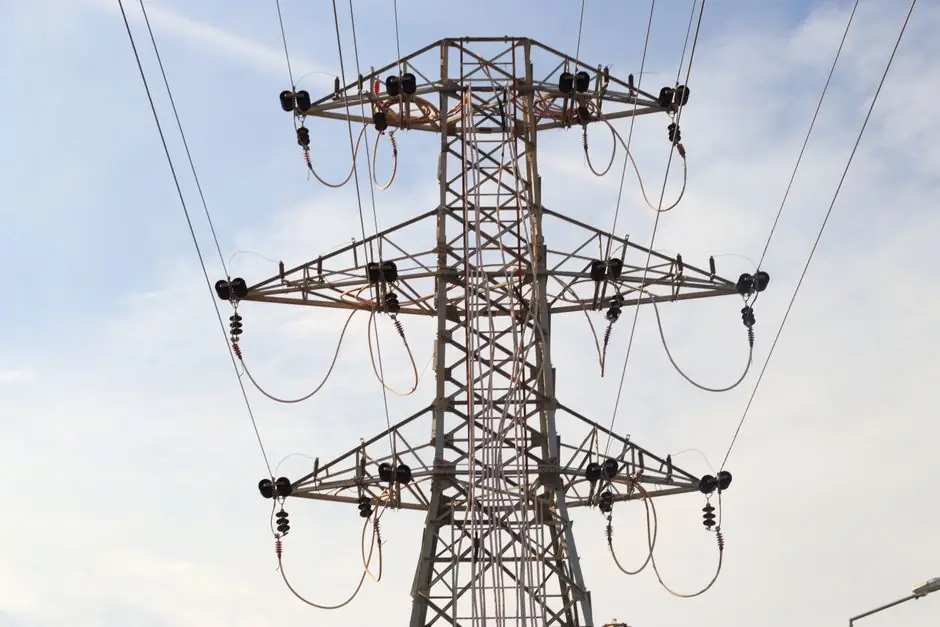
Aluminum-clad steel (ACS) overhead ground wire delivers the same tensile strength as extra-high-strength steel while weighing 15 percent less, per AFL product literature [S1].
Transmission utilities have standardized ACS for OPGW and shield wire on coastal, industrial, and long-span EHV routes because the metallurgically bonded aluminum sheath protects the steel core from the micro-cracking and pitting that destroys zinc coatings on galvanized strand [S2][S5]. This article compares the two conductors head-to-head on corrosion, conductivity, mechanical performance, and economics.
Why Galvanized Strand Fails as a Ground Wire
Galvanized steel ground wire strands are specified under ASTM A363 and ASTM A475, with zinc-5% aluminum-mischmetal variants under ASTM A925 and ASTM A855 [S3]. The zinc layer is metallurgically bonded by hot-dipping, but field failure data shows the coating develops micro-cracks and pitting that lets moisture penetrate and undercut the zinc from the steel, setting up stray-voltage conditions on the shield wire [S5].
Galvanized steel is also a poor conductor: a 3/8" 7-wire Class A galvanized strand sits around 30-40% IACS depending on zinc thickness, and the zinc itself corrodes preferentially in salt-spray, industrial, and acidic-soil environments. Once the zinc is breached, the underlying high-carbon steel rusts quickly, the cross-section weakens, and the strand loses both conductivity and tensile capacity, a dual failure mode that compounds on aging lines [S2][S5].
How Aluminum-Clad Steel Is Built and Why It Lasts
Aluminum-clad steel is a bimetallic conductor produced by compacting high-purity aluminum powder around a high-strength steel rod, then applying heat and pressure to form a dense, inseparably welded cladding; the rod is subsequently drawn to finished wire sizes without changing the steel-to-aluminum area ratio [S1]. A typical ACS construction holds 25% aluminum by cross-sectional area, which is thick enough to act as a true corrosion barrier rather than a sacrificial coating [S4].
The aluminum sheath is not a sacrificial layer like zinc; it is a passive barrier of EC-grade aluminum that forms a self-healing oxide film. As a result, ACS retains its strength and conductivity unchanged in any atmosphere where solid aluminum is satisfactory, including heavy industrial pollution and marine salt fog [S3][S6]. No flaking or delamination occurs during heat treatment or mechanical working because the aluminum-steel bond is metallurgical, not a dipped coating [S4].
Mechanical and Electrical Performance Compared
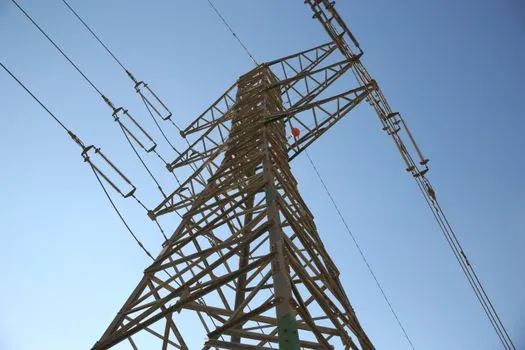
ACS delivers the same tensile strength as extra-high-strength steel at 15% lower weight, and is much more conductive than either galvanized steel or solid aluminum of equivalent strength [S1]. Against ACSR (aluminum conductor steel reinforced) of the same diameter, ACS conductor weight is about 5% lower, current-carrying capacity runs 2-3% higher, and power loss decreases 4-6% [S4].
Concrete numbers from the ASTM B416 size table illustrate the strength headroom: a 19-wire No. 5 AWG ACS strand has a rated breaking strength of 326.39 kN at 2129 kg/km and DC resistance of 0.2698 ohm/km, while the 7-wire No. 5 AWG version still offers 120.27 kN at 781.1 kg/km and 0.7426 ohm/km [S4]. On the DIN 48201 table, a 240 mm² 61-wire ACS strand reaches 299.05 kN rated strength at 0.357 ohm/km, well into the range used for EHV overhead ground wire [S4].
Corrosion Resistance in Coastal and Industrial Service
Aluminum-clad steel conductors are explicitly recommended for coastal areas, saline-alkali beaches, and industrial zones where salt-spray corrosion is severe; the aluminum cladding prevents the steel core from oxidizing or undergoing galvanic corrosion [S2]. Because the corrosion product of aluminum is a stable oxide rather than a soluble salt, the sheath does not progressively undercut the way zinc does on galvanized strand [S3][S6].
AFL rates its Alumoweld products as corrosion-resistant in industrial, semi-industrial, and marine environments, and superior to aluminized steel, which is itself a metallurgical coating but with an aluminum-silicon layer that is thinner and more brittle than EC-grade aluminum cladding [S1]. For a deeper look at how metallurgical aluminum coatings compare with zinc and zinc-5% Al-Mischmetal coatings, see the ASTM A925 vs A363 spec breakdown on the encyclopedia page. The practical service-life difference is what drives the spec: ACS in saline atmospheres routinely outlasts galvanized strand by a factor of two to three, which directly lowers line maintenance and overhaul cost [S2][S3].
Application Selection: Where ACS Fits and Where It Does Not
ACS is the right answer for overhead ground wire (shield wire) on EHV and HV transmission lines, OPGW reinforcing cores, ACSR/AW conductor cores, guy wires for antenna towers and masts, formed wire for dead-ends and splices, and messenger wire for figure-8 cable [S1][S3]. Long-span river and estuary crossings, where corrosion and tensile load combine, are the classic use case.
ACS is not the right answer for substation grounding grids, where IEEE 837-listed copper-clad ground rods and bare copper conductors are specified for low-impedance fault current dispersion; aluminum has higher resistivity than copper and a lower melting point (1220°F vs 1980°F for copper), so it handles rapid 500 ms fault-current heating poorly compared with copper or copper-clad steel [S5]. It is also not a drop-in replacement for galvanized fence wire or agricultural applications where cost per kilogram dominates and 10-20 year life is acceptable. For a spec-oriented comparison of how ACSR/AW cores stack up against alternative reinforcement materials, the prestressing strand selection guide walks through the same steel-versus-bimetallic trade-off in a different load case.
Specification Standards and Sourcing Checklist
Engineers specifying ACS ground wire should reference ASTM B416 (Alumoweld ACS wire and strand) for the conductor itself, with the relevant galvanized comparator standards being ASTM A363, ASTM A475, ASTM A925, and ASTM A855; for the messenger-wire use case, ASTM A640 applies [S3]. International equivalents include IEC, BS, DIN 48201, AS, NFC, SS, and CSA, and most major mills will hold all of these in parallel [S3].
When sourcing, verify three items: (1) the aluminum-to-steel area ratio (typically 25% Al for ground-wire duty), (2) the minimum cladding bond integrity under bend and torsion tests, and (3) the DC resistance at 20°C, which is the cleanest indicator of conductor quality because any thinning of the aluminum sheath or contamination at the bond shows up there first. The 7-wire to 37-wire constructions in the ASTM B416 table (3/7/19/37 wires) cover the full range from distribution-class shield wire up to EHV OPGW cores, so most spec sheets will not need to leave that envelope [S4]. For procurement teams weighing total installed cost rather than unit price, the aluminum alloy grade selection reference is a useful cross-check on the EC-grade aluminum used in the cladding layer.
Limits, Failure Modes, and Open Questions
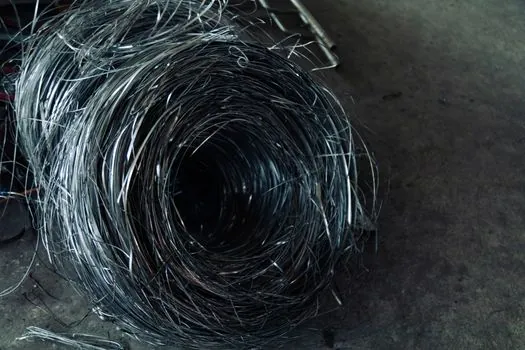
ACS is not invincible. Sustained exposure to alkaline concrete, certain fertilizer runoff, and stray DC currents from HVDC electrodes can pit the aluminum sheath over decades. Mechanical damage during installation, nicks from spinning grips, or contact with dissimilar metals in the absence of proper connectors, can also breach the cladding and expose the steel core to corrosion, at which point the failure mode converges with that of galvanized strand [S2][S5].
Two open spec questions remain worth tracking in 2026. First, the IEEE 80 grounding-grid formula, written in 1980, treats copper-clad steel the same as solid copper, and Powertech Labs fault-current testing has shown that one manufacturer's copper-welded steel outlasts the formula's predictions; a parallel set of ACS fault-current tests has not yet been published in the open literature [S5]. Second, utilities that have standardized on ACSR/AW for phase conductors are increasingly dual-sourcing ACSR/AW cores (the AW suffix) from ACS rather than galvanized steel wire, which is shifting tonnage but not yet showing up in published installed-base numbers. Watch for an updated IEEE 1048 working-group draft and any 2026 release of extended-life ACS test data from the EPRI overhead-transmission program.
See also our earlier report, 6061 vs 7075 Aluminum for Structural CNC Machining: Spec Decision Guide.