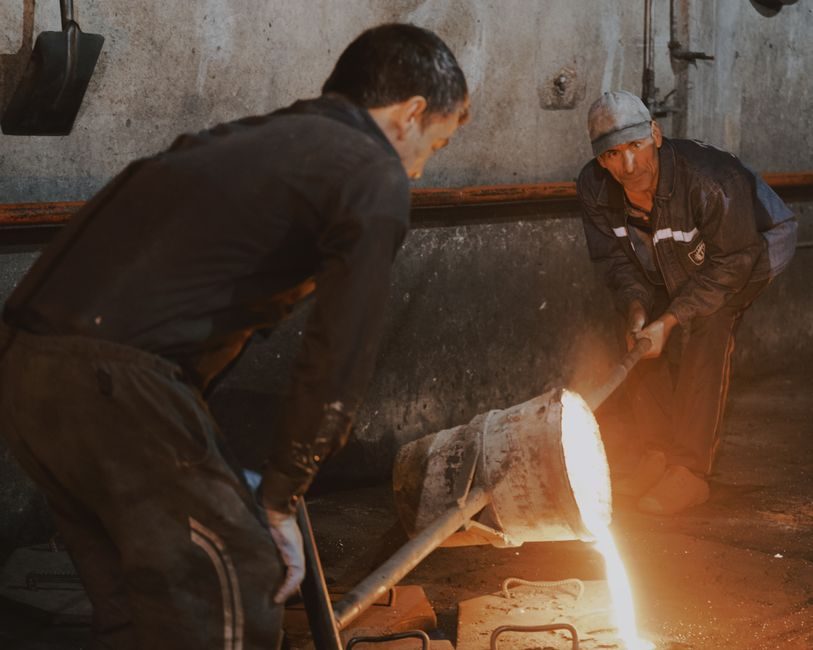
Aluminum die casting and a die casting machine are not interchangeable line items: the process yields finished metal parts, while the machine is the capital asset that injects molten aluminum at 650-700 °C under high pressure into a hardened steel die [S1][S9].
On 2026-07-29 sourcing channels, this split is visible in two parallel catalogs — Made-in-China lists aluminum cover parts at US$2.39-$2.89 per piece (MOQ 1,000) [S5], while Ningbo Dongfang lists an 80-ton cold chamber aluminum die casting machine at US$17,000-$22,000 per set (MOQ 1) [S1]. Buyers who confuse the two routinely over-spec or under-spec by an order of magnitude.
Scope: parts, alloys, and machine categories in current catalogs
Aluminum die casting is a process family covering cold-chamber high-pressure injection of Al-Si, Al-Si-Cu, and Al-Mg alloys into steel dies; the 2026 Made-in-China aluminum category lists cover parts, smart door lock housings, and bimetal radiator bodies at US$0.09-$1,990 per piece depending on size and alloy [S4][S5][S7]. The 2026 Ningbo Dongfang product line splits equipment into hot-chamber 16-180 ton and cold-chamber 25-280 ton, with 40+ years of manufacturing and 300-500 sets annual capacity [S1].
Aluminum alloys dominate the cold-chamber segment because molten aluminum attacks the gooseneck and plunger of a hot-chamber machine, so the geometry of the part dictates the die casting machine class before any tonnage discussion [S1][S9]. For zinc and lead alloys under 180 ton locking force, hot-chamber models (US$10,000-$20,000/set) remain the economic default [S1][S6].
Decision matrix: machine tonnage vs part weight and alloy
The locking force rule of thumb pairs roughly 4-5 tons of clamp force per square inch of projected area for aluminum cold-chamber work, so an 80-ton machine (US$17,000-$22,000) typically covers small-to-medium cover parts in the 0.1-2.0 kg range, while 280-ton cold-chamber units (US$43,500-$50,000) are the entry point for automotive structural housings and large radiator bodies [S1][S3]. Made-in-China's Longhua 1250-ton cold-chamber automated line is the upper bracket for high-volume aluminum structural parts [S3].
Hot-chamber aluminum work is technically possible only for very low melting point or magnesium alloys; standard aluminum specifications require a cold-chamber architecture with a separate shot sleeve and ladle, which is why Bian Diecast and FU YU SHAN both market dedicated aluminum cold-chamber cells rather than retrofitting hot-chamber hardware [S2][S9].
Price-per-piece vs price-per-set: how to read 2026 quotes
For a 500-ton cold-chamber machine (US$17,500-$20,000/set for the 38-40 ton hot-chamber class, scaling upward for 1300 kN horizontal aluminum injection moulding machines at US$20,000-$23,000/set [S1]), amortize machine cost over expected annual shot count: a 280-ton cold-chamber cell running two-shift aluminum covers can amortize in 18-36 months at typical China-labor shop rates.
For the part side, the same 2026-07 sourcing window shows US$0.50-$1.00 for RoHS-certified aluminum smart-door-lock housings (MOQ 100) [S4] versus US$964.82-$1,043.47 for a finished double-channel bimetal aluminum heating radiator [S7]; the radiator carries ~$1,000 of value-added finishing, so a buyer who only prices the raw die-cast blank understates true landed cost by 3-5×. See the aluminum die casting machine reference for matching shot weight to platen size.
Use cases: who needs what, and who does not
Custom aluminum parts buyers (Tier-2/3 auto suppliers, smart-lock OEMs, LED heat-sink brands) need a job-shop partner with multi-tonnage cold-chamber capacity — Bian Diecast's one-stop model combining mold design, casting, CNC, and surface treatment is a representative 2026 offering [S9].
Process-engineering teams building captive lines need capital equipment: 25-ton mini cells (US$10,000-$11,000, MOQ 2) for prototyping, 80-180 ton cells (US$17,000-$32,000) for serial aluminum production, and 280-ton+ horizontal cold-chamber units (US$43,500-$50,000) for structural castings [S1]. Buyers who only need 50-500 pieces of finished parts should not buy a machine — unit part cost from a job shop will be lower than one year's machine depreciation at that volume [S4][S5].
Limitations, failure modes, and material constraints
Aluminum die casting is constrained by wall thickness (typically ≥1.0 mm for pressure-tight parts, ≥0.8 mm for cosmetic), draft angle (≥1° on steel dies), and shot weight relative to machine platen; under-sized machines cause flash and die deflection, while over-sized machines waste energy and lengthen cycle time [S1][S8].
Hot-chamber zinc die casting machine options (US$10,000-$20,000/set) cannot be safely used for aluminum because molten aluminum dissolves the iron-rich gooseneck and plunger; specifying a hot-chamber machine for an aluminum job is a procurement error, not a cost saving [S1][S6].
Standards, sourcing signals, and trackable next nodes
The 2026 export-side data points to three trackable signals: (1) RoHS certification surfacing on aluminum smart-lock housings [S4]; (2) the 1,246 hot-chamber suppliers on Alibaba with response rates up to 91.6% indicating a still-liquid secondary market for small-tonnage cells [S6]; and (3) FU YU SHAN's FYS 550F-900F aluminum die casting machine line from Tainan as a Taiwan-sourced alternative to mainland 25-280 ton cells [S2].
Buyers comparing options should request the actual locking force (kN or ton), platen size, shot weight, and chamber type in writing — vague "aluminum die casting machine" RFQs attract 16-ton hot-chamber quotes for jobs that require 1300 kN cold-chamber cells. The structured matrix above maps a 25-280 ton cold-chamber aluminum machine to typical part geometries and 2026 FOB price bands, and the linked how to choose an aluminum die casting machine: 2026 spec map article extends the decision logic to platen, shot, and tie-bar dimensions.